
admin
April 7, 2023
Akanksha Nagar, Christina Moniz; Financial Express
April 7, 2023
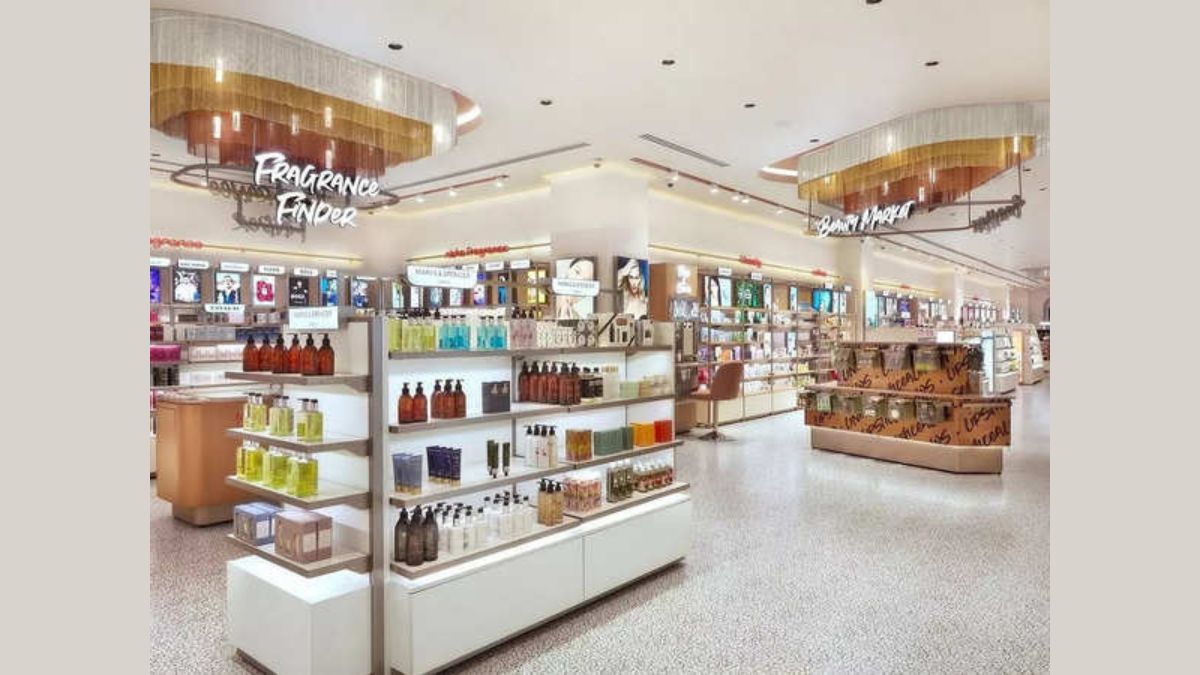
Reliance Retail’s (RR) launch of an omnichannel beauty and personal care (BPC) retail platform Tira this week brought the fight in the $27-billion market right to the doorstep of entrenched brands such as Nykaa, Sephora, Shoppers Stop, Tata Cliq, Myntra et al. Along with the app and website, the Isha Ambani-led company unveiled a 4,300 sq ft flagship store at Jio World Drive at BKC, Mumbai, and is working to set up stores in at least 100 locations across the country over the next few months.
RR already sells BPC products via its large network of department store chains and on its JioMart platform and last year, acquired a controlling stake in makeup and personal care brand Insight Cosmetics. RR was also in talks with Arvind Fashions to acquire Sephora, but media reports suggest the deal was called off earlier this year.
Clearly, RR has been working hard to capture the lion’s share of the fast-growing market.
According to Statista, revenue in the market will amount to $27.23 bn in 2023 and is expected to grow annually by 3.38% (CAGR 2023-27). Calling it a bottomless market, Samit Sinha, managing partner, Alchemist Brand Consulting, says, “There is definitely a huge untapped opportunity for beauty. Though we have seen a fair bit of growth in India over the past few years, we have barely scratched the surface. Its consumers are no longer just women, but also men. Additionally, differences between young female consumers in small cities and those in metro markets are reducing.”
Taking on competition
No doubt Tira has a lot going for it.
Reliance Retail Ventures Ltd, through its subsidiaries and affiliates, operates an omnichannel network of 17,225 stores and digital commerce platforms across categories including grocery, consumer electronics, fashion and lifestyle, etc.
Sinha points out that RR has a huge advantage in terms of its distribution reach and suggests it look at tapping the huge, pent-up demand in the smaller markets more than the metros, as consumers in these markets today have similar aspirations as metro consumers.
When it comes to categories like colour cosmetics or fragrances, consumers still will opt for offline retail than online, especially in smaller cities since they have limited retail outlets for product trials. That is what Reliance should be focussing on – creating a large offline footprint for its brand and if there is any company that can meet that need, it is the large corporates like Reliance, he adds.
Distribution apart, RR also needs to have a very clear positioning for the brand, notes Devangshu Dutta, chief executive, Third Eyesight. “Differentiation is the key and for that, it has to be clear about what segment of the market it is targeting and its offering. RR formats and the online presence provides a certain possible viable size of distribution, but beyond that, it has to create its own distinctive position in the market.”
Of course, competition hasn’t been sitting tight. Online market leader Nykaa, for instance, has 141 stores and plans to add another 50 in 2023; Tata Group too has announced the launch of over 20 beauty tech stores in the country.
While it has opened multiple outlets, experts say, Nykaa is still primarily an online brand. And this marketing is getting increasingly cluttered.
The online BPC market is roughly around Rs 10,000 crore in India (which is $1.2 billion) and could double in the next 3-4 years, points out Karan Taurani, senior VP, Elara Capital. That means the category could grow to reach $2.5 billion in 3 to 4 years with a CAGR of 25%.
Also, the BPC market requires a differentiated approach compared to other categories, with a lot of influencer-led campaigns and other marketing efforts to build consumer recall. “Other companies have struggled to acquire the kind of success and growth that Nykaa has seen,” he says.
That said, we have all seen how Reliance’s Ajio has given Myntra a run for its money in the fashion category with heavy discounting; so it is quite possible RR will play spoilsport in the online BPC marketplace and give Nykaa tough competition in the medium to long-term.
Tira is leaving no stone unturned. Its online platform has shoppable videos, blogs, tutorials, trend-setting tips, personal recommendations, and a virtual try-on feature, while its brick-and-mortar store offers beauty tech tools such as virtual try-on, skin analyser, fragrance finder and gifting stations to personalise purchases, along with trained beauty advisors.
Even as Tira is looking to differentiate itself via technology or by offering personalised services, Nisha Sampath, managing partner, Bright Angles Consulting, believes the only way Tira can truly stand out will be through the experience it offers. The proof will lie in how seamlessly it guides the customer through the purchase experience, she sums up.
(Published in Financial Express)
admin
March 23, 2023
Sharleen D’Souza, Business Standard
Mumbai, March 23, 2023
After sparking a price war in the carbonated beverages market through Campa Cola, Reliance Consumer Products has taken the pricing battle to the other segments in the fast-moving consumer goods market.
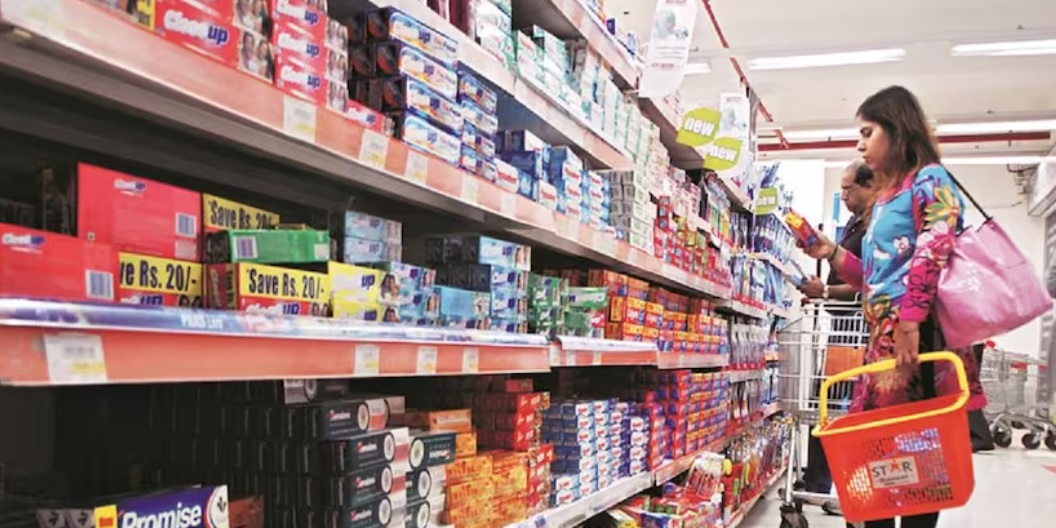
For instance, in soaps, it has priced its product lower than the market leader in the segment at Rs. 25 for 100 gms across its three brands – Glimmer, Get Real and Puric.
With Glimmer, Reliance Consumer competes with Lux, which sells a 100-gm soap bar at Rs. 36, while Get Real is similar to Hindustan Unilever’s Pears soap bar, which is priced at Rs. 54 for 100 gms. In the hygiene space, Reliance has taken on Reckitt Benckiser’s Dettol, priced at Rs. 40 for 75 gms. Godrej Consumer Products, one of the leaders in soaps sells its Godrej No 1 45 gms (each) pack of 4 for Rs. 40.
In the dish wash category, it captured the main price points of Rs. 5 for 75 gms, Rs. 10 for 145 gms, and Rs. 15 for 200 gms in bars, and Rs. 10 for 65 ml pouch, Rs. 20 for around 140 ml pouch, and Rs. 30 for 200 ml pouch in liquids. HUL’s Vim bar is priced at Rs. 5 for a 60-gm pack and Rs. 10 for a 125-gm pack, while a 300-gm pack retails at Rs. 30.
But Reliance has also moved a step further into the sachet space and is retailing a 5 ml sachet of dish wash liquid at Rs. 1. Other brands do not sell sachets.
On JioMart, the price of RCPL’s Enzo two-litre front-load liquid detergent is Rs. 250, a 43 per cent discount to the maximum retail price (MRP) of Rs. 440; the topload two-litre liquid detergent is available at a 35 per cent discount and now priced at Rs. 250. Its compact detergent powder one kg pack is priced at Rs. 149, after a 12 per cent discount on its MRP of Rs. 170. HUL’s Surf Excel Easy Wash detergent powder is priced at Rs. 150 and Quick Wash at Rs. 240 for a kilogram. But Rin detergent powder is priced for Rs. 103 and Wheel detergent powder at Rs. 73 for 1 kg. Surf Excel’s front load two-litre pack is priced at Rs. 390 and top load at Rs. 370. Tide’s 1.5 kg detergent powder sells for Rs. 225.
In detergents, Reliance has not disclosed which segment it intends to cater to and what price points it will offer in general trade.
Reliance is following the challenger strategy like in the telecom space, said Devangshu Dutta, founder at Third Eyesight. He said this is the fastest way to acquire market share, and since Reliance has deep pockets, it can easily fund market share acquisition by launching its products at a significant price difference compared to rivals.
“Customers will move at least to try the product and if they end up liking the product they will stick to it. This strategy is best suited for market share acquisition,” Dutta explained.
An executive from a top FMCG firm said on the condition of anonymity that there will eventually be a price war in whichever segment Reliance enters. He explained that while Reliance was still setting up its distribution network, over time due to its B2B supply chain, it will be able to push its products into retail
stores.
Some distributors who spoke on the condition of anonymity said it would not be easy to move the leaders in the segment as these companies have a fixed customer base and it might be difficult to topple brands that have been in the market for a while.
Reliance followed the same strategy with its carbonated beverage, Campa Cola. It relaunched Campa at a price point of Rs. 10 for 200 ml, Rs. 20 for 500 ml, Rs. 30 for 600 ml, Rs. 40 for one litre, and Rs. 80 for two
litres.

(Published in Business Standard)
admin
March 15, 2023
Faizan Haider, ET Bureau, 15 March 2023
Value apparel brands are set to grow in India.
The success of Tata Group’s Zudio that sells clothes below Rs 1,500 has prompted Reliance, Shoppers Stop and several global brands to enter the mass-priced retailing segment.
While Reliance Retail is planning to launch a value apparel format, likely to be named ‘Youth’ to compete directly with Tata’s Zudio and Landmark group-owned Max, Shoppers Stop is coming up with a mass-priced brand, internally called InTune, people in the know said.
Aditya Birla Fashion & Retail has been eyeing shoppers in tier-2 and -3 cities with Style Up, a similar format, while affordable French brand Kiabi is in talks with retail space providers and potential partners to enter the India market.
“Although there is a significant concentration of demand in the metro cities and tier-1 cities, these are also hypercompetitive markets. With economic growth spreading into the smaller cities and rising aspirations, especially among young consumers, there is an opportunity for brands to expand into these markets,” said Devangshu Dutta, founder of retail consulting firm Third Eyesight.
“However, keeping price-sensitive segments in mind, companies are creating new labels and brands, rather than pulling down their existing brands’ selling price,” Dutta said.
Trent, the Tata Group company that houses retail brands such as Westside, Zudio and Landmark, had earlier said that while Westside accounted for 70% of its standalone business, Zudio had the potential to outpace the department chain due to the size of the opportunity in the value segment.
“While the value format can offer growth in smaller cities, in metro cities the retailers are trying to target youth through this format. The youth is also aware of the sustainability part and most of these brands are focusing on it,” said Shriram PM Monga, who cofounded retail consultancy firm SRED.
Both Reliance and Shoppers Stop are looking for 6,000-9,000 sq ft space at malls and high street for their new brands, said a person familiar with the development.
Experts said India’s consumption structure was skewed in the past over a narrow base of rich consumers accounting for a large chunk of the market. However, as the economy is broadening across many more cities and the impact is reaching further down the income ladder, the opportunity for value formats and value brands is expanding.
For Lifestyle International, its value brands Max and Easy Buy have already outpaced the department stores by sales, indicating that consumers are increasingly seeking either lower-priced merchandise or opting for global brands such as Zara and H&M for fashion apparel instead of department stores.
(Published in The Economic Times)
admin
March 13, 2023
Tushar Goenka, Financial Express
March 13, 2023
Flipkart Supermart, the online grocery delivery platform of the Walmart-owned ecommerce company, is betting on regional brands to unlock the next phase of growth. Over the past few months, the e-tailer has been listing brands and making them more readily available in cities where their recall value is high.
The regional push targets staples and is pronounced across categories such as atta, tea, pulses, among others. So, instead of offering, say, just the Tata brand of tea, Flipkart also showcases local favourites like Nameri Tea for the residents of Assam. Similarly, instead of selling Nestle’s Maggi and ITC’s Yippie noodles across the country, Flipkart will also let customers pick brands selling Korean noodles, popular among north east teenagers.
The shift in focus is vital in a country whose grocery bill totals $600 billion, of which offline sales account for a staggering $592 billion, while online is a much smaller $8 billion. Further, of the total grocery bill, the share of regional brands at around 60% is much higher than organised national brands that stood at 40%, according to rough estimates from EY.
So far, the plan seems to have worked for the company. Smrithi Ravichandran, head of grocery, says her unit has grown 2.5X between June 2022 and February 2023.
The reason for this shift in focus is easy to understand. In Ravichandran’s own words, “The Indian palette changes every 150 kilometres.” Consider this. The kind of toor daal consumed in Chennai is different from that consumed in Madurai. That is, even within a single state (Tamil Nadu in this case) there is a huge difference in preferences. And that is true for most categories.
Next, look at the potential. Ravichandran’s department sees about 65-70% of its orders coming from Tier 2 and beyond, with metros and Tier 1 cities accounting for the rest.
Analysts believe Flipkart’s initiative is a step in the right direction. Says Devangshu Dutta, CEO, Third Eyesight, a retail consulting firm, “Focusing on regional brands makes eminent sense not just to cater to tastes in a particular geography but to also serve consumers who have moved away from their hometowns and might find it difficult to buy their chosen brands.”
That said, catering to regional preferences is easier said than done. “If one has the same selection even for the same state, it doesn’t help. But there is a cost in catering to that varied choice and we’ll need to operate more fulfilment centres,” Ravichandran adds.
From what to how
Flipkart’s plans to double down on the regional selection in grocery will mean partnering with some of them. Here consumer data available with Flipkart will come in handy, says Ravichandran.
Angshuman Bhattacharya, national leader, consumer product and retail, EY India, believes that by offering more regional brands in categories like atta, Flipkart will deepen penetration, giving smaller players a chance to tap a wider customer base. “Smaller, regional brands will be hungrier for growth and may end up offering healthier margins than what a nationalised player would do,” he adds.
In this, Flipkart’s approach is similar to that of Future Retail under Kishore Biyani, who underscored the importance of a regional brand-led strategy. “The Future Group had launched around 10 private labels of atta and that is no easy feat. A regional brand-led focus might prompt Flipkart to toy with the idea of launching its private labels at a later stage. Or it may even end up asking the regional brands to package staples under its brand, thereby yielding much higher margins,” Bhattacharya of EY points out.
Flipkart isn’t drawing the line just yet. The company will invest in technology to tell customers about the origin of the products they order. “Conscious consumerism is another aspect we will focus on. So, on the packet of a toor daal, consumers will have traceability regarding where and when exactly the daal was harvested,” Ravichandran adds.
This journey will not be a cakewalk for Flipkart. Analysts point out that to be able to partner with Flipkart and address its customer base of over 450 million, smaller brands must up their supply chain spends. That apart, there is always the fear that if the e-commerce giant does not get the desired results, it might discontinue such tie-ups, leaving the regional players in the lurch. Flipkart must allay these fears right at the outset.
(Published in Financial Express)
admin
December 12, 2022
Christina Moniz, Financial Express
December 12, 2022
This year has seen the entry of several brands into the plant-based meat category, from large players like ITC and Tata Consumer Products to newer brands like Licious. Mock meat, a growing trend especially in Western markets, is a plant-based protein processed to resemble and taste like meat. From vegetarian ‘chicken nuggets’ and sausages to meat-free ‘mutton’ seekh kebabs, most Indian players use ingredients like soya and jackfruit to mimic the texture and taste of meat.
The Indian vegan meat market is rather small currently — estimated to be around Rs 250-300 crore. But consider the potential: About 41 percent of respondents in India identified as either vegan, vegetarian, or pescatarian in a 2021 survey. A report by Wazir Advisors estimates that this category will grow 8-10 times to reach Rs 3,500 crore in 2026.
Looking from a global perspective too, this new category cannot be written off as just a blip. Worldwide, the consumption of such meat substitutes grew from 133 million kg in 2013 to 470 million kg in 2020.
While the projections are fantastic for this market, it is still very small within the entire food category, points out Sandeep Singh, co-founder of Blue Tribe Foods, a two-year-old start-up in this segment. What is needed to grow the category, he believes, is innovation. “The food items need to move beyond burgers and nuggets to appeal to the Indian non-vegetarian consumer. For example, someone needs to create a good chicken tikka masala or a good kheema to attract the Indian palate,” he explains. Earlier this year, star couple Virat Kohli and Anushka Sharma announced their investment in Blue Tribe Foods, a move that has boosted awareness for the brand and category, says Singh.
Variety & cost
Tata Consumer Products, which launched its vegan meat brand, Simply Better, in July this year is tapping into the trend of consumers moving towards healthier and sustainable lifestyle choices. Deepika Bhan, president, packaged foods (India), Tata Consumer Products, maintains that the market holds great growth potential. “Over 70% of the Indian population is flexitarian (consumes both vegetarian and non-vegetarian food). Surveys also show that over 73% of Indians today are protein deficient. These data points signify untapped potential in the plant protein segment. The consumer cohort, which is aware of the health and environmental benefits of plant protein, is likely to expand to a more diverse audience seeking to supplement their diet with alternate, plant-based meat,” remarks Bhan.
Cost is a factor hindering growth. Currently, the pricing for plant-based meat is 1.5 times the price of real meat products. “For premium consumers, price is not a challenge but to gain scale and reach the masses, pricing needs to be more attractive,” observes Devangshu Dutta, CEO, Third Eyesight. Indians have for decades consumed soya nuggets and products as a source of protein and as a meat alternative, but brands today are targeting urban consumers who are not price sensitive. “The consumers that brands are targeting are influenced by trends in Western markets and adopting veganism for ethical or health reasons,” adds Dutta.
Another consumption trend that is unique to Indian consumers is that there are around 100-odd non-meat eating days annually, on account of religious or cultural occasions. Meat and seafood company Licious is targeting these consumers on non-meat eating days with its newly launched vegan meat brand, UnCrave. Simeran Bhasin, business head, alternative protein, Licious, states that all brands in the category are still on a journey to improve their offerings . “Our plan is to create relevance before aiming to take a share in it. Eating is believing, and we want more of our consumers to sample our alternative protein offerings. So, we send samples of UnCrave along with Licious food deliveries to encourage consumption and drive brand awareness,” explains Bhasin.
While UnCrave is currently present in only four cities (Mumbai, Delhi, Pune and Bangalore), she asserts that there is a market for the brand in non-metros too and expects the brand to reach the top 20 markets by the end of the next fiscal.
(Published in Financial Express)
