
admin
October 7, 2023

Gargi Sarkar, Inc42
7 Oct 2023
The Indian ecommerce industry anticipates a stronger festive season compared to last year with over 20% sales growth, driven by the D2C segment’s expected 40% QoQ surge
The overlap of festive celebrations and wedding seasons, particularly with a later Diwali this year, is predicted to further stimulate demand
Despite the evident purchase intent, retailers are preparing for a possibly neutral festive season as economic challenges may hit consumers’ spending
As the festive season rings in its 10th anniversary in the ecommerce realm, giants like Flipkart and Amazon are prepping for their annual mega sales, set to begin on October 8. This year, however, they will face tough competition from newer players, including Meesho, which carved out a significant slice of the festive sales pie last year.
With new entrants like Tata Neu and JioMart, and fashion and lifestyle ecommerce players such as Myntra, Nykaa, and AJIO, the stage seems to be set for a fierce showdown.
For these ecommerce platforms, the annual festive sales aren’t merely about revenue generation; they’re pivotal customer engagement and acquisition opportunities. These events lure consumers with compelling discounts and promotions, giving a considerable boost to their yearly sales targets.
Through strategic marketing blitzes, they also aim to amplify brand recognition and glean insights into shopper preferences. Following last year’s subdued festivities, market analysts have predicted a revival in shoppers’ enthusiasm this year, forecasting a robust 20% surge in sales.
The festive season this year is set to witness a remarkable upswing in the ecommerce sector’s gross merchandise value (GMV). According to consulting firm Redseer, the GMV is anticipated to see an 18-20% surge, amounting to INR 90,000 Cr, a leap from INR 76,000 Cr in the previous year.
“The preceding quarter (April to June) witnessed a subdued performance in both offline and online retail sectors, primarily due to persistent inflationary pressures. However, the scenario is expected to undergo a transformation during the upcoming festive season. Festive periods tend to unleash latent consumer demand, prompting individuals to open their wallets more liberally,” Ashish Dhir, EVP (consumer and retail) of business consulting and services firm 1Lattice said.
There is a growing focus on electronics and appliances as traditional categories of interest. However, fashion and beauty are also emerging as important categories. The emergence of luxury goods is another important segment, which will likely make waves during the upcoming festive sales.
The ecommerce industry anticipates a stronger festive season compared to last year with over 20% sales growth, driven by the D2C segment’s expected 40% quarter-over-quarter (Q0Q) surge. However, average user spending is likely to remain flat.
Further, Tier III cities and beyond are becoming key revenue contributors, particularly in the fashion and beauty categories. Although consumer sentiment has improved, retailers are wary that buyers could maintain a cautious stance when it comes to spending lavishly.
While there is much to look forward to, let’s delve deeper into what shoppers and retailers can expect from this milestone year, which marks 10 years of festive sales fervour in the Indian ecommerce space.
D2C Brands To Lead The Charge
Notably, the Indian market is projected to have 500 Mn+ online shoppers by 2030, growing at 12% compound annual growth rate from 205 Mn in 2022, according to a 2020 report.
As far as the upcoming quarter is concerned, industry experts forecast that the homegrown ecommerce sector will likely see impressive growth of over 20%.
Playing a pivotal role in this escalation will be the D2C segment, predicted to grow more than 40% QoQ from October to December. Established ecommerce giants like Amazon, Flipkart and Meesho could also be looking at an approximate 30% uptick in sales, according to experts.
Tracing back to the inaugural ecommerce festive sales in 2014, the industry’s GMV was recorded at INR 27,000 Cr. Fast forward to 2023, the GMV is poised to touch an impressive INR 5,25,000 Cr, a nearly 20-fold increase, per a RedSeer report.

Festive Ecommerce OffersAverage User Spending Could Remain Muted
Despite the rise in GMV in 2022 compared to 2021, average expenditure per shopper held steady at INR 5,200 during the initial four days of the festive season sale, according to a RedSeer report.
This year doesn’t seem poised for a significant spike in individual user spending either. However, there is a silver lining in the form of rising consumer activity in smaller towns and cities. On the flip side, elevated living costs in metropolises like Bengaluru and Mumbai could dent extravagant consumer spending, noted Devangshu Dutta, the founder and CEO of Third Eyesight, a boutique management consulting firm.
Yet, with the growing online shopper populace in these cities, there’s potential for the average order value (AoV) to reduce as more users flock online to shop.
“As the online shopping base continues to expand, the average spending per user naturally tends to decrease. This phenomenon occurs as more people venture into ecommerce, with platforms like Amazon and Flipkart extending their reach to cover a broader audience. However, it’s essential to note that this drop in the average ticket size is a common trend when the customer base expands,” Sangeeta Verma, director of digiCart India said.
Consumers Sentiment Positive, But Retailers Remain Realistic
With the waning impact of inflation, India is witnessing a positive shift in consumer sentiment from the previous year. Unlike several developed nations wrestling with inflation, India has remained largely untouched by its dual impact on demand and supply, experts suggest.
For example, Flipkart delivered strong gross merchandise value (GMV) and sales growth in the company’s second quarter of the financial year 2023-24 (FY24), Walmart’s chief financial officer John David Rainey said during an earnings call.
“In India, the distinguishing factor in terms of festive demand is that it’s not merely brand-driven; consumers here are eager to spend, and the purchase intent is notably high. Unlike some developed economies grappling with inflationary concerns, both the demand and supply sides in India have not seen any impact of inflation. The consumer demand continues to stay buoyant,” Chirag Tanjeja, cofounder and CEO of GoKwik said.
The overlap of festive celebrations and wedding seasons, particularly with a later Diwali this year, is predicted to further stimulate demand, 1Lattice’s Dhir added.
Nevertheless, a note of caution reverberates among retailers. Despite the evident purchase intent, retailers are preparing for a possibly neutral festive season as economic challenges may hit consumers’ spending.
However, a recent study conducted by Nielsen Media India and commissioned by Amazon India says otherwise. According to the report, 81% of consumers are enthusiastic about shopping during the upcoming festive season. More importantly, this positive sentiment towards online shopping is not limited to metropolitan areas but Tier II and III cities and towns.
Ecommerce Platforms Ramp Up Efforts To Woo Sellers
In this year’s festive season, a standout trend is ecommerce giants’ intensified drive to court and captivate sellers with multiple strategic offerings like enticing commission rates, equipping them with advanced selling tools, enhancing the overall selling experience, and broadening their outreach.
Recently, ecommerce heavyweight Meesho made its platform accessible to non-GST registered sellers too. Not too behind in the race is Amazon India, which unveiled its multi-channel fulfilment (MCF) last month for D2C brands and retailers. This initiative is expected to aid sellers in managing customer orders from diverse channels.
Meanwhile, Flipkart flaunted its impressive seller growth, citing a tally surpassing 1.4 Mn — a notable 27% jump since 2022. Meesho currently has a seller base of 1.3 Mn and Amazon has over 1.2 Mn sellers.
Echoing the seller-side optimism, digiCart’s Verma said, “As a seller, we hold a very bullish sentiment. We’re so confident that we started stocking up well in advance. The robust build-up is evident from the current numbers. Mature sellers will expand into existing and new categories after.”
A recent survey by Redseer revealed that sellers are projecting a 15% increase in festive sales year-on-year. Even though the recent sales momentum on ecommerce platforms has been somewhat subdued — with only 40% of those surveyed reporting a 10% quarterly hike — there’s palpable enthusiasm for a significant festive sales boost across a multitude of product sectors.

Who Will Drive The Festive Ecommerce Growth?
Tier II and III cities and towns are expected to be the biggest contributors in this year’s festive season sales. According to experts, customers from these cities and towns are keen on giving their wardrobes and beauty kits a festive makeover. Although Tier I cities are spoilt for choice with numerous offline stores, spanning both legacy and contemporary brands, such luxuries are scarce in smaller cities.
However, this is steadily changing now. Some of the prominent D2C brands that have emerged from the country’s Tier II & III towns and cities are Raipur-based Drools, Mohali-based Lahori, Kanpur-based Phool, Coimbatore-based Juicy Chemistry, just to name a few.
Furthermore, consumer demand in the eastern regions of the country, along with enhanced connectivity in the Northeast, is also on the rise. Semi-urban and rural areas are fast emerging as the driving force behind the new wave of ecommerce growth, a trend expected to be pronounced during the festive season.
Considering that a whopping 65% of India’s populace resides in rural regions, the untapped ecommerce potential is immense, according to the Economic Survey 2022-23.
Yet, fostering trust will be paramount. Residents in these regions typically bank on word-of-mouth endorsements and recommendations from local retailers when exploring new products and brands. This is expected to give local D2C brands a much-needed boost in the upcoming festive season.
What’s Beyond The Festive Sale Fervour
As festive trends leave their mark in the ecommerce landscape, we’re likely to witness several transformative strategies. Central to this evolution will be Buy Now, Pay Later (BNPL) schemes. Yet, the traditional cash-on-delivery remains a preferred choice for many.
Ecommerce brands are increasingly prioritising customer retention, recognising that fostering enduring relationships offers more value. This shift is evident in the rise of loyalty programmes.
Notably, Flipkart introduced “Flipkart VIP” – a direct competitor to Amazon’s Prime – right before the festive sales kickoff. Simultaneously, Meesho debuted a loyalty initiative, targeting both customers and sellers.
Apart from the dominant themes, a few other noteworthy trends are slated to redefine the festive shopping narrative. Black Friday, for instance, is set for a revamp. Gen Z’s influence, especially their propensity to favour specific brands, will be significant.
Last year, for D2C brands, the Black Friday event overshadowed the traditional Diwali and Dusshera festivals in sales figures. GoKwik data indicates that brands on their platform saw a staggering 63% rise in GMV during the Black Friday sale, contrasting starkly with the 10-day Diwali sales.
Also, Christmas, too, is evolving. The allure of winter holidays and modern gifting practices are propelling this transformation, turning Christmas into a significant commercial event.
Given that the final leg of 2023 (October to December) will host almost all the major Indian festivals, the ecommerce players are in for a treat. Even though there will be a lot of cut-throat competition among ecommerce players, there will be no dearth of opportunities for them to woo customers who are eager to splurge to add more flavours to their festive celebrations this year. Going ahead, we will keep a close eye on the ecommerce players and D2C brands that will emerge triumphant after the great Indian festive showdown.
(Published in Inc42)
admin
August 28, 2023

Bindu D. Menon, Financial Express
August 28, 2023
Calvin Klein, Levi’s, Adidas and Lacoste are among the several players who are looking to tap the potential of Outlet malls, which are generally located on the peripheries of cities and major highways. These malls are fast replacing the old factory outlets of major brands, which were located in the cities in crowded places.
Real estate developers are also strategically choosing such locations to attract a wider customer base. Value-driven customers are thronging to such malls as it offers branded products at a discounted price ranging from 30-70%.
A few companies FE spoke to said Outlet malls are refined version of factory outlets and companies are able to generate revenue by liquidating stocks at a lower price.
Outlet Malls are a concept popular in the international market and are a huge hit among travellers. They are typically large group of shops outside city periphery that sell apparel, shoes and luggage at a discounted price. In the last decade, Outlet malls have sprung all over the country especially adjoining highways.
In New Delhi’s Jasola district, Pacific Premium, real estate firm has opened premium shopping space. Pacific Group operates around six malls spread across Delhi and Dehradun. Its new premium outlet mall is its largest to date and has four storeys and sizeable parking area.
The mall houses aspirational brands such as Birkenstock, Tommy Hilfiger, CalvinKlein, Levi’s, Adidas, Madame, Lacoste, Vero Moda and American Eagle among others. Other leading brands such as Nykaa and CaratLane, too have signed lease for occupying mall space.
Players like Village Groupe are developing mixed use development space in off location like Khapoli on Mumbai-Pune highway, Ludhiana and even Jaipur highway. A company disclosure says that it is developing over 500,000 sq feet mixed use space off-city limits.
“Outlet malls are a great opportunity for consumers who want to get the touch and feel experience. To that they offer brands at a discounted price is huge attraction for consumers,” said Susil S Dungarwal, promoter, Beyond Squarefeet Advisory, a mall management advisory firm.
Asked if online companies will pose a challenge to Outlet malls, Dungarwal says that there is no competition. “Outlet malls are an impulse destination. A consumer may be travelling along a highway, a good mall with discounted brands will be sure shot attraction,” he said adding growth in private vehicles has given a shot in the arm to Outlet malls.
“Till mid 1990s only 20% of vehicles on highways were private vehicles (cars and buses) and the rest were commercial vehicles (trucks and lorries). However, in 2023, almost 60% of the vehicles on highways are private vehicles,” he said.
Devangshu Dutta, Founder, Third Eyesight, said, “Outlet (discount) stores sit at the confluence of a mutual need. Branded chains with excess inventory to liquidate which they don’t want to carry at their primary stores, and consumers who want lower prices for their purchases”.
He points that outlet malls can offer brands some of the same advantages as regular malls, in terms of acting as footfall magnets, and offer shared services, but at lower costs due to a cheaper location.
“Rather than creating their own standalone outlet stores, brands can take up spaces in an outlet mall. The challenge of maintaining and managing footfall is shifted to the mall. However, as with regular malls, outlet malls need to be located well and need to be also managed well,” he added.
According to consultancy firm Anarock, top cities have over 51 million sq feet of mall stocks across the country with Delhi-NCR, Mumbai Metropolitan Region and Bengaluru accounting for 62% of the total stock.
(Published in Financial Express)
admin
August 18, 2023
Viveat Susan Pinto, Financial Express
August 18, 2023
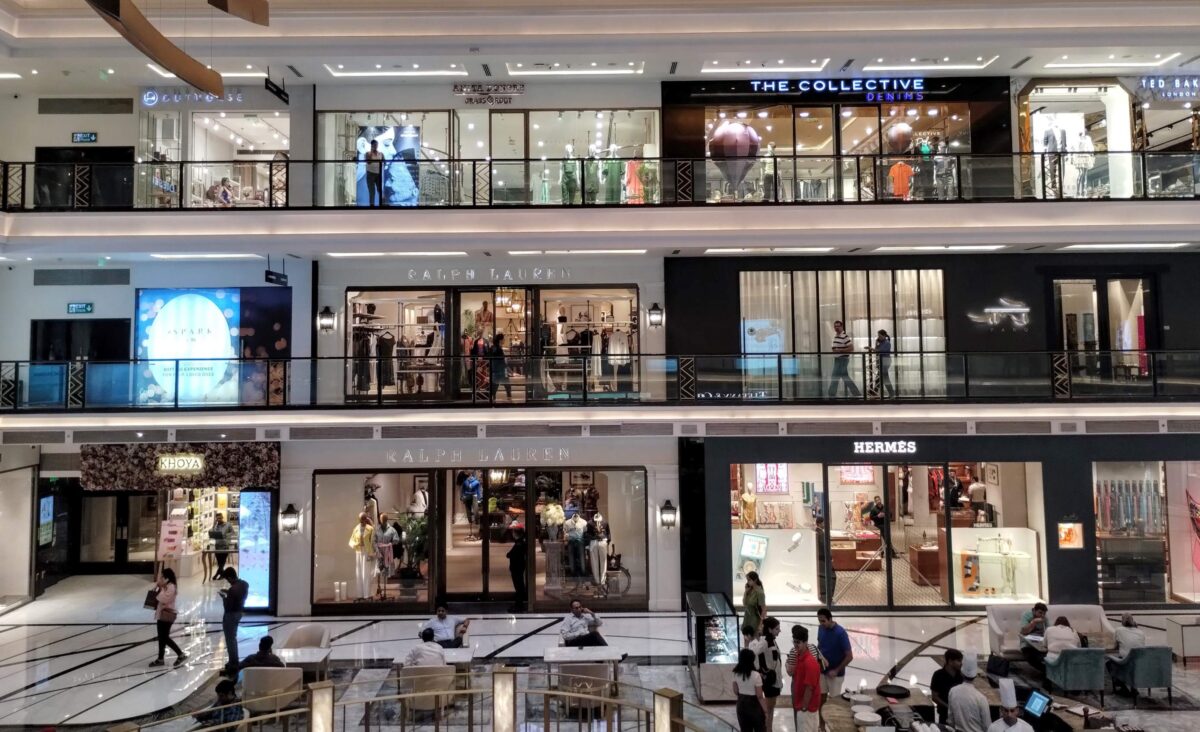
Retail activity in the country is set to increase with some 20 foreign brands likely to enter India in the next 6-8 months, according to retail consultants and experts. This is double the number of about 10 foreign brands that would enter India annually in the pre-pandemic period.
An attractive retail market and growing affluence and consumer tastes are among the key reasons for the interest shown by foreign brands in India, said experts. Also, large groups such as Reliance and Aditya Birla are open to partnerships with foreign brands, with Reliance Brands, part of Reliance Retail, in particular, being the most aggressive of the lot.
“Global markets are witnessing slowdown and recessionary concerns, which is hurting retail sentiment. In contrast, retail sentiment in India is upbeat despite food inflationary pressures. Spending across non-essential categories will also grow as the festive season nears,” said Abhinav Joshi, head of research, India, Middle East & North Africa at consultancy CBRE.
The consultancy on Thursday released a report which said that retail leasing activity in India had grown 24% year-on-year in the first half of CY2023, led by foreign and domestic brands. The second half of the year was also expected to see a strong double-digit rate of growth in terms of leasing activity, with overall retail leasing likely to touch 5.5-6 million sq. ft. at the end of the CY2023, second only to the peak of 6.8 million sq. ft. seen in CY2019.
Of the names eyeing an India-entry in the next few quarters include labels such as Italian luxury fashion brand Roberto Cavalli, American sportswear and footwear brand Foot Locker, Armani Caffe, the luxury cafe brand of Armani, British luxury brand Dunhill, Dubai’s Brands for Less, Old Navy and Banana Republic from Gap, Chinese brand Shein, Maison De Couture from Valentino, Spanish luxury brand Balenciaga, EL&N, a UK-based boutique cafe, Galleries Lafayette from Paris, Kiabi, Mavi, Damat, Dufy, Tudba Deri, Avva, Boohooman and Miss Poem, all apparel brands from Turkey and Europe, say industry sources.
Barring Galleries Lafayette which has tied up with Aditya Birla Fashion and Retail for its India entry, most other names are either talking to Reliance Brands (part of Reliance Retail) or have tied up with the company, persons in the know said. For instance, Balenciaga, EL&N, Shein, Gap’s Old Navy and Banana Republic, Armani Caffe, Maison de Couture from Valentino have tied up with Reliance Brands for their India entry. Executives at Reliance Brands were not immediately available for comment.
Most of these brands are eyeing a presence in cities such as Mumbai, Delhi-NCR, Bengaluru and Hyderabad in the first phase of launch, before expanding their presence to other cities such as Pune, Ahmedabad, Chennai and Kolkata.
“The India retail opportunity is a compelling one, which most foreign retailers don’t want to miss,” says Devangshu Dutta, chief executive officer at Gurugram-based consultancy Third Eyesight.
“Some of the brands who’ve come earlier have also tasted success especially in the fast fashion category. This is an indication that brand awareness is growing and that people are ready to spend on global products as discretionary incomes grow,” he says.
On Wednesday, Japanese fast fashion retailer Uniqlo said that it was setting up two new stores in Mumbai in October, after launching 10 stores in the north over the last four years. The company’s chief executive officer Tomohiko Sei indicated that the retailer was open to new markets and store openings, but would focus on Mumbai for now.
CBRE says that Mumbai has seen retail leasing grow by 14.6% year-on-year in the first half of CY2023 on the back of a push by foreign brands to acquire space in the city. Delhi-NCR, meanwhile, reported a higher 65% year-on-year growth in retail leasing in the first half of the year, led by retail activity by both foreign and domestic brands.
(Published in Financial Express)
admin
July 25, 2023
Suprita Anupam, Inc42
Jul 25, 2023
– Following a stock downgrade, Nykaa might lose some visibility among public market investors at a time when competition in the beauty ecommerce space is intensifying
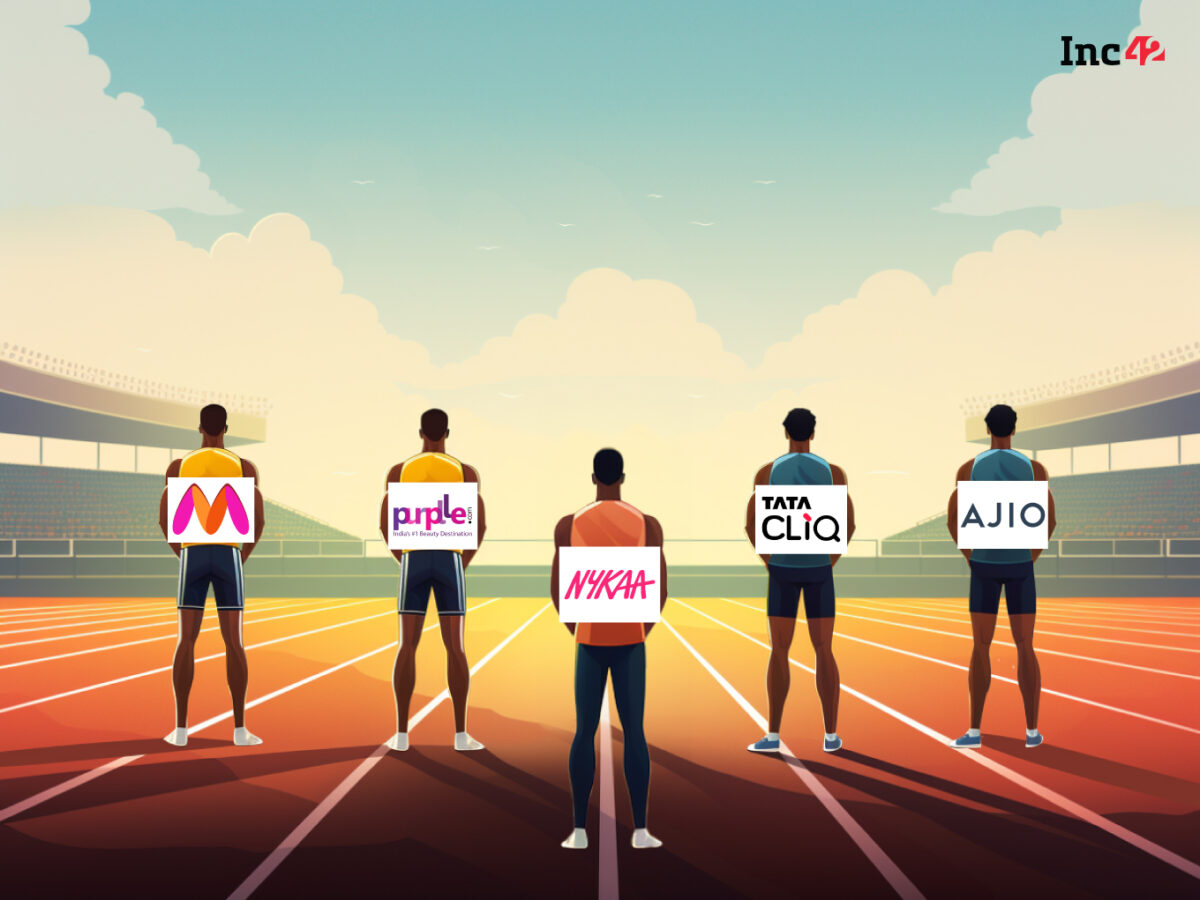
– Nykaa, which has been the most popular beauty marketplace, has had to fight off Reliance Tira, Flipkart-owned Myntra, Tata CLiQ and others but has to invest heavily in omnichannel and private label expansion
– As its profitability and traction have declined, Nykaa needs to fix things for the long run without losing too much money as it does not have the capital reserves similar to its rivals
In the first week of July, the Nykaa stock took a significant hit, falling 42% from its 52-week high. Further, the Association of Mutual Funds in India (AMFI) downgraded the stock, dropping it from the top 100 listed companies in the country. As of now, the company is ranked somewhere between 101 and 250 on the market capitalisation threshold.
From a near monopoly in the beauty ecommerce space, Nykaa has lost its top spot. Not to mention, new competition, in the form of D2C brands and behemoths such as Tata and Reliance, has complicated the situation even more.
The downgrade by the AMFI means that Nykaa is no longer an attractive largecap stock in India, and this could have an impact on the company’s visibility in the near future.
So, what exactly triggered this collapse?
It was only in November 2021 that Nykaa’s INR 5,352 Cr IPO saw 82x subscription, the highest among large startup IPOs in India. Having withstood competition from marketplaces such as Amazon India and Walmart-backed Flipkart and Myntra, Nykaa seemingly set a new benchmark for Indian ecommerce startups with its blockbuster IPO.
But the last 20 months have been nothing short of disruptive. Reliance-backed AJIO has grown in stature, and the Indian conglomerate has also launched Tira in the beauty ecommerce space.
Meanwhile, Tata has also bolstered its beauty and personal care product assortment on its platform Tata CLiQ. Furthermore, the Tatas have added 20 beauty tech stores across the country, aligned with its ecommerce operations, while Myntra Beauty has registered 2X-3X growth in recent months and expanded its brand collection. Therefore, Nykaa needs to come up with something exceptional to compete with the aforementioned well-funded BPC contenders.
Adding to the company’s woes was the announcement of the issue of bonus shares in a 5:1 ratio and changes in key management personnel after a successful IPO. This did not go down well with investors. Bonus shares announcement was largely perceived as a way to keep the company’s anchor investors from offloading shares at the end of their IPO lock-in period.
Experts believe that amid declining year-on-year profitability, Nykaa could see a cash crunch as it prepares to combat with deep-pocketed corporations. For now, it will be interesting to see if Nykaa can hold onto its market share?
Nykaa’s Losing Its Footfall To AJIO & Myntra
First, let’s look at the bread-and-butter for ecommerce platforms such as Nykaa — that is visits, page views, engagement and repeat orders.
It must be noted that Nykaa has separate properties for fashion (Nykaafashion.com) and beauty (nykaa.com). If we look at the performance over the last 3-4 months, the fashion vertical has definitely seen some gains, but Nykaa.com itself has experienced negative growth in total visits.
The flagship property is bleeding users due to an ever-intensifying competition, which is quite clear in the graph given below.

Further, Nykaa, Nykaa Man and Nykaa Fashion have the lowest numbers when it comes to average visit durations.
On the ecommerce front, Nykaa has a lot of catching up to do against its competitors. Some of Nykaa’s private labels — take Dot&Key for instance — have become popular discounted items on Myntra, AJIO, Amazon India and other marketplaces, which shows that the company is forced to use its competition to sell its products.
In contrast, Myntra, AJIO, Tira and Amazon’s private labels are largely walled inside their respective marketplaces. To beat the competition and stay in the public spotlight, Nykaa has opted for the omnichannel strategy, and it is looking to add brand-owned stores on the retail front. But here too, the competition is stiff.

Nykaa Faces Challenges With Its Online-To-Offline Strategy
When we look at the omnichannel operations, Nykaa has 145 physical stores, 38 fulfilment centres, and 2,749 stores of its owned brands. The company plans to open more physical stores this year, according the announcements made in its last earnings call.
Nykaa’s founder and CEO Falguni Nayar had earlier said, “Physical retail is a necessary investment that we need to make, even if it adversely affects overall profitability. So, we are aiming for the optimal mix of online, offline, and duty.”
This is where the situation becomes more complicated. Being primarily an online platform, Nykaa has managed to stay lean and achieve profits thus far. However, opening more stores means more investments and a significant increase in operational expenditure, including higher employee expenses.
Plus, this entails entering into fierce competition with Tata and Reliance.
Reliance Retail alone has launched over 3,300 new stores in FY23 under its various brands, including Tira Beauty, Trends, and others.
Similarly, Tata has been a well-known name in the BPC and fashion industry. It introduced the first-ever cosmetics brand, Lakme Cosmetics, to India (later sold to Unilever). Tata has over 22 in-house labels for its Westside brand, which operates over 200 stores across the country.
While Tata plans to open 20 beauty tech stores, equipped with AI and VR, it already has 391 Zudio stores nationwide.
For Tata and Reliance, it is relatively easier to build an online business backed by their offline stores compared to Nykaa’s strategy of building an offline presence backed by online operations. These large conglomerates have years of experience in building retail brands in the offline space.
So, essentially, Nykaa seems to have lost ground in its strength areas of ecommerce and offline retail, as it is not as experienced as its rivals.
Speaking to Inc42, Devangshu Dutta, the founder and CEO of Third Eyesight, a boutique management consulting firm explained, “Apart from the impact of Covid, in the last 3-4 years, many brands have started moving offline because that’s where the bulk of the business happens. But moving offline means entering a completely different business. You’re not able to centralise inventory as much, and you may not be able to respond to market-specific segments as quickly.”
He also believes, like any other offline retail business, Nykaa will face high operational costs, but it has an advantage in the fact that it may be able to use data more effectively from its online operations. Nevertheless, this is a minor advantage.
“Your store locations have to be correct, and self-sustaining quickly, at least on a cash operating basis. At the business level you may look at profitability in a longer term,” Dutta added.
Profits Plummet: Nykaa’s Other Big Worry
India’s beauty and personal care market, presently valued at $16.8 Bn, is poised to grow at a compound annual rate of 11%, with cosmetics and perfumes categories growing at a faster clip.
According to a joint report by international beauty brand Estée Lauder and Gurugram-based business insights firm 1Lattice, a substantial portion of sales worth about $1.3 Bn are through ecommerce channels. This is expected to grow at a CAGR of 30% during FY22-27, followed by companies that retail beauty products in health and beauty stores and modern retail shops.
With 30% of India’s BPC market share, Nykaa has so far managed to stay ahead in the race. Nykaa’s beauty category (55% of the broad BPC category) saw 33% full-year growth with a GMV of INR 6,649 Cr. On the fashion side, the GMV grew 47% for the full year at INR 2,570 Cr.
BPC and fashion are the two mainstays of Nykaa’s business, even though fashion is a relatively new vertical for the Mumbai-based company. The company had earlier launched Nykaa Man, a separate platform for men’s grooming, beauty and fashion, but with less than 1 Mn visits, it has failed to grow over the last few years while AJIO has grown from 0-37 Mn users, as per analysts.
“At one end, Nykaa’s online PAT has been going down for the last two years, while Nykaa Fashion’s loss for the year has grown consecutively, putting Nykaa business in a fix,” said an analyst from PwC.
Nykaa needs to bring a balance between short-term losses and long-term profits. However, the company’s current strategy fails to show a way out, the analyst added.

The Balancing Act For Nykaa
As per the analyst quoted above, the company’s BPC products have so far had lower prices than Myntra and AJIO, where discounts are typically lower.
However, when compared to Amazon India and its long list of D2C brands and private labels, Nykaa products were slightly more expensive. Amazon also scored over Nykaa with its better supply chain and distribution.
Nykaa banked on product assortment, the assurance of quality and authenticity of products, but as more and more brands join Tira, AJIO and Tata CLiQ, this is also fast eroding.
Access to international brands is no longer exclusive to Nykaa, so it needs to tackle distribution and supply chain, where its rivals score heavily.
Giving Nykaa the benefit of the doubt, a consultant from brokerage firm Motilal Oswal recently said, “There is no clear playbook for these businesses. When Nykaa entered the segment, it was pioneering many aspects in India.”
However, now the company needs to exercise extreme caution regarding expenses and investments because of heavyweight competition with deeper pockets.
P Ganesh, chief financial officer at Nykaa, highlighted that the company still has funds remaining from the IPO, which will be utilised to secure future capital needs.
Ganesh added, “It’s worth noting that while we have observed a considerable increase in working capital as the company scales up, the number of working capital days is expected to stabilise. This means that the amount of funding allocated to working capital should moderate in the future.”
But analysts also believed that Nykaa cannot afford to sacrifice its market share in India’s rapidly growing beauty, personal care, and wellness segment. One thing that is advantageous for Nykaa is that Reliance-owned Tira is still new in the market and will take some time to get to critical mass adoption.
This is a window of opportunity for Nykaa to stretch its lead and fight off its rivals. Nykaa’s brand value primarily comes from its online business, so it must not let offline expenses hinder its online growth plans. However, given the competition, Nykaa is in a Catch-22 situation.
In the BPC segment, owned and private label brands play a vital role in increasing long-term profitability and repeat purchases. All of this will require extensive investment from Nykaa’s leadership — there are segments in BPC where Nykaa has no private label or owned brands.
As of now, the question remains: Can Nykaa maintain its dominance in the online market while facing fierce competition on multiple fronts?
(Published on Inc42)
admin
July 19, 2023
Faizan Haidar, ET Bureau
19 July 2023
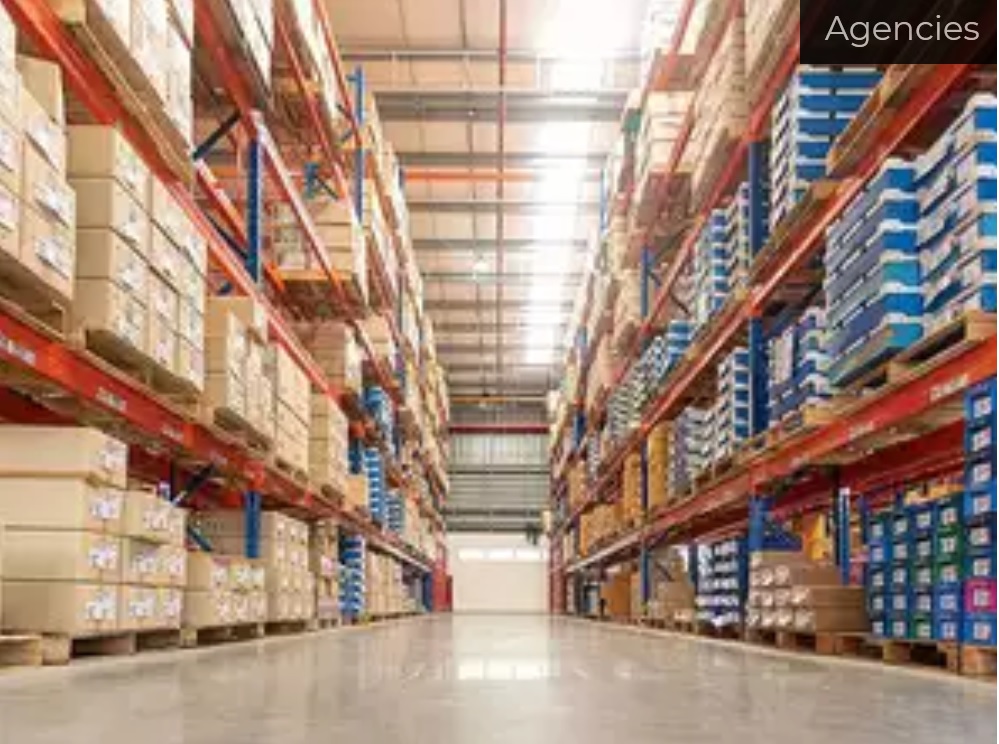
E-commerce companies’ share in warehousing space leasing has fallen to 3% amid declining demand from more than 20% during Covid-19. With the easing of the pandemic, demand faltered for e-commerce companies, even as bricks-and-mortar rivals rented 14% of space during the January-June period as they witnessed a demand resurgence.
In 2020, during the pandemic, e-commerce took more than a fifth of warehouse space while physical retailers had a 9% share, according to data by Savills India.
The overall leasing activity in India continued to grow, with a total space take-up of 22.4 million square feet in the first six months of 2023, up from 20.9 million sq ft a year ago.
“E-commerce companies had over-committed space during Covid, expecting the exponential growth they experienced at that time to continue. There are many facilities where they continue to pay rentals without utilising the full space,” said Gagan Randev, executive director, India Sotheby’s International Realty.
According to Savills data, after increasing demand for warehousing space over the past five years, tier-2 and tier-3 cities saw the share of e-commerce declining to 4% in the January-June period from 34% a year ago.
“In the past three years, year-on-year space absorption from e-commerce has undergone a significant change due to increased investments in their warehousing operations and footprint optimisation through automation, shelving and improved racking systems. These investments have enabled them to increase their existing storage space and enhance overall operational efficiency,” said Srinivas N, managing director, Industrial and Logistics, Savills India.
Experts said the companies are also looking to outsource the space they had taken during the pandemic.
“E-commerce overbuilt the capacity as Covid-led growth was harvested by them. Now that capacity is vacant. That’s why you see a lot of marketplaces trying to externalise their services. That is not coming out of a business model, that is coming out from vacant space,” said Ashvini Jakhar, founder of Prozo, which manages supply chains for companies.
In the first half of 2023, the third-party logistics sector continued to drive warehousing demand, accounting for 44% of the total absorption, up from 37% a year ago, followed by the manufacturing (22%), retail (13%) and fast-moving capital goods and consumer durables sector (6%).
“E-commerce, grew exponentially during Covid when physical retailers were constrained by prevailing conditions and immediately after that when chain stores were still recovering from the pandemic shock,” said Devangshu Dutta, founder of retail consulting firm Third Eyesight. “However, the retail business in India is predominantly offline; as demand continues to grow overall, it is only natural for physical retailers’ own growth to be driven by the market’s momentum and that would be reflected in warehousing space taken up by them across the country.”
For most retailers, after Covid-19, the warehouse is the epicentre for omnichannel distribution network for offline as well as online clientele.
(Published in Economic Times)
