
admin
June 16, 2023
Sharleen D’Souza & Shivani Shinde, Business Standard
June 8, 2023
Why are companies finding it difficult to sustain the supply-chain business?
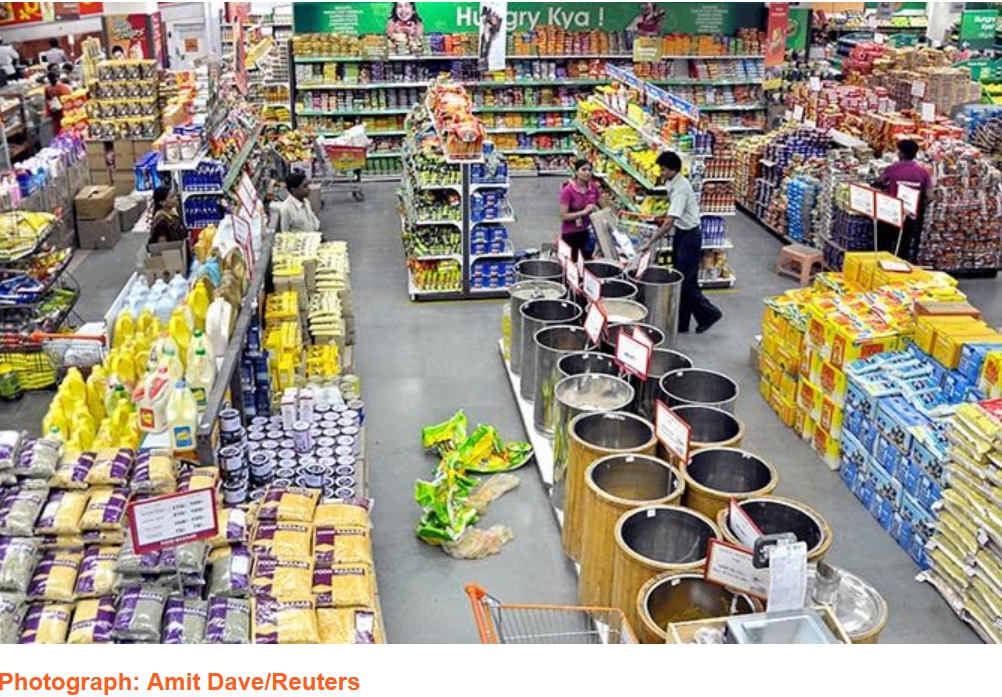
Experts point out that gross margins in supplying fast-moving consumer goods (FMCGs) are very low.
While it does look attractive because it is the largest part of the consumption market, the last-mile supply chain and retailer are not making money.
“FMCG brands have ensured high margins for their businesses by streamlining and smoothing their supply chains over decades and making them cost-efficient,” said Anshuman Singh, founder and managing director, Stellar Value Chain Solutions.
Singh said in rural markets, the costs of supply chains were proportionately high due to lower volumes.
He added: “The low margins in the last leg of the FMCG rural supply chain make it difficult for new-age rural distribution players to offset the high costs.”
Devangshu Dutta, chief executive officer, Third Eyesight, a consultancy firm, said modern B2B (business-to-business) players had tried to step in to replace the traditional links in supply chains with price incentives and a large selection of products.
“Traditional distributors and wholesalers don’t just add costs but also add value, including aggregating demand for brands, disaggregating supplies for small retailers, providing market intelligence to both ends of the chain, and giving credit to retailers and a sort of financial guarantee for manufacturers,” Dutta said.
He said for their business models to work — online or offline — B2B businesses needed a significant concentration of demand, which had been tough to get in many locations.
On July 6, 2022, the Competition Commission of India (CCI), in the dispute between biscuit manufacturer Parle and B2B player Udaan, upheld the plea of the former, saying it did not violate competition laws. Parle had refused to sell its products directly to Udaan.
Udaan was the first B2B start-up to have a run-in with a well established brand, which was not interested in moving away from the traditional distribution model.
What has that meant for Udaan? It has meant tweaks to its business.
It further diversified its product portfolio so that its access to the market was not impacted.
It forayed into the mobile accessories segment as local brands tapped into its network of over 3 million retailers.
Earlier, this year it expanded its reach in the miller segment, which supplies staples like pulses, grains, wheat, rice, and oil.
Udaan aims to take on board about 100 miller partners per quarter.
It works with over 500 miller partners, supplying over 10,000 SKUs (stock-keeping units) to retailers and kirana owners, according to the company in an interaction with Business Standard.
The other company that recently had to tweak its business or go back to its focus on rural India is Pune-based ElasticRun.
B2B start-up ElasticRun has decided to focus on the core business and wind up its new expansion plans.
Backed by SoftBank and Prosus Venture, ElasticRun, which typically runs distribution for FMCGs in rural areas, decided to expand and also cater to retailers within city limits, i.e. tier 1 and tier 2 markets that had a strong distribution owing to companies having direct distribution in those areas.
“We initiated a pilot for urban markets. But through the year, as the macro changed, we decided not to pursue the urban pilot and focus on our core of rural business … we have to part ways with almost 2 per cent of our employees,” said Sandeep Deshmukh, co-founder and chief executive officer, ElasticRun, in an earlier interaction with Business Standard.
ElasticRun extends the reach of the brands’ direct distribution networks to deep rural markets. It enables access to a set of net new stores and customers, who were not accessible through traditional distribution networks.
The need to spend in order to get market share has caused well-entrenched players like Amazon to pull out of some of its distribution business.
Amazon India has decided to shut down Amazon Distribution, according to sources. This follows its recent decision to close down its food delivery and edtech offers. The moves are part of the annual operating planning review process amid global macroeconomic uncertainties. The e-commerce giant is looking to focus on its core businesses, sources said.
Amazon Distribution operates a platform where sellers sell FMCGs and apparel products from companies and distribute them among kiranas and small neighbourhood stores.
However, this unit operated in only three cities of Karnataka — Bengaluru, Mysuru, and Hubbali.
(Published in Business Standard)
admin
June 7, 2023
M. Sriram and Aditya Kalra, Reuters (MUMBAI/NEW DELHI)
June 7, 2023
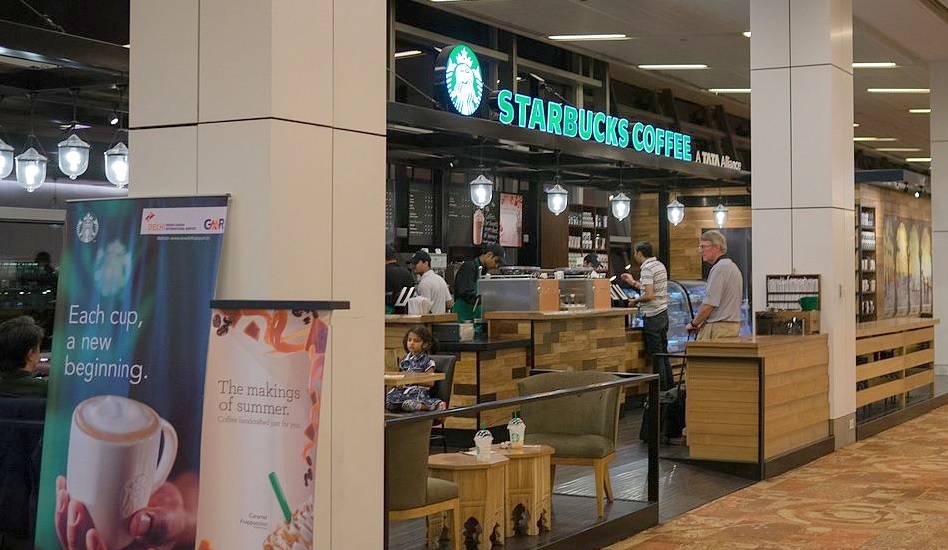
Starbucks is revamping its strategy to lure Indians, including children, with smaller, cheaper beverages as it looks to expand in small towns amid a fierce challenge from domestic startups in one of its fastest-growing markets.
Among the first foreign coffee brands to enter tea-loving India, the U.S. giant has taken almost 11 years to open 343 stores, in contrast with private equity-backed chains Third Wave and Blue Tokai that opened about 150 in the last three years.
“As you grow in size, you need to get new consumers,” said Sushant Dash, the chief executive of Starbucks in India, adding that the chain’s “pricing play” would help shatter a perception that it is expensive.
The company has launched a six-ounce drink, “Picco”, which starts at $2.24, and milkshakes for $3.33 as part of its revamp to target affluent Indians who prefer smaller servings.
Starbucks plans to open more stores in smaller towns, said an industry source, who spoke on condition of anonymity.
Both its new offerings are unique to India and unavailable in China, Singapore and the United States.
India’s small but fast-growing specialty tea and coffee cafe market is worth $300 million and set to grow 12% each year, Euromonitor estimates. Canada’s Tim Hortons and Britain’s Pret A Manger are also expanding, but have only a handful of outlets.
“Excessively large portion sizes are an American phenomenon,” said Devangshu Dutta, head of retail consultancy Third Eyesight.
“Indian consumers are value-conscious. If adjusting portion sizes down to what is more normal helps make prices accessible, that’s a double win.”
He was among the analysts who felt the move by Starbucks, operating in India in a joint venture with Tata Group, could further boost its sales, which hit a record $132 million in fiscal 2022/23.
Although Starbucks still dominates in India, rivalry is fizzing in the capital, New Delhi, and the technology hub of Bengaluru, where many Third Wave cafes are often as crowded as Starbucks outlets.
“We’ve lost 30 cups a day to them,” said a barista at a Starbucks shop in Delhi that sells 7,500 drinks a month, referring to a Third Wave that opened nearby months ago, but already sells 3,700.
Starbucks has faced homegrown challengers elsewhere, most notably in China, where its 6,200 stores service the biggest market outside the United States.
There, in just the last five years, Luckin Coffee has used discounts to lure customers to its 10,000 mostly pickup or delivery stores.
Bet On Chai
In India, where Starbucks has added domestic touches to its offerings over the years to boost their appeal, it is now stepping up that game, just as global giants McDonald’s and Domino’s have done.
It estimates that just 11% of Indian homes drink coffee, as opposed to 91% drinking tea. Hot milky tea, or “chai” as it is known in Hindi, is sold at roadside stalls by the hundreds of cups each day for as little as 10 rupees (12 U.S. cents).
Starbucks, which offered for years just one milk chai “latte” made with tea syrup, has launched “Indian-inspired” tea offerings laced with spices and cardamom, both favourites in many Indian homes, which start at 185 rupees ($2.24).
The drinks were introduced to attract those who do not drink coffee and shun Starbucks, said Dash, adding the company would retain its focus on coffee and not make chai a primary offering.
The launch of smaller, cheaper beverages in India indicates Starbucks may have seen “a decline in traffic related to a pushback” on higher prices, said Chas Hermann, a U.S.-based restaurant consultant and former Starbucks executive.
Competition, Small Cities Push
In May, people lured by a one-for-one offer queued in a street outside the first Starbucks store in the western city of Aurangabad, a YouTube video showed in scenes reminiscent of when it first opened in India.
But its rivals are catching up and a price war has begun.
Soon after Starbucks’ May launch of $3.33 milkshakes, designed to attract children, Third Wave launched its own range, a fifth cheaper at $2.71.
In Bengaluru, startup investors and founders hold meetings in Third Wave outlets. It has more than 40 stores there, exceeding the 35 of Starbucks, data from real estate analytics firm CRE Matrix shows.
Third Wave’s chief executive, Sushant Goel, said he planned to add 60 to 70 stores every year, with a focus on big cities. He saw Starbucks’ cheaper, small-sized drinks as a response to competition in “an incredibly price-sensitive market”.
Matt Chitharanjan, chief executive of Blue Tokai, said it had “seen success in converting customers from Starbucks”, partly because of lower prices.
While Dash said he was undeterred by competition, Starbucks recognises the threat, although privately.
In one lease deal for a Bengaluru mall reviewed by Reuters, Starbucks inserted a “cafe exclusivity” clause barring the mall owner from allotting space on the same floor to rival “premium” brands, including Third Wave and Blue Tokai.
“Going deeper into smaller cities, beyond the metros, is the only way to grow,” said Ankur Bisen, head of retail at India’s Technopak Advisors.
(Reporting by M. Sriram and Aditya Kalra; Additional reporting by Anushree Fadnavis in New Delhi, Varun Vyas and Euan Rocha in Bengaluru, Miyoung Kim in Singapore, Sophie Yu in Beijing and Hilary Russ in New York; Editing by Clarence Fernandez)
admin
May 26, 2023

Chloe Cornish in Mumbai and Eleanor Olcott in Hong Kong, Financial Times
May 26 2023
India’s biggest company Reliance Industries is seeking to dominate the country’s $10bn online domestic fashion market, striking a deal with Shein that will allow the rapidly growing Chinese retailer to return to the world’s most populous nation.
The retail unit of billionaire Mukesh Ambani’s petrol-to-telecoms conglomerate will tie up with Shein three years after India banned the online retailer’s app in its attempt to freeze Chinese companies out of the local market in retaliation for border clashes that had left at least 20 Indian soldiers dead.
“We can confirm Shein’s partnership with Reliance Retail and have no additional comment at this time,” said Shein, declining to answer questions about the structure of the deal. Reliance did not respond to queries about the partnership, which was first reported by the Wall Street Journal.
The addition of a low-priced offering gives India’s biggest listed company by market capitalisation an important boost in its battle to dominate the country’s growing online fashion retail market, which was worth $10bn in 2022, according to analyst estimates.
As part of the licence agreement, which was recently approved by the government, Shein will receive a percentage of profits generated from its fast fashion sales in India, people familiar with the deal said, while Reliance will help Shein build a supply chain with India’s garment industry for global exports.
The move into Indian sourcing comes as Shein diversifies its supply chain outside the coastal province of Guangdong in southern China, where it has 8,000 suppliers, mostly located in the garment hub of Panyu. Pandemic-era supply chain bottlenecks, rising labour costs in China and geopolitical tensions between Beijing and Washington have propelled multinational companies, including Apple and clothing retailer Mango, to migrate parts of their supply chains out of the country.
Shein, which does not sell in China, has been seeking to distance itself from its home country. Last year, it made its Singapore arm the de facto holding company, rapidly expanding its workforce there and shifting some of its operations from its China headquarters in Nanjing.
Shein will seek to minimise delivery times by having more manufacturing centres around the world. India, meanwhile, hopes to benefit from multinationals’ “China plus one” movement, a strategy that seeks to avoid investing only in China and aims to diversify supply chains to other countries.
Reliance has signed agreements with international luxury brands ranging from Balenciaga to Burberry, catering to India’s small but growing demographic of super-rich consumers. In addition, it has nearly 13,000 bricks-and-mortar stores across the country selling affordable apparel.
“Reliance’s other international brand partnerships are more premium, being luxury or designer brands,” said Devangshu Dutta, chief executive of consultant Third Eyesight. “India is still a relatively low per capita income economy. The bigger opportunity is in brands which are euphemistically called value brands, and that’s where Shein is positioned.”
For Shein, access to the Indian market will allow the company to boost sales as the pace of its expansion in Europe and the US begins to lose steam, according to people briefed on its growth figures.
The Financial Times reported that in a recent presentation to investors, Shein forecast that gross merchandise value — the total value of merchandise sold on its platform — will almost triple by 2025 to $80.6bn compared with the figure last year.
The lofty revenue projections come ahead of a much anticipated initial public offering, which promises to be one of the largest listings of a Chinese-founded company in years.
In fashion ecommerce, Reliance lags behind Myntra, one of India’s oldest ecommerce players, which merged with Walmart-backed Flipkart in 2014. Myntra accounts for around half of the online fashion market in India, according to Satish Meena, an independent ecommerce analyst based in Gurgaon.
“Myntra is the nucleus” for online fashion, said Ankur Bisen, senior partner at retail consultancy Technopak Advisors, adding that its “cohort” of shoppers is primarily young and urban. “With the Reliance and Shein partnership, they would like to get into this cohort and break the monopoly of Myntra,” Bisen said.
Meena estimates that Reliance’s ecommerce fashion business Ajio has about 4 per cent of market share, while Bisen put Ajio among the “long tail” of ecommerce fashion ventures behind Myntra. Reliance’s JioMart online shop also sells clothes, alongside groceries and electronics.
“If you look at Reliance as a company, it’s about dominance and it’s about long term,” Dutta said.
(Published in the Financial Times)
admin
May 24, 2023

Shambhavi Anand, Economic Times
New Delhi, May 24, 2023
Retailers and shopkeepers will soon not be allowed to seek phone numbers of their customers while generating bills, according to a diktat by the department of consumer affairs, a senior government official said.
Taking the numbers of customers without their “express consent” is a breach and encroachment of privacy, said the official, without wanting to be identified.
The official added that such a move will be classified as an unfair trading practice defined as any business practice or act that is deceptive, fraudulent, or causes injury to a consumer.
Most large retailers mandatorily take down buyers’ phone numbers while generating the bill for their purchases and use them for loyalty programmes or sending push messages.
The move has come after the department received several complaints from consumers about retailers insisting on getting their phone numbers. This will be communicated to all retailers through industry bodies representing retailers soon, the official added.
While the implementation of these new rules may require some adjustments and initial costs for retailers, it is seen as a necessary step towards protecting consumer privacy and ensuring fair business practices in the retail sector, said experts.
While retailers will have to rework their systems in case this becomes a regulation, this won’t stop them from asking for phone numbers of consumers as their loyalty programmes run on these numbers, said Devangshu Dutta, founder of Third Eyesight, a retail consultancy firm.
He added that retailers also use numbers for sending e-invoices and so this could have a cost impact and environmental impact.
(Published in Economic Times)
admin
May 16, 2023

Viveat Susan Pinto, Financial Express
May 16, 2023
The country’s top two organised retailers, Reliance Retail and DMart, are shifting focus to the large but fragmented pharma retail market in India in their quest for growth. The Rs 2-trillion domestic pharma retail industry is largely dominated by mom-and-pop stores, much like the fast-moving consumer goods market and kiranas.
On Saturday, Avenue Supermarts, which runs the DMart chain of stores, said it had set up a new subsidiary called Reflect Healthcare and Retail to launch pharmacy shop-in-shops. Reliance Retail, on the other hand, proposes to step up the launch of offline pharmacy stores under Netmeds, the e-pharmacy company it acquired in August 2020. Netmeds is now a subsidiary of Reliance Retail.
The plan with Netmeds, according to persons in the know, is to open around 2,000 standalone pharmacy stores in the next few years. Reliance Retail already has around 1,000 shop-in-shop pharma stores across Reliance Smart Bazaar and Smart Point outlets.
During Reliance Industries’ fourth quarter earnings call last month, Dinesh Taluja, chief financial officer of Reliance Retail, said standalone pharmacy stores by the company would be positioned as destinations for pharma and wellness products. The aim, Taluja said, was to leverage omni-channel capabilities to serve customers better.
DMart, on the other hand, has launched one pharmacy shop-in-shop in the Mumbai Metropolitan Region (MMR) for now. But the future plan, according to industry sources, includes rolling out at least four to five more of such outlets in the MMR region in the next few months.
“While e-pharmacies are a growing concept, there is a large population out there that still prefers to go to a nearby pharmacy or medical store to purchase drugs or medicines prescribed or buy over-the-counter products,” said Devangshu Dutta, founder and chief executive of retail consultancy Third Eyesight.
“The number of organised retail chains in the pharma space in the country are limited. This presents an opportunity for organised players like DMart and Reliance Retail to expand their presence in the market,” Dutta said.
Apart from Apollo Pharmacy, which is India’s largest omnichannel pharmacy chain with over 5,000 outlets, the organised pharma retail space in India largely has regional chains or popular standalone outlets within cities catering to a captive market, say experts. So, organised retailers such as Reliance Retail and DMart can disrupt the market if they begin growing their presence.
Analysts at brokerage firm Kotak Securities, however, see DMart’s foray into pharma retail as a pilot programme, which could be scaled up in the future. “This is another pilot that is expected to boost footfalls in DMart’s brick and mortar business using existing store infrastructure,” they said.
(Published in Financial Express)
