
admin
August 24, 2023
admin
August 23, 2023
New Delhi, 23 August 2023
Bindu D. Menon, Financial Express
Tata Group’s Titan Company is not the only one to be bullish on the fine jewellery segment by recently raising its stake in CaratLane from 71.09% to 98.28% for a consideration of Rs 4,621 crore. Other corporate groups as well as private equity firms who have entered this segment are making investments and scaling up.
For instance, recently, Aditya Birla Group entered the gold jewellery market with the launch of Novel Jewels with an estimated investment of Rs 5,000 crore. It also plans to launch large-format jewellery formats and in-house brands.
“The younger generation’s changing style preferences and shopping habits have favoured the growth of jewellery chains and a shift in jewellery designs to lighter, more contemporary styles. This has also facilitated the delinking of the cost and the product price to some extent,” said Devangshu Dutta, Founder, Third Eyesight.
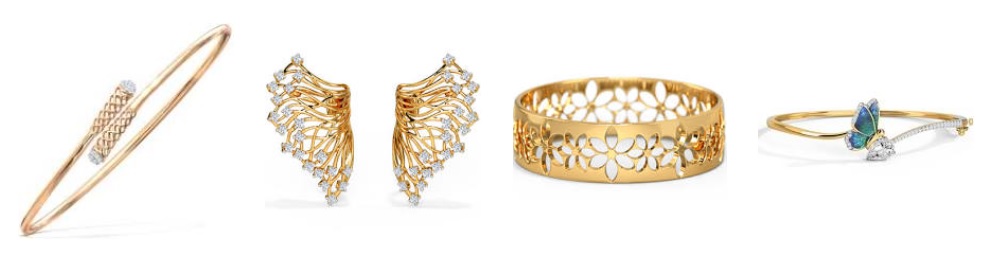
Analysts following the sector said that lighter weight jewellery have been a game changer for the industry. Moving away from the traditional 22 carats jewellery line, younger consumers are opting for 12, 14 and 18 carat jewellery in minimalist designs; a trend largely mimicked from the western markets.
From the companies’ perspective gross margins are invariably higher in design enhanced jewellery as compared to traditional designs.
Leading silver jewellery brand Giva jewellery too had recently bagged a Rs 200 crore funding led by Premji Invest to expand its product line. The round also saw participation from existing investors such as Aditya Birla Ventures, Alteria Capital and A91 Partners. Giva reportedly launches 250 new designs every month, as per the company’s disclosure.
“We look forward to leveraging Premji Invest’s playbook on omnichannel across several consumer brands and retail businesses to strengthen our leadership position and establish our pan India presence,” said Ishendra Agarwal, founder and CEO, Giva.
Giva plans to use the capital for inventory management and expanding its offline presence in India. The company has secured Rs 130 crore funding till date, excluding the current funding.
Fine jewellery in India are priced between Rs 5,000 to Rs 50,000. Major players in the segment include Caratlane, Tanishq, Bluestone among others.
(Published in Financial Express)
admin
August 18, 2023
Viveat Susan Pinto, Financial Express
August 18, 2023
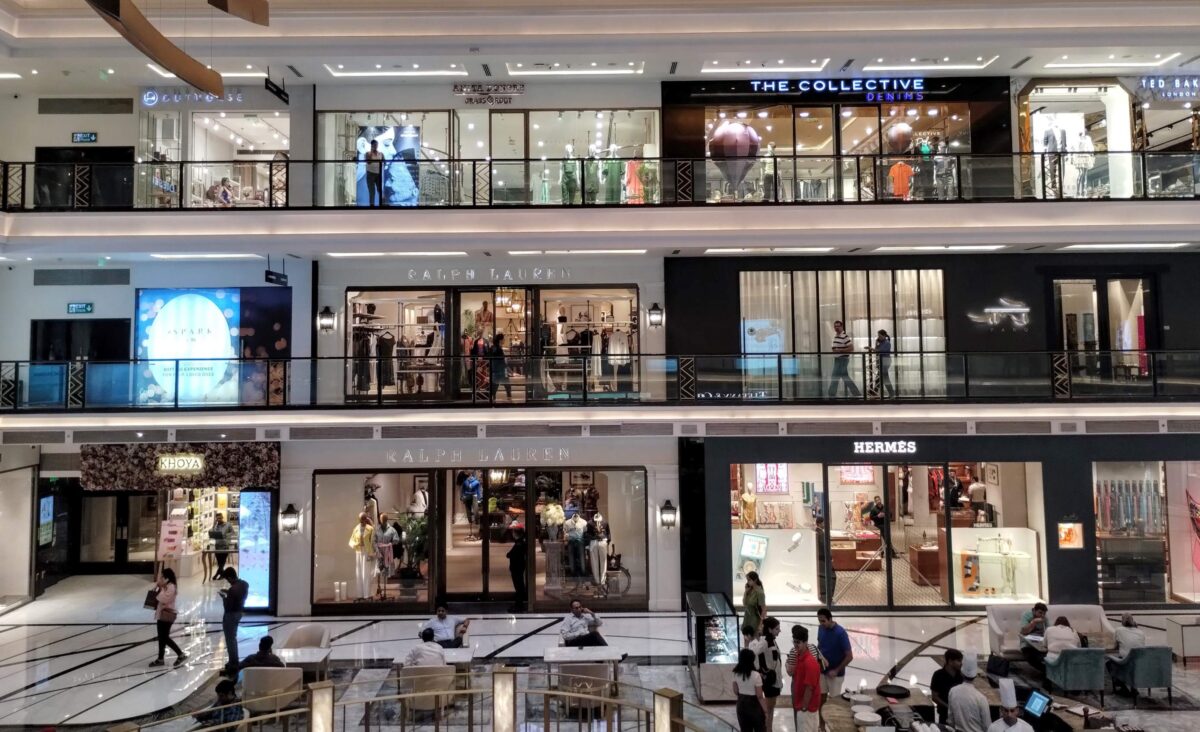
Retail activity in the country is set to increase with some 20 foreign brands likely to enter India in the next 6-8 months, according to retail consultants and experts. This is double the number of about 10 foreign brands that would enter India annually in the pre-pandemic period.
An attractive retail market and growing affluence and consumer tastes are among the key reasons for the interest shown by foreign brands in India, said experts. Also, large groups such as Reliance and Aditya Birla are open to partnerships with foreign brands, with Reliance Brands, part of Reliance Retail, in particular, being the most aggressive of the lot.
“Global markets are witnessing slowdown and recessionary concerns, which is hurting retail sentiment. In contrast, retail sentiment in India is upbeat despite food inflationary pressures. Spending across non-essential categories will also grow as the festive season nears,” said Abhinav Joshi, head of research, India, Middle East & North Africa at consultancy CBRE.
The consultancy on Thursday released a report which said that retail leasing activity in India had grown 24% year-on-year in the first half of CY2023, led by foreign and domestic brands. The second half of the year was also expected to see a strong double-digit rate of growth in terms of leasing activity, with overall retail leasing likely to touch 5.5-6 million sq. ft. at the end of the CY2023, second only to the peak of 6.8 million sq. ft. seen in CY2019.
Of the names eyeing an India-entry in the next few quarters include labels such as Italian luxury fashion brand Roberto Cavalli, American sportswear and footwear brand Foot Locker, Armani Caffe, the luxury cafe brand of Armani, British luxury brand Dunhill, Dubai’s Brands for Less, Old Navy and Banana Republic from Gap, Chinese brand Shein, Maison De Couture from Valentino, Spanish luxury brand Balenciaga, EL&N, a UK-based boutique cafe, Galleries Lafayette from Paris, Kiabi, Mavi, Damat, Dufy, Tudba Deri, Avva, Boohooman and Miss Poem, all apparel brands from Turkey and Europe, say industry sources.
Barring Galleries Lafayette which has tied up with Aditya Birla Fashion and Retail for its India entry, most other names are either talking to Reliance Brands (part of Reliance Retail) or have tied up with the company, persons in the know said. For instance, Balenciaga, EL&N, Shein, Gap’s Old Navy and Banana Republic, Armani Caffe, Maison de Couture from Valentino have tied up with Reliance Brands for their India entry. Executives at Reliance Brands were not immediately available for comment.
Most of these brands are eyeing a presence in cities such as Mumbai, Delhi-NCR, Bengaluru and Hyderabad in the first phase of launch, before expanding their presence to other cities such as Pune, Ahmedabad, Chennai and Kolkata.
“The India retail opportunity is a compelling one, which most foreign retailers don’t want to miss,” says Devangshu Dutta, chief executive officer at Gurugram-based consultancy Third Eyesight.
“Some of the brands who’ve come earlier have also tasted success especially in the fast fashion category. This is an indication that brand awareness is growing and that people are ready to spend on global products as discretionary incomes grow,” he says.
On Wednesday, Japanese fast fashion retailer Uniqlo said that it was setting up two new stores in Mumbai in October, after launching 10 stores in the north over the last four years. The company’s chief executive officer Tomohiko Sei indicated that the retailer was open to new markets and store openings, but would focus on Mumbai for now.
CBRE says that Mumbai has seen retail leasing grow by 14.6% year-on-year in the first half of CY2023 on the back of a push by foreign brands to acquire space in the city. Delhi-NCR, meanwhile, reported a higher 65% year-on-year growth in retail leasing in the first half of the year, led by retail activity by both foreign and domestic brands.
(Published in Financial Express)
admin
June 30, 2023
Pooja Yadav, Afaqs
June 30, 2023
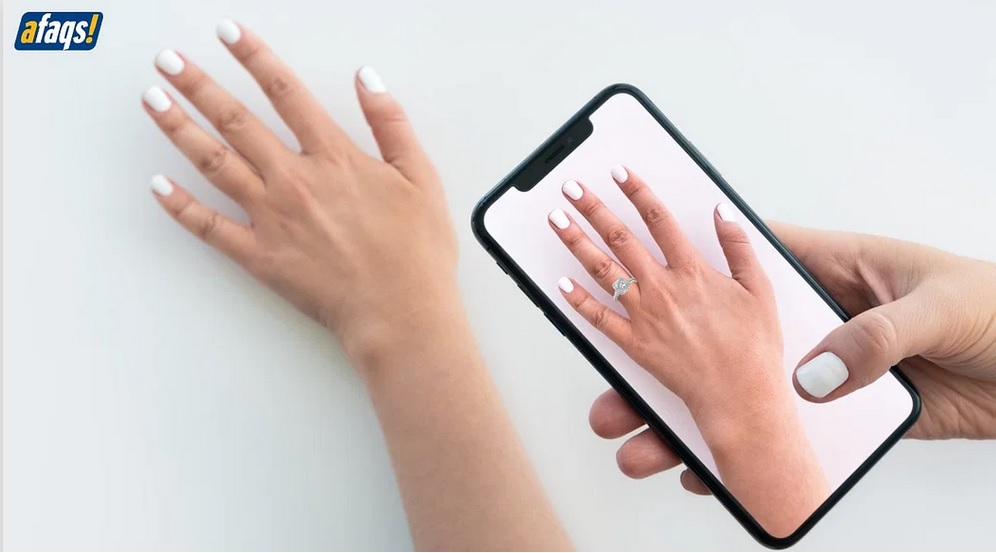
Over the last two-three years, we have seen technology innovations making its way into the Indian jewellery sector. Brands have been trying to transform the online jewellery segment by using various technologies like augmented reality (AR), artificial intelligence (AI), live video assistance, computer-aided design (CAD), computer-aided manufacturing (CAM), and more.
Despite the numerous innovations, the offline jewellery segment is still ahead of the online space, when it comes to sales. What makes the offline jewellery segment outpace the online segment?
The Indian e-commerce market is expected to grow to $111.40 billion by 2025 from $46.2 billion in 2020, as per an International Institute of Gemology report. While the segment remains to grow, what drives it back is the customer preference for physical jewellery stores.
Vipin Nair, marketing head & CRM at Malabar Gold & Diamonds, points out, “As of now, there seems to be no real alternative to trying on jewellery pieces in a retail store. Brands have been able to crack the logistics part, but not the ‘feel’ part. AR/VR has been around for a long time, but it doesn’t give you a feel of the jewellery pieces. It is a poor technology. The big purchases will continue to happen only in offline stores.”

Nair adds that despite the many challenges in the online space, it is now growing faster than before. “Earlier, there was a disconnect in the online segment. A customer had to wait for two-three weeks to receive a product. The online platforms seem to have cracked this business model, as whatever you like today, you can order and get it in a day’s time.”
Online jewellery segment started gaining popularity in 2020. In 2018, Tanishq started its e-comm website, and many other brands accompanied it in the online journey. What started with Tanishq has become a new journey for many start-ups and brands in the online space.
During Covid, the jewellery industry has been one of the worst-hit. Advent of online shopping and consumers relying on digital platforms during pandemic, helped brands strategise and invest more on online platforms.
According to Devangshu Dutta, founder and chief executive of Third Eyesight, trust is important when one is buying jewellery.
“It’s not a question of innovations. You can have virtual trials, whether it is online or in a store. But at the end, the customers have to see the piece and then buy it. Even if you are an online brand, you have to be able to offer an omnichannel experience. You have to enable in-home experience.”
As per Dutta, what’s required in this segment, is a change of mindset. “The share of online and modern retail will grow with time.”
Brands like Tanishq, Bluestone, Malabar, Kalyan Jewellers, Tata CLiQ, etc., are working on newer technologies. Then there are new players like the Aditya Birla Group that is set to foray into the branded jewellery retail business, with an investment of Rs 5,000 crore. The group’s new venture ‘Novel Jewels’ will have in-house brands in large-format exclusive retail stores across India.
Rashi Goel, founder and CEO, Performonks, says that the new brands entering the category, are trying to change the rules of the game. “These brands cater to working women, who want lighter, modern and fashionable pieces that they can match and wear with their outfits every day. So, the battle will be of brand building.”
“Tanishq offers light pieces, but tends to advertise heavy wedding jewellery, because that is in line with the category codes. The Aditya Birla Group will have to differentiate itself through the product experience. It will have to tell a brand story that takes the category narrative forward. If it is targeting young women looking for modern styles, it may benefit by having a direct-to-consumer (D2C) element (alongside retail stores in big cities). It could incorporate technology, where women can ‘try on’ jewellery virtually on the app.”
Recent trends
Citing the World Gold Council, Asian Lite International reports that there is a growing demand for lightweight and studded jewellery. Bridal jewellery alone accounts for at least half of the market share.
“Women prefer lightweight jewellery because it is practical and blends well with a modern lifestyle,” shares Nair of Malabar Gold & Diamonds.
Technology innovations may bring in some challenges, but they are also helping many people, in terms of convenience and choice. The online segment, which is still a fraction of the offline segment, is lately generating interest among digital savvy millennials.

Puneet Mansukhani, partner, KPMG in India, states that the online jewellery space has been garnering significant attention, especially amongst the millennials.
“Customer expectations are changing. Personalisation is playing a critical role. Technology involvement is increasing by the day, with AR taking the lead. However, the industry still has to tackle challenges around pilferage.”
On the upcoming trends, Mansukhani says, “Jewellery which is made to order with a modern look of hyper-personalisation (customised), is gaining importance, considering that value and convenience continue to be the top drivers of consumption.”
Manufacturers are increasingly focussing on producing lightweight pieces to satisfy the demands of young consumers, especially those who want to wear gold jewellery that matches with their western outfit every day, as per a World Gold Council report.
According to Third Eyesight’s Dutta, since fashion (lightweight) jewellery usually doesn’t cost much, “a consumer is not that invested in it. You can buy it online, like any other fashion product.”
The World Gold Council report adds that studded jewellery – known as ‘Polki’, ‘Kundan’ or ‘Jadau’ – has an estimated market share of 15-20%. The share of studded jewellery in North India is considerably higher. In South India, consumers are more inclined towards gold products, 60-70% of which are studded with diamonds and the remaining 30-40% are set with precious or semi-precious stones.
Jewellery landscape
In India, jewellery was traditionally purchased for investment purposes. People used to believe in buying heavy jewellery. But now, there’s a shift towards versatility and contemporary jewellery.
Nair states, “Contemporary designs are getting a lot of traction lately. It was not the case 10-15 years back. Lightweight jewellery is now in vogue and heavy jewellery is restricted to occasions like weddings. People now are looking for something practical. They are more into the design, quality, etc.”
Will the changing consumer preferences impact the bridal jewellery market?
Bridal jewellery dominates the gold jewellery landscape, with 50-55% of market share. Indians usually purchase gold for two occasions – weddings and festivals.
Around 11-13 million weddings take place in India every year. With women marrying at an average age of 22 and more than half of the country’s population below the age of 25, the demand for bridal jewellery will remain strong over the long-term, as per the World Gold Council data.
Going forward
The jewellery manufacturing landscape in India is largely unorganised and skill-intensive. Most jewellery pieces are still hand-crafted by artisans.
“Hence, the scale continues to be limited. Although we are gradually seeing jewellery retailers invest in large set-ups. We are also witnessing the overall jewellery market heading towards formalisation on the back of GST, government policies around hallmarking and exports,” shares Mansukhani of KPMG.
“For large players looking to enter this space, automation and focussing on in-house manufacturing, could help jewellers counter the high manufacturing charges.”
admin
June 9, 2023
By Pavan Lall, Fortune India
Jun 9, 2023
For fashion designer Tarun Tahiliani, getting funding from a corporate house was incidental. It happened through a high-profile customer, none other than Aditya Birla Group chairman Kumar Mangalam Birla. Birla had been a customer of Tahiliani’s Ensemble some three decades ago when he was getting engaged. They stayed in touch over the years and at one stage discussed the need for an Indian fashion brand focused on scale and accessibility. “It came out of a conversation and was a two-year ambling route. I had asked if they were expanding their designer brand footprint, and he (Birla) told me to meet the Aditya Birla Fashion and Retail (ABFRL) CEO for a deeper chat,” recalls Tahiliani.

The result was Tasva, a sub-brand that Tahiliani has a minority stake in. The focus was to zero in on the ethnic space, not lose out on the homegrown touch, yet keep user-friendly clothes in traditional silhouettes at accessible price points that were not haute couture. Launched in December 2021, Tasva primarily caters to the premium occasion-wear segment, and has been growing at a fast pace.
Raising Cash
Tahiliani, who got ₹67 crore funding for a third of his company with an option to further offload up to 20%, isn’t the only one to see corporate finance push capital into his designs and stores. Sabyasachi Mukherjee of Kolkata, who opened a large multi-level store in a heritage-style building early this year in Mumbai, sold a little over half his company to Birla, reportedly for around ₹398 crore. ABFRL has also bought a 51% stake in House of Masaba Lifestyle, the entity that houses apparel, personal care, and accessories businesses under brand ‘Masaba’ owned by designer Masaba Gupta. Besides the Aditya Birla Group, Mukesh Ambani-led Reliance Brands has bought a 52% stake in Ritu Kumar, 51% in Abu Jani Sandeep Khosla, and 40% in Manish Malhotra. Earlier, in 2008, Kishore Biyani’s Future Group took a 23% stake in Anita Dongre, which was later sold to private equity player General Atlantic for ₹150 crore.
“While we are reaching a sense of critical mass in terms of consumer base, luxury is not new to India. Designers have been flogging their wares for decades,” says Devangshu Dutta, founder of Third Eyesight, a consultancy firm focused on consumer goods and modern retail. “What has changed is the size of the target audience.”
According to a recent Knight Frank wealth report, India is set to see a projected 58.4% increase in ultra-high-net-worth individuals, those with a net worth over $30 million, from 12,069 in 2022 to 19,119 in 2027. The domestic apparel market, too, was pegged at $60 billion last year, not far behind the developed world, a McKinsey’s FashionScope report has said.


“Earlier, India was a country that just produced for the world. Today India is also becoming the largest consumer market. International brands are keen to invest in business relationships with India. India will change the game for luxury. Where else will you get a billion people who are of a young age, and will be the future luxury buyers of brands?” says Sabyasachi.
“The economy has expanded beyond bigger cities, which has raised the consumption size” adds Dutta of Third Eyesight.
Corporate Handholding
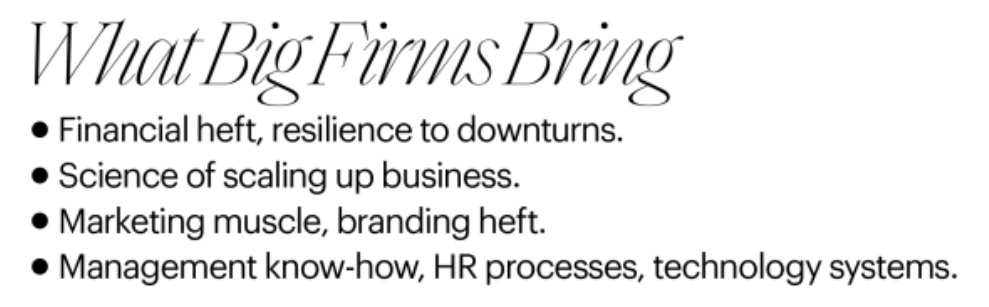
“Corporate involvement helps scale faster than organically, and a lot of designers are tying up with companies with technical expertise and go-to-market for smaller towns and cities,” says Anita Dongre. “For a designer, having a corporate brings in processes, technical expertise and management know-how, and helps her focus on designing,” she adds. In Sabyasachi’s case, too, a new CEO — Sumati Mattu, as well as a new HR head and COO, were brought on board to prepare for the brand’s expansion.
For Sabyasachi though, it has helped in creating a safety net, especially for his employees, more than anything else. “Right now we have two investors — me and Birla together, so it makes me feel protected. Nothing else has changed. The only thing that has changed is that we have a great HR policy with the Birlas; they will be able to look after my people better, as I have created a beautiful safety net for all my employees.”
Dutta, on the other hand, says that “for large companies in the fashion space such as Aditya Birla, it is a natural step to buy into an established brand with scale since brand recognition combined with capital and organisational structure make for a win-win. The platform of fashion is currently at the right juncture to replicate networks and create scale,” he adds.
Other designers, including Manish Malhotra, who has also received funding from Reliance, say, “corporatisation of fashion houses in India has brought about a safety net for luxury brands, making us push for larger creative forces and expansion in terms of scale, branding and customers.”
Growing Into India
Tahiliani says we have opened 55 Tasva stores and will reach 90 in this financial year. Tasva crossed around ₹60 crore in annual revenue in 2022, and is set to hit ₹200 crore this year, he adds.


Similarly, Dongre, widely regarded as the largest designer and fashion house by revenue, has around 150 stores across brands, and Global Desi, a substantial increase from the 10-15 stores she ran before receiving her first funding. “The added benefit is that such funding helps push into international markets.” While Dongre launched her stores in Dubai and New York a few years ago, Sabyasachi launched a New York-located store in West Village last year.
So, what’s the road ahead?
“Corporate India has successfully built large-scale fashion businesses and acquired international brands, but has not been able to create a homegrown luxury brand of cultural or social significance. That will change now,” says Sabyasachi. Jewellery is set to be his focus, along with sunglasses, beauty, shoes, and other categories. “Jewellery is a very important category in the country, a great revenue earner,” he says.
“The film industry was corporatised because its potential was discovered, now it is fashion’s time,” adds Manish Malhotra. “Corporatisation lets designers look beyond bridal-wear, occasion-wear, and focus on newer creative strategies as there’s more space and potential for experimentation.”
Tahiliani agrees that compared to overseas, the trend is an expected one. “Most of the brands abroad have seen stellar growth because they have been aligned with corporate houses.” He points to the famous Alexander McQueen, who started in 1992, and was discovered by Isabella “Issie” Blow. The tie-up allowed him to expand his label, open boutiques around the world, and push into the categories of perfume, eyewear, accessories trainer and clothes for men.
Globally, France-based Kering group owns designer labels Gucci, Alexander McQueen, and Balenciaga, among others. LVMH Moët Hennessy Louis Vuitton, commonly known as LVMH, owns Loro Piana, Fendi, Christian Dior, Kenzo and Marc Jacobs.
The question then is, with all the global exposure and corporatisation, will there be a shift in Indian design sensibilities?
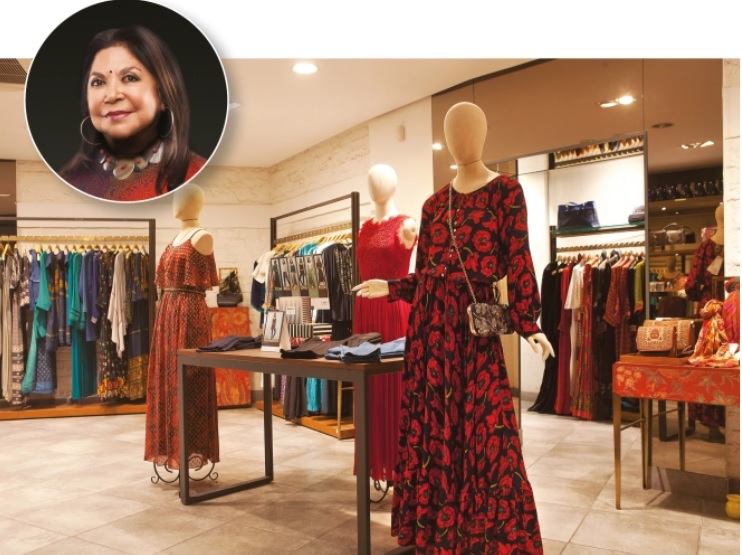

“Now you see people wearing bold gowns or black ties for one or two events, but Indians have kept a unique spirit of celebration and culture unlike anywhere else in the world. Bollywood has played a huge part in amplifying this because of the song and dance and colours and events such as Holi and Sangeet,” feels Tahiliani.
The bottomline: Luxury fashion is now more inclusive, and regional customers are the next big target area for brands.
(With inputs from Priya Kumari Rana)
(Published in Fortune India)
