
admin
September 23, 2022
Sagar Malviya, The Economic Times
September 13, 2022
Uniqlo, Asia’s biggest clothing brand, has turned profitable in India in less than three years after it opened its first store in the country despite operating in a period marked by Covid-led lockdowns and restrictions.
The Japanese brand posted a net profit of ₹21.4 crore for 2021-22 compared to a loss of ₹36.1 crore in the previous year, according to business intelligence firm AltInfo. Its sales rose 63% year on year to ₹391.7 crore for the year to March 2022, a slower pace compared to FY21 when it clocked 86% sales growth on a low base.
Experts feel Uniqlo’s strategy of pricing its merchandise at least 20% higher than rivals Zara and H&M has helped it earn better margins despite inflationary pressures in terms of raw materials.
“The market is not easy and turning profitable at a time when most rivals are spending aggressively is a good indication of success. As an international brand, they (Uniqlo) are able to get good locations and are preferred tenants, which helps in generating sales, especially in top cities,” said Devangshu Dutta, founder of Third Eyesight, a strategy consulting firm. “However, the pricing is a bit premium and until they are able to source locally, selling products at a right value for the market will remain challenging.”
The Japanese brand opened its first door in the country in September 2019, but stringent lockdown measures announced in March 2020 to contain the Covid-19 outbreak delayed its store expansion plans, restricting its store count to about seven outlets so far.
Uniqlo has said India is one of the most priority markets where consumers are increasingly shifting from ‘fast-fashion’ to long-lasting essentials and functional wear. “India is an important and very big priority market,” Tomohiko Sei, CEO of Uniqlo India told ET in June.
(Published in The Economic Times)
admin
July 27, 2022
Written ByAlakananda Chakraborty
Brand’s positioning may be just below Starbucks

It is against this background that Reliance Brands (RBL) announced its strategic partnership with global fresh food and organic coffee chain, Pret A Manger (PAM).
By Alokananda Chakraborty
India may boast of the presence of several marquee international coffee chains, but none of them, with the possible exception of Starbucks, have been able to make much of an impact. The reasons are obvious; for one, India is largely a tea-drinking market, with coffee penetration still at just about 11%. Coffee remains largely an in-home consumption drink. Then there are the usual challenges of getting prime real estate at a reasonable cost and consumers’ capacity to pay. The pandemic, which disrupted food supply chains and the overall demand, delivered a body blow, leading to shutdown of around 8% of the outlets during 2021.
It is against this background that Reliance Brands (RBL) announced its strategic partnership with global fresh food and organic coffee chain, Pret A Manger (PAM). The first store will open by the end of this financial year. While RBL is tight-lipped about the pricing or positioning strategy, experts say PAM’s biggest advantage is its association with Reliance.
“PAM is a late entrant and would have been at a huge disadvantage if it went alone,” says Anthony Dsouza, executive director & country service line leader, innovation, Ipsos India.
So what does Reliance brings to the table? “Significant investment capability, real estate strength and know-how of retail. These could lead to a much higher scalability and access to the right locations,” says Angshuman Bhattacharya, national leader, consumer product and retail sector, EY India. “However, running a café chain also involves building out the right supply chains across the country, which the brand would need to build,” he adds.
Bhattacharya is bang on. The success of an F&B franchise business depends on getting real estate at the right price. Reliance can offer a tremendous advantage here to PAM. Not only does it run a very large retail business, it also owns malls.
Experts say a lot would also depend on the right pricing. Pramod Damodaran, who had relaunched Costa Coffee India in his earlier stint as COO for that firm, and is now CEO of Wagh Bakri Tea Lounge, says, “There’s a big space between the 240 and170 for a cup of cappuccino, that is, just below the Starbucks/Costa Coffees of the world.”
PAM will probably occupy that window – it is unlikely to be a premium offering for two reasons. One, PAM is primarily a sandwich chain in the UK and it’s not clear how much premium it can command for a pre-made sandwich. Two, if PAM were to take advantage of the retail footprint of Reliance and were to follow a shop-in-shop format, say, in a Reliance Trends store, it can’t afford to be premium. The positioning would be a consequence of that captive audience.
In other words, the store location will, to a large extent, determine both the pricing and positioning of PAM. Agrees Devangshu Dutta, chief executive of Third Eyesight, a specialist management consulting firm: “At the end of the day, PAM is more a quick service outlet than a cafe. (Pret A Manger means “ready to eat” in French). And the consistency of its offering comes from what is called the pre-prep.”
All PAM outlets in the UK follow the concept of “freshness of ingredients” and “quickness of service”. The hero product – the sandwich in this case – is still a convenience food, a grab-and-go item. It is prepared by a central commissary or multiple commissaries and is at the most heated or packaged at the counter. “So it is not a restaurant and it can’t charge a restaurant price,” says Dutta.
In a sense, Domino’s has perfected this model with a lot of pre-prep done at the commissary end but the actual pizza is prepared “at location” or in the store. “In this case (PAM), you are not doing that volume of work at the consumer-facing counter,” Dutta adds. And if that is the model RBL plans to replicate in the country, the positioning, by default, is mass.
“The PAM-Reliance combination is likely to be a mass market offer, with value pricing and highly localised strategy,” Dsouza of Ipsos says.
But mass or premium positioning, PAM’s entry will no doubt roil the waters. “Incumbents have to up the food game if they want to take on the might of Reliance,” says an executive with a rival brand. Beverages form a dominant part of the café industry sales. Besides food and beverages, merchandising, which is employed largely for branding, is rapidly becoming a source of additional revenue. About 60-65% of café sales come from beverages, followed by food which forms about 20-25% and about 10% from merchandise.
For one, Tata Starbucks, which witnessed a 76% growth and logged `636 crore revenue in FY22, has been working at its food menu and delivery for some time. In a recent interview to FE BrandWagon, Sushant Dash, CEO, Tata Starbucks, had said that the brand had to “re-prioritise” because of the pandemic, with innovation becoming more important to keep the brand relevant. Starbucks innovated with the menu to keep the interest level up among customers and introduced new food items and gave the existing food items an Indian twist,” he had said.
Earlier this month, Starbucks added masala chai, filter coffee and an array of bite-sized snacks and sandwiches to its menu card. Its new milkshakes will be priced starting at 275, while masala chai and filter coffee will start from190. It also introduced the ‘Picco’ – meaning ‘small’ in Italian – starting at `185.
Will that be enough? Given PAM’s strong presence in the food space, there is no denying that existing café chains in India have to tweak their food menu considerably. In other words, they will have to get out of their comfort zones.
Source: financialexpress
admin
July 8, 2022
Akash Podishetty & Krishna Veera Vanamali, Business Standard
New Delhi, 8 July 2022
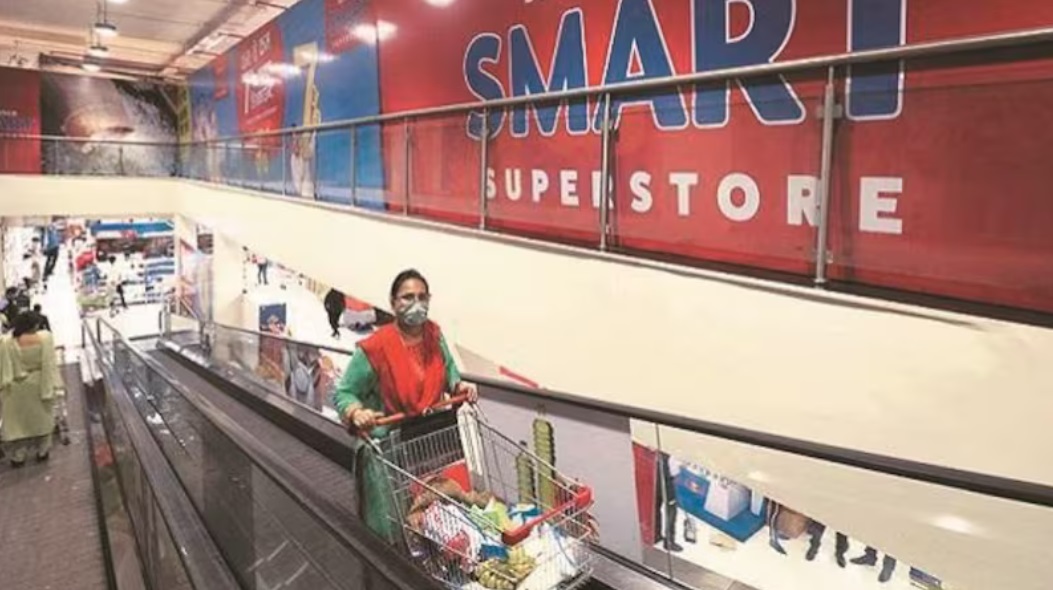
India’s $900 billion retail market has emerged as one of the most dynamic industries and is expected to reach anywhere between $1.3-$1.5 trillion by 2025. The organized retail is seen gaining 15% market share in the overall retail space, while food & grocery and apparel and lifestyle may account for 80% of India’s retail market by 2025.
Large market offers big opportunities. And it looks like Reliance Retail has seized it, with its massive omni-channel retail play of physical stores, B2B with kiranas and e-commerce.
The company went on an acquisition spree and partnerships in the last three years, adding to its portfolio some of the biggest names, including Hamleys, Dunzo, Zivame etc.
It has also partnered with famous global retail chain 7-Eleven. Catering to India’s affluent consumers, Reliance, meanwhile, houses some of the most iconic brands such as Versace, Armani Exchange, GAP, GAS, Jimmy Choo, Michael Kors among others. The premium segment has become one of the fastest growing categories.
Also firming up its inorganic play, the company is planning to acquire dozens of niche local consumer brands to build a formidable consumer goods business.
Arvind Singhal, Chairman and Managing Director, Technopak Advisors says, there’s focus on physical retail expansion. Reliance is looking to cater to both price conscious and brand conscious customers, while trying to capture as much of the private consumption market as possible, he says.
Reliance Retail’s competitors are nowhere close to even put up a fight. The company has over 15,000 offline stores across categories, compared with DMart’s 294 stores or Aditya Birla Fashion’s 3,468 outlets.
Reliance retail’s revenue has grown five times in the last five years and the core retail revenue of $18 billion is greater than competitors combined, according to a Bernstein report.
Speaking to Business Standard, Devangshu Dutta, CEO, Third Eyesight, says, Reliance wants a decent share of Indian consumers’ wallet. From that perspective, Reliance still has a long way to go, he says. As consumer preferences evolve, Reliance too should adapt.
An undisputed leader in the domestic market, the aim of Reliance, according to Mukesh Ambani, is to become one of the top 10 retailers globally. Part of this bet is based on the premise that incomes and consumption power of Indians will increase across the board in coming years. However, could the uneven recovery that different segments of the population have seen stop the pie from growing larger and prove to be a dampener for Ambani’s ambitions?
(Published in Business Standard)
admin
June 30, 2022
Written By Aditya Kalra & Abhirup Roy

MUMBAI, June 30 (Reuters) – Reliance Industries (RELI.NS) said on Thursday it would open outlets of Pret A Manger in India under a franchise deal with the British sandwich and coffee chain, a first foray by the Indian firm in the country’s growing food and beverage industry.
Reliance Brands Ltd (RBL), a unit of the conglomerate that also runs India’s biggest retail chain, would start by opening branches of Pret, as the brand is known in Britain, in big Indian cities, both companies said.
RBL Chief Executive Darshan Mehta said in joint statement the partnership was “rooted in the strong growth potential” of the Pret brand, known for its organic coffee and upmarket sandwiches, and the Indian food and beverage industry.
The first outlet would open in Mumbai before March 2023 and India was expected to become one of Pret’s top three markets in three years, a source familiar with the matter told Reuters.
Pret A Manger, whose name means “ready to eat” in French, first opened in London in 1986. It now has 550 outlets globally, including in the United States and several European states. It is owned by investment group JAB and founder Sinclair Beecham.
In India, the brand will compete with Starbucks (SBUX.O), which has a joint venture with India’s Tata, and Costa Coffee, which is owned by Coca-Cola (KO.N).
Mukesh Ambani, one India’s richest men, runs Reliance, which has more than 2,000 supermarkets and grocery stores in India. Reliance also has partnerships with luxury brands, such as Burberry and Jimmy Choo.
“Reliance wants to look at retail in all its shapes and forms. Over time, they’ve realised partnerships are the way for business formats that may be difficult or slower to crack,” said Devangshu Dutta, head of retail consultancy firm Third Eyesight.
Source: reuters
admin
April 24, 2022
Written By Christina Moniz
Brand and marketing experts, while expressing surprise at the development, as the two labels enjoy significant brand equity, also noted that if true, it highlights the challenges faced by legacy brands, with international brands growing their footprint in the country.

Apparel and textile major Raymond may be in the midst of talks to sell its prized apparel brands Park Avenue and ColorPlus, amid rising speculation about the future of the company’s apparel business. As per media reports, the company is in talks with Danish retail group Bestseller — which houses labels such as Jack & Jones, Vero Moda and Only — for the sale, seeking a valuation of around Rs 500 crore for ColorPlus, and even more for Park Avenue.
Brand and marketing experts, while expressing surprise at the development, as the two labels enjoy significant brand equity, also noted that if true, it highlights the challenges faced by legacy brands, with international brands growing their footprint in the country. Also, legacy brands, especially in the formal wear category, have been facing headwinds ever since the pandemic led to a work-from-home culture.
However, Sunil Kataria, the newly-appointed CEO of lifestyle business for Raymond, told FE these reports are “speculative”, stating that both Park Avenue and ColorPlus currently account for close to 50% of the company’s apparel business. In September last year, the board had approved the demerger of Raymond’s apparel business, which, at that time, was being managed by a 100% subsidiary of Raymond Ltd, Raymond Apparels, explains Kataria. The demerger covers all of the company’s ‘power brands’ — Park Avenue, Raymond Ready to Wear, ColorPlus and Parx.
“We want to double our apparel business revenues in the next three years. We ended up doing business of over Rs 300 crore in Q3 FY22, even at a time when the Covid-19 impact was still there, and that is the clearest proof that the sale of our brands is not on the cards,” asserts Kataria. The company also claims to have plans to further expand its retail footprint for Park Avenue, ColorPlus and even the newly-launched Ethnix brand. Kataria is betting big on the upcoming wedding season and the resurgence of travel in the next few months to drive growth.
Raymond currently has a retail footprint of close to 1,500 stores across 600 cities, of which 300 or so are exclusive outlets for brands like Park Avenue, Parx and ColorPlus.
For Samit Sinha, founder & MD, Alchemist Brand Consulting, said the reports of the sale of these two labels are surprising since both enjoy significant brand equity. “For a long time, Raymond and Park Avenue have been inextricably linked. Independent of its marketing performance, Raymond as a brand continues to hold great aspirational value and still holds its own despite the presence of big international labels,” he remarked, noting that the reported `500-crore valuation would be much below what the brand could command.
On the flip side, the speculation about the sale of these brands also highlights the new reality facing legacy brands in the retail segment — particularly in the formal wear category, with ‘work from home’ eclipsing professional lives. Offline-heavy Raymond has been no exception, with its business being impacted by the pandemic and the consumer shift to online shopping, observes business strategist Lloyd Mathias. “Apparel retailing is a competitive space, and many international brands have been increasing their retail footprint in India. These global companies with deep pockets will continue to grow in size and scale, and penetrate into smaller towns and cities,” points out Mathias. This means that brands like Park Avenue and ColorPlus will face serious challenges in sustaining their growth.
Interestingly, over the last three years, Raymond has increased its footprint in Tier III and IV markets as a part of its growth strategy. Devangshu Dutta, CEO of retail consultancy Third Eyesight, states that when a brand seeks to widen its presence in smaller markets, it is usually because it is facing headwinds in terms of growth, or because there is saturation in demand from the big markets, on account of the large number of international labels entering the country. “The challenge in smaller cities, though, is that the sales density you can achieve is also much lower as compared to the larger ones. You have to have an operation that is growing in terms of topline while also running efficiently to make this kind of expansion strategy successful,” Dutta explains.
Raymond’s Kataria adds that the company will continue to invest in these smaller markets and leverage its current brand equity.
Source: financialexpress
