
admin
March 23, 2023
Sharleen D’Souza, Business Standard
Mumbai, March 23, 2023
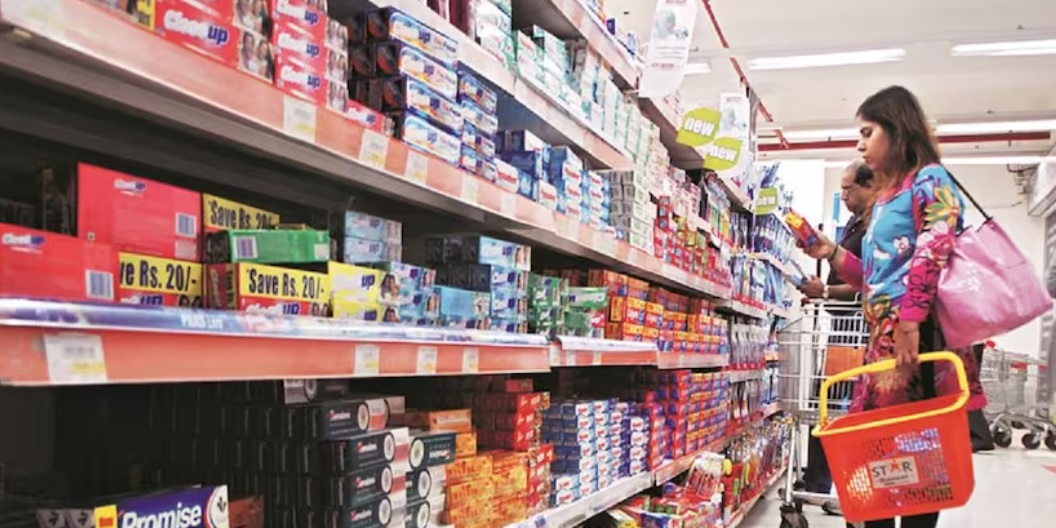
After sparking a price war in the carbonated beverages market through Campa Cola, Reliance Consumer Products has taken the pricing battle to the other segments in the fast-moving consumer goods market.
For instance, in soaps, it has priced its product lower than the market leader in the segment at Rs. 25 for 100 gms across its three brands – Glimmer, Get Real and Puric.
With Glimmer, Reliance Consumer competes with Lux, which sells a 100-gm soap bar at Rs. 36, while Get Real is similar to Hindustan Unilever’s Pears soap bar, which is priced at Rs. 54 for 100 gms. In the hygiene space, Reliance has taken on Reckitt Benckiser’s Dettol, priced at Rs. 40 for 75 gms. Godrej Consumer Products, one of the leaders in soaps sells its Godrej No 1 45 gms (each) pack of 4 for Rs. 40.
In the dish wash category, it captured the main price points of Rs. 5 for 75 gms, Rs. 10 for 145 gms, and Rs. 15 for 200 gms in bars, and Rs. 10 for 65 ml pouch, Rs. 20 for around 140 ml pouch, and Rs. 30 for 200 ml pouch in liquids. HUL’s Vim bar is priced at Rs. 5 for a 60-gm pack and Rs. 10 for a 125-gm pack, while a 300-gm pack retails at Rs. 30.
But Reliance has also moved a step further into the sachet space and is retailing a 5 ml sachet of dish wash liquid at Rs. 1. Other brands do not sell sachets.
On JioMart, the price of RCPL’s Enzo two-litre front-load liquid detergent is Rs. 250, a 43 per cent discount to the maximum retail price (MRP) of Rs. 440; the topload two-litre liquid detergent is available at a 35 per cent discount and now priced at Rs. 250. Its compact detergent powder one kg pack is priced at Rs. 149, after a 12 per cent discount on its MRP of Rs. 170. HUL’s Surf Excel Easy Wash detergent powder is priced at Rs. 150 and Quick Wash at Rs. 240 for a kilogram. But Rin detergent powder is priced for Rs. 103 and Wheel detergent powder at Rs. 73 for 1 kg. Surf Excel’s front load two-litre pack is priced at Rs. 390 and top load at Rs. 370. Tide’s 1.5 kg detergent powder sells for Rs. 225.
In detergents, Reliance has not disclosed which segment it intends to cater to and what price points it will offer in general trade.
Reliance is following the challenger strategy like in the telecom space, said Devangshu Dutta, founder at Third Eyesight. He said this is the fastest way to acquire market share, and since Reliance has deep pockets, it can easily fund market share acquisition by launching its products at a significant price difference compared to rivals.
“Customers will move at least to try the product and if they end up liking the product they will stick to it. This strategy is best suited for market share acquisition,” Dutta explained.
An executive from a top FMCG firm said on the condition of anonymity that there will eventually be a price war in whichever segment Reliance enters. He explained that while Reliance was still setting up its distribution network, over time due to its B2B supply chain, it will be able to push its products into retail
stores.
Some distributors who spoke on the condition of anonymity said it would not be easy to move the leaders in the segment as these companies have a fixed customer base and it might be difficult to topple brands that have been in the market for a while.
Reliance followed the same strategy with its carbonated beverage, Campa Cola. It relaunched Campa at a price point of Rs. 10 for 200 ml, Rs. 20 for 500 ml, Rs. 30 for 600 ml, Rs. 40 for one litre, and Rs. 80 for two
litres.

(Published in Business Standard)
admin
March 15, 2023
Faizan Haider, ET Bureau, 15 March 2023
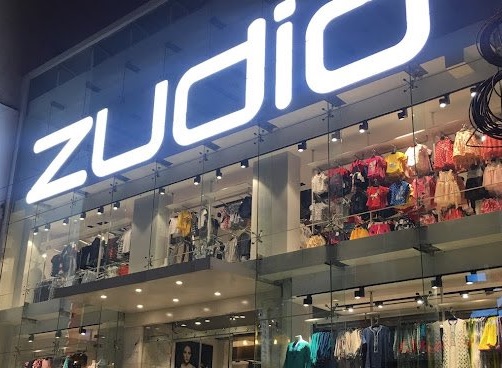
Value apparel brands are set to grow in India.
The success of Tata Group’s Zudio that sells clothes below Rs 1,500 has prompted Reliance, Shoppers Stop and several global brands to enter the mass-priced retailing segment.
While Reliance Retail is planning to launch a value apparel format, likely to be named ‘Youth’ to compete directly with Tata’s Zudio and Landmark group-owned Max, Shoppers Stop is coming up with a mass-priced brand, internally called InTune, people in the know said.
Aditya Birla Fashion & Retail has been eyeing shoppers in tier-2 and -3 cities with Style Up, a similar format, while affordable French brand Kiabi is in talks with retail space providers and potential partners to enter the India market.
“Although there is a significant concentration of demand in the metro cities and tier-1 cities, these are also hypercompetitive markets. With economic growth spreading into the smaller cities and rising aspirations, especially among young consumers, there is an opportunity for brands to expand into these markets,” said Devangshu Dutta, founder of retail consulting firm Third Eyesight.
“However, keeping price-sensitive segments in mind, companies are creating new labels and brands, rather than pulling down their existing brands’ selling price,” Dutta said.
Trent, the Tata Group company that houses retail brands such as Westside, Zudio and Landmark, had earlier said that while Westside accounted for 70% of its standalone business, Zudio had the potential to outpace the department chain due to the size of the opportunity in the value segment.
“While the value format can offer growth in smaller cities, in metro cities the retailers are trying to target youth through this format. The youth is also aware of the sustainability part and most of these brands are focusing on it,” said Shriram PM Monga, who cofounded retail consultancy firm SRED.
Both Reliance and Shoppers Stop are looking for 6,000-9,000 sq ft space at malls and high street for their new brands, said a person familiar with the development.
Experts said India’s consumption structure was skewed in the past over a narrow base of rich consumers accounting for a large chunk of the market. However, as the economy is broadening across many more cities and the impact is reaching further down the income ladder, the opportunity for value formats and value brands is expanding.
For Lifestyle International, its value brands Max and Easy Buy have already outpaced the department stores by sales, indicating that consumers are increasingly seeking either lower-priced merchandise or opting for global brands such as Zara and H&M for fashion apparel instead of department stores.
(Published in The Economic Times)
admin
February 23, 2023

India’s economy is in focus globally, and is also at an inflection point.
Join Devangshu Dutta at the Asia-Pacific conference of UFI, The Global Association of the Exhibition Industry. Registration Link: https://lnkd.in/dq89_rY3
See you at UFI Asia-Pacific Conference in Kuala Lumpur!
admin
January 18, 2023
Faizan Haidar, ET Bureau
Jan 18, 2023
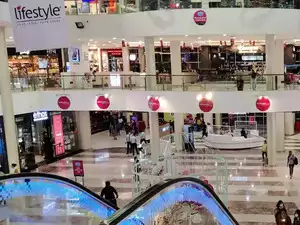
Tension has built up between retailers and malls across India, with leading malls planning to increase rentals every year instead of the current arrangement of every three years.
Industry insiders said large retailers are opposing the move given the number of stores they operate. Malls usually sign nine-year agreements with the retailers with a 15% increase in rentals every three years. If rents increase 5% each year, retailers will have to shell out about 17% in three years.
“It does not make any sense because we sign our properties for a long term, which is generally 12-15 years. An annual escalation in rent will not be viable and we would want to not go ahead with such short-term demands,” said a chief executive at a departmental store chain, who did not wish to be identified.
Rajendra Kalkar, president-west at Phoenix Mills, which operates more than half-dozen malls in Mumbai, Pune and Bengaluru, and in some tier-2 cities, said rentals are revised as per the originally agreed terms of the agreement. But in new agreements, the issue of annual rent revision is being negotiated on a case-by-case basis.
Another retailer said on condition of anonymity that brands invest a lot in fit-outs and annual rental hikes will make the business unviable. “A brand has to manage so many stores that annual hikes will lead to a chaotic situation where every month brands will have to keep rental hikes in mind,” said the retailer.
Other malls such as those of DLF, Nexus and Oberoi, Select City Walk and Vegas are also mulling over the issue, said industry executives.
“We have started something like staggered rental so that we can hike the rental every year. However, in the first year. we don’t put much pressure because the brand is trying to settle in. But once they start doing well, we push for a rental hike,” said the director of a leading mall, who did not wish to be identified.
Single-brand retailers said the demand is strong and they may be able to absorb rent inflation, if at all it goes through.
Mall developers said they will push for a 20% rental hike in three years given the inflation and cost of raw materials.
“The cost of everything has gone up and we will have to put it in a fresh condition to sustain. Retailers are doing good and they should not be hesitant in absorbing the hike,” said another mall developer.
India’s top ten listed retailers, including Aditya Birla Fashion & Retail, Shoppers Stop, Jubilant Foodworks and Tata Trent, have together saved more than Rs 1,500 crore in rents over the past two financial years, after negotiating discounts with malls and other landlords for the lockdown period.
“Covid impacted both mall developers and retailers, and mall developers may possibly be trying to recover from those lockdown losses,” said Devangshu Dutta, founder of retail consulting firm Third Eyesight. “Where there’s a dearth of quality retail spaces, well-managed malls may be able to negotiate more strongly for a frequent hike. But both retailers and malls need to come together for a symbiotic solution that works for both.”
Rentals have now returned to pre-Covid levels, as malls have returned to normal business and their tenants are seeing healthy footfall. According to ICRA, rental income reached 80% of pre-Covid levels during 2021-22 and is expected to surpass 2019-20 levels by 4-6% in the current fiscal.
“We have seen double-digit growth and understand that it was an unfavourable time for mall operators during Covid. So during renewal, we may accept rent escalation if we are not able to hold it. However, we don’t expect any adverse impact on our financials,” said Satyen Momaya, CEO of Celio, a French apparel brand.
Rental incomes have improved at a faster pace after the second wave of the pandemic, with recovery at 74% during the second quarter of 2021-22, as against 34% a year ago, and reaching 102% of pre-Covid levels in the second half of the current fiscal, said ICRA.
“Malls are investing heavily in events and every month there are two-three events to ensure footfall. With these initiatives, the mall expects sales to increase and the retailer to pay higher rent,” said a Kolkata-based mall developer, who did not wish to be identified.
admin
December 23, 2022
ET Bureau, Dec 23, 2022
Reliance Retail Ventures, a subsidiary of Reliance Industries and the holding company of the group’s retail businesses, signed definitive agreements to acquire German wholesaler Metro AG’s India business – Metro Cash & Carry India-for a total cash consideration of ₹2,850 crore.
As part of the deal, Reliance will get 31 large format stores in 21 cities as well as the realty portfolio that includes six store-occupied properties, 3,500 staff and Metro’s 3 million B2B customers, of which 1 million are frequent buyers. The deal is subject to regulatory and other conditions and is expected to be completed by March 2023, the companies said on Thursday. ET had first reported in its edition dated Oct 15 that Reliance is the frontrunner to acquire Metro’s India business.
Metro AG said in a release that the India business valuation implies a sales multiple of 0.6x based on sales in the year ended September and takes into account lease rental and other related liabilities of e150 million (₹1,320 crore). Metro India generated sales of ₹7,700 crore (926 million euros), its best ever, in the year ended September.
Metro expects a transaction gain of about 150 million euros and an earnings per share (EPS) gain, once the deal closes.
The move will help Reliance consolidate its presence in the B2B trade segment, which it calls new commerce and is among its next big growth drivers, intensifying competition with Udaan, Amazon and Walmart-owned Flipkart. Reliance owns and runs the country’s largest retail business. All Metro India stores will continue to operate under the Metro brand during an agreed transition period.
Reliance Retail Ventures director Isha Ambani said the acquisition of Metro India aligns with its new commerce strategy of building a unique model of shared prosperity through active collaboration with small merchants and enterprises.
“We believe that Metro India’s healthy assets combined with our deep understanding of the Indian merchant and kirana ecosystem will help offer a differentiated value proposition to small businesses in India,” she said.
Metro AG chief executive officer Steffen Greubel said it is selling a growing and profitable wholesale business at the right time. “Indian trade industry is currently experiencing strong consolidation and disproportionate growth in ecommerce, including the B2B segment,” he said. “Due to the market dynamics, a sizable investment would be required to further grow the business. Therefore, now is the right time to use the momentum and open a new chapter for Metro India.”
Metro said it aims for a leading market position in wholesale. Due to increasing market consolidation, accelerated digitalisation and intense competition, Metro India’s operations don’t fit Metro’s core growth strategy, it said. Abneesh Roy, executive director, institutional equities at Nuvama, said the price to sales ratio is 0.37, which seems fair, given the B2B segment is a low-margin business.
Reliance will gain a significant jump in revenue and established locations that it can expand or optimise under its own branding and formats, said Devangshu Dutta, founder of retail consulting firm Third Eyesight. “The additional shelf space will also be very welcome for its own FMCG brands,” he said.
(Published in The Economic Times)
