
admin
May 5, 2025

Mint, 5 May 2026
Priyamvada C., Sneha Shah
Urban India’s pet parents are driving a wave of investor interest in the pet care space. A clutch of startups such as Heads Up For Tails, Supertails, and Vetic are now in fundraising talks amid rising demand for premium products and services
While Supertails looks to raise about ₹200 crore by the end of this year, Heads Up For Tails is eyeing an investment from domestic investment firm 360 One Asset over the next few months, according to mul tiple people familiar with the matter.
Vetic, a tech-enabled chain of pet clinics, is looking to raise a sizeable round and has begun discussions with investors, they said, adding that some of these transactions may see existing investors part exit their stake.
Supertails and Vetic did not immediately respond to Mint’s requests for a comment. While 360 One declined to comment, Heads Up For Tails’ founder Rashi Narang denied the development.
Investor interest in pet care surged in the years following the pandemic, driven by a wave of new pet adoptions and rising disposable incomes. In 2023, pet care startups raised a record $66.3 million across 16 rounds, led by one major transaction ― Drool’s $60 million fundraise.
While 2023 saw a funding spike driven by Drool’s large deal, overall funding activity in 2024 was more broad-based, with fundraising at $17.9 million spanning 13 rounds, as per Tracxn.
“Pet ownership in India is estimated to be less than 10% of overall households, but growing at a rapid pace with rising incomes, especially among urban consumers. In developed economies, pet ownership can exceed three in four households, and that headroom for growth is reflected among the upper income segments in India,” said Devangshu Dutta, chief executive of Third Eyesight, a management consulting firm.
He added that urban couples and singles in many cases are even opting to become “pet parents” instead of having children.
Platforms such as Supertails, Drools and Heads Up For Tails have been the big beneficiaries of this shift. Drools raised $60 million from LVMH-backed private equity firm L Catterton in 2023, while Supertails raised $15 million led by RPSG Capital Ventures in February last year.
Similarly, Supertails, which is in talks to acquire Blue 7 Vets, a multi speciality veterinary clinic, as part of its strategy to expand offline, will also raise capital to fund the acquisition of new customers, investments in technology, and the expansion of healthcare services, including Super-tails Pharmacy and build an omni-channel experience for consumers.
The company raised about $15 million in its series B funding round last year led by RPSG Capital Ventures and existing investors Fireside Ventures, Saama Capital, DSG Consumer Partners and Sauce VC.
(Published in Mint)
admin
March 20, 2025

Sagar Malviya, Economic Times
Mumbai, 20 March 2025
Established beauty product makers such as Forest Essentials, Colorbar, Kama Ayurveda, Body Shop, VLCC Personal Care and Lotus Herbals saw a slowdown in sales growth in FY24, according to the latest Registrar of Companies filings. Consumers favoured new-age rivals such as Minimalist and Pilgrim, specialised derma brands, as well as global labels Shiseido, Innisfree and Eucerin.
Sales growth of established brands mostly in the natural skincare segment, more than halved to single digits during the previous financial year amid a broader economic slump.
In contrast, companies such as L’Oreal, Nykaa and Sephora continued to grow at 12-34% on a significantly bigger base, even as they lost pace.
Direct-to-consumer brand Pilgrim more than doubled its sales, Minimalist’s revenue increased 80% and Foxtale’s sales surged 500% on a lower base.
“With most consumers tightening their budget on discretionary spends in FY24, they seem to have opted for brands that give instant benefits compared to natural products, which take time to be effective,” said Devangshu Dutta, founder of retail consulting firm Third Eyesight.
Over the past few years, there has been a flurry of beauty product launches, which have depended on platforms such as Nykaa and Tira for sales.
In the past two years, Nykaa has launched more than 350 brands, or In the past two years, or nearly one new label every alternate day on average.
This includes international brands such as CeraVe, Uriage and Versed, as well as home-grown brands such as Foxtale and Hyphen.
Reliance Retail, which entered beauty retailing with Tira two years ago, now sells nearly 1,000 brands, including exclusive labels such as Akind, Augustinus Badee, Allies of Skin, Kundal and Patchology.
“10 years ago we were only competing against big guys,” Vincent Karney, global chief executive of Beiersdorf, maker of Eucerin, Nivea and La Prakrit, told ET last month. “Now we have those local brands, and we have to become a bit more agile.”

On Nykaa, Fenty Beauty by Rihanna is the highest-selling brand in lipcare while Eucerin has become its biggest premium dermo-cosmetic serum. South Korean beauty brands Axis-Y, Tirtir and Numbuzin grew over 60% in 2024, with sales of toners increasing 104%, serums 45%, moisturisers 52% and sunscreens 154% on the platform.
VLCC and Colorbar did not respond to ET queries, while Forest Essentials was not reachable.
In January, Mike Jatania, cofounder and executive chairman of The Body Shop and Aurea Group, told ET, “There would be continuation of new entrants. Inflation is still a global issue and we will see the pressure. Competitive environment will be a challenge… 70% of our stores are showing decent growth. We have closed some stores and opened a few also, that’s the nature of the business.”
Ingredients Matter
Warnery of Beiersdorf emphasised the need to stay focused on “big innovation, by being able to talk to GenZ, (a position) which might be filled in by those local brands coming with basic ingredients.”
The likes of Minimalist, Ordinary and Pilgrim disclose active ingredients at a granular level, specifying the exact percentage of acid used in the product to appeal to GenZ users (those born between 1997 and early 2010s), who are said to be far more conscious of what they use on their skin compared to millennials (those born during 1980s to mid-1990s) and Gen X (those born from about 1965 to 1980).
Shoppers Stop, which manages brands such as Estee Lauder, Shiseido, Bobbi Brown, Mac and Clinique in India, sees the overall beauty market driven by companies focusing on consumers across age groups, and not just younger ones. Both natural and dermatological products are expected to find takers.
“While most new age brands tap younger cohorts, their pocket size allows them to mostly buy affordable products and the more affluent consumers opt for established global brands that have proven themselves since decades,” said Biju Kassim, chief executive, beauty, at Shoppers Stop. “Beauty is still not a habit in India and with hundreds of brands being launched, the focus is to grow penetration. There is also a shift from care to cure, driven by derma-recommended products and brands disclosing active ingredients, but it is still a niche sub-segment.”
Dutta of Third Eyesight sees the current trend as temporary. “We expect growth of (established) companies to bounce back in the current fiscal, driven by a strong demand for beauty,” he said, pointing especially to online platforms. India’s beauty and personal care market is expected to reach $34 billion by 2028, up from $21 billion now, driven by an online surge and a growing preference for high quality, premium beauty products according to a report by Nykaa and consulting firm Redseer.
Nicolas Hieronimus, chief executive of cosmetics giant L’Oreal, last year said consumers in India are more demanding and are not just settling for very basic things like putting an ingredient in a product such as salicylic acid or collagen. “That’s where L’Oreal has the best cards to play, and that’s where we really thrive,” he had told ET.
Beiersdorf, Unilever, L’Oreal and Shiseido, among the world’s largest cosmetics companies, have all identified India as a key growth driver, citing the burgeoning population and growing affinity for beauty products.
(Published in Economic Times)
admin
March 7, 2025
Shailja Tiwari, Financial Express
March 7, 2025
This is what happens when you hit the gym after a long pause. On your first rebound day, the same weights seem heavier, the same set of squats tires you quicker. You might feel frustrated – nothing seems the way you left it.
The same scenario faces brands looking to make a comeback. Those “muscles” – read brand loyalty -have lost strength due to long absence. The brand’s “stamina”- customer loyalty – have declined with neglect. All of which essentially means you need a relook at the entire “regimen” – the product, price, place and promotion – that seemed to work the last time around.
Men’s fashion brand Reid & Taylor is facing the same dilemma.
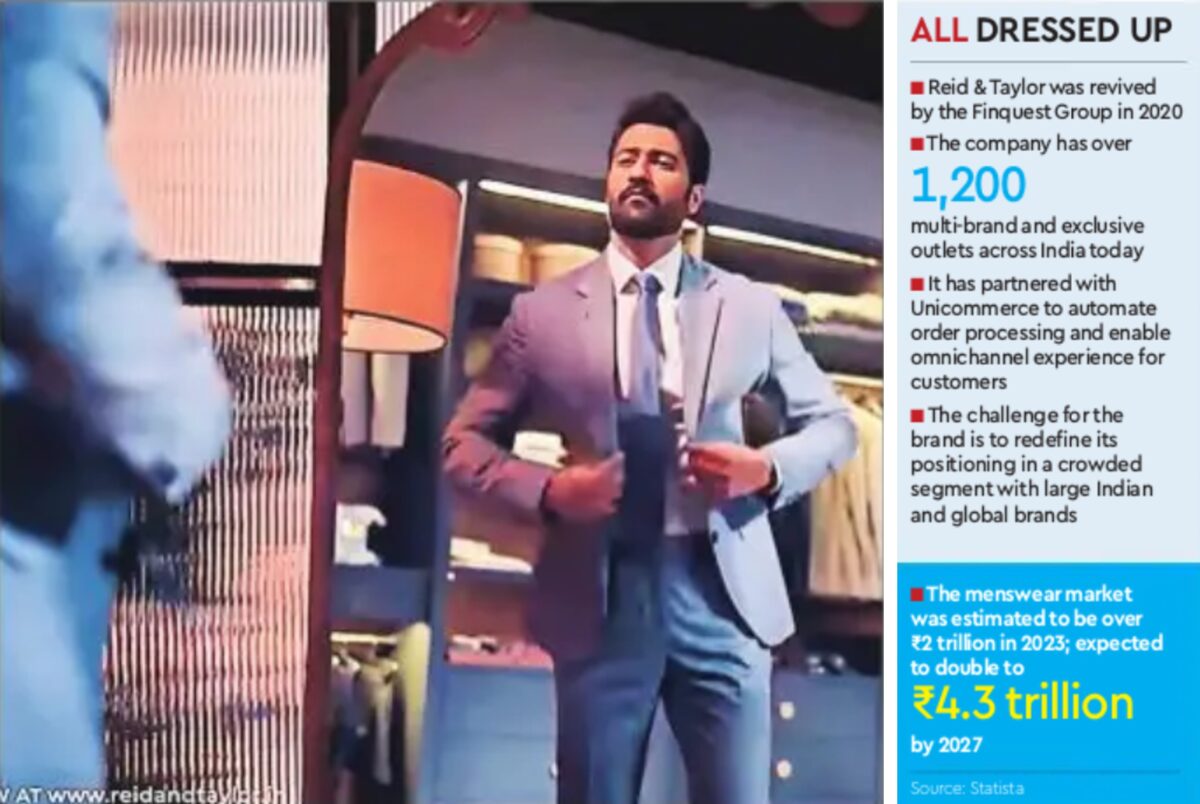
Launched in India in 1998, the brand vanished from the market in 2018 after S Kumars – which held the rights to manufacture and market the Scottish brand in India went bankrupt. Reid & Taylor is making a gradual comeback now, under the aegis of its new owner Finquest Group, complete with a campaign featuring new brand ambassador Vicky Kaushal and tagline, “Man on a Mission”.
Finquest Group has invested over ₹750 crore in revitalising the brand. Reid & Taylor is available in more than 1,200 multi-brand and exclusive brand outlets across the country, as per a company announcement.
In January, Reid & Taylor also announced its partnership with the Unicommerce to knit together the brand’s website, warehouses, physical stores, and other online platforms in one integrated network. The tech integration followed the launch of Reid & Taylor’s brand website and its growing presence across various online marketplaces, a clear signal the company is gearing up to address the needs of today’s customer and give its competitors a run for their money.
Kapil Makhija, CEO and MD, Unicommerce, explains how this will enable Reid & Taylor to modernise its operations: “In addition to a consistent customer experience, this integration enables efficient inventory management through a centralised platform that allows ship-from-store service, where the brand can switch orders between warehouses and stores, offering a broader assortment for sale and faster order fulfilment. It also helps Reid and Taylor connect with the more online savvy audience.”
The Indian menswear market, encompassing formal, casual and traditional apparel, had crossed ₹2 trillion in 2023 and is expected to reach ₹4.3 trillion by 2027, as per a Statista report. Experts say that the menswear category has grown exponentially since Reid & Taylor’s first outing. It has a host of local and international brands such as Raymond, Mufti, Allen Solly, Louis Phillipe and Manyavar offering stiff competition.
In other words, Reid & Taylor has its task cut out.
Makeover strategy
The greatest challenge for the relaunched brand is to establish relevance and share-of-mind with a new set of consumers, observes Devangshu Dutta, CEO of Third Eyesight. “In its initial avatar in India, it rode on the brand’s past goodwill, but since its fall a few years ago, the market has changed significantly. Ready-to-wear apparel, growth of modern retail, online commerce and a set of consumers who have no past history or association with the brand are all significant factors at play, remarks Dutta.
At its best in the early-2000s, the brand was positioned mostly within the wedding segment, a category that is also rapidly changing. The styles that dominate wedding apparel are changing among younger cohorts, points out Ajimon Francis, MD India for Brand Finance. Formal three-piece suits and safari suits are no longer style statements.
Consumers are opting either for designer wear like a Tarun Tahiliani or for mid-segment offerings where brands like Raymond operate. “Formal suits are becoming an ‘uncle’ or ‘dadaji’ segment, and the wedding lines showcased by most brands are geared towards traditional wear. Formalwear for weddings now includes sherwanis and kurtas, where brands like Manyavar and FabIndia rule,” he points out.
Reflecting on the brand’s exit earlier from the Indian market, Francis says that its owners’ (S Kumars) inability to adapt the brand to changing consumer behaviour led to its downfall. The Finquest Group will need to clearly redefine its new positioning since Reid & Taylor now offers a mix of styles across casual and formal menswear.
Legacy brings credibility but it can also be baggage, remarks Rutu Mody Kamdar, founder of Jigsaw Brand Consultants. The challenge for Reid & Taylor lies in shaking off the heritage brand’ tag and making itself relevant to younger buyers who value modern style over nostalgia. “It needs to own the ‘quiet luxury’ space, timeless tailoring with a contemporary edge. That includes modern cuts, cultural collaborations, omnichannel presence, and aspirational storytelling,” suggests Kamdar.
E-commerce strategy will be key too. The brand will need to blend strong visuals with smart pricing and seamless strategy. Kamdar adds that Reid & Taylor needs to look at e-commerce as not just a sales channel but also a brand building platform.
(Published in Financial Express – Brandwagon)
admin
March 4, 2025
Kashmeera Sambamurthy, Storyboard18
4 March 2025
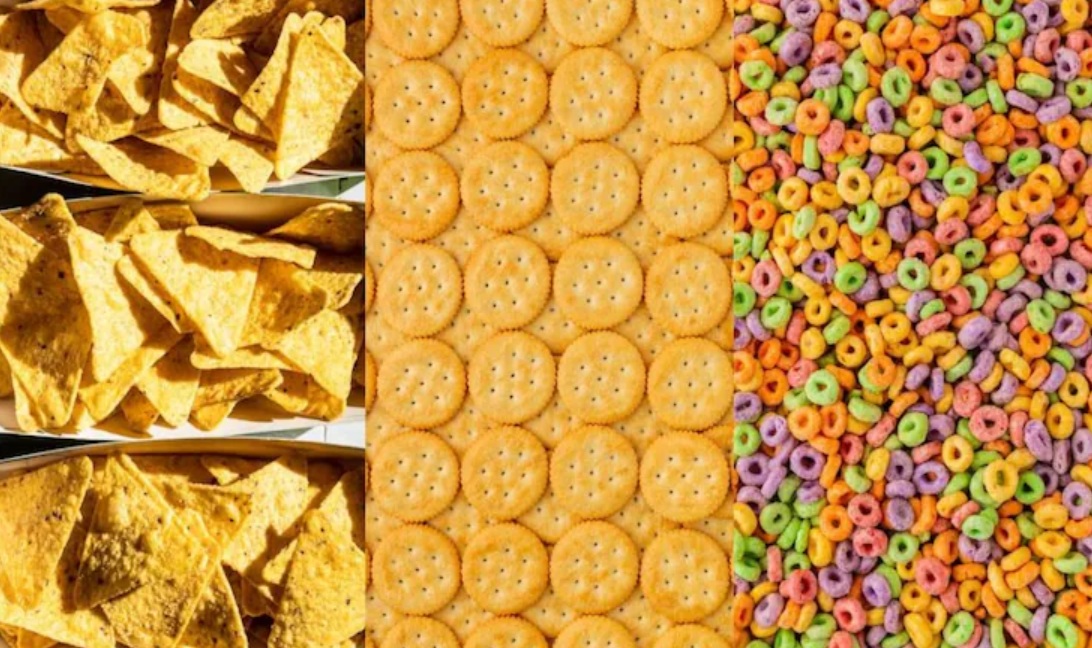
A growing number of health advocates and industry watchdogs in India are raising concerns over misleading food advertisements, challenging brands on their claims and pushing for stricter regulations in an industry where marketing often outpaces oversight.
Recently, lifestyle guru Luke Coutinho called out quick-commerce platform Zepto over what he described as a misleading advertisement for garlic bread on Instagram. Sharing a screenshot of the ad on his social media, Coutinho criticized its promotion of refined carbohydrates as a bedtime snack, calling it “unethical” and a product of corporate greed. Tagging regulatory bodies including the Food Safety and Standards Authority of India (FSSAI) and the All India Institute of Medical Sciences (AIIMS), he urged authorities to take action.
Similarly, Dr. Arun Gupta, convenor of Nutrition Advocacy in Public Interest (NAPi), a national think tank of medical experts, pediatricians, and nutritionists, highlighted a full-page advertisement in Delhi Times for Amul TRU, a fruit drink brand. The ad, published on February 14, emphasized the “goodness of real fruits in every pack,” but Gupta pointed out that the listed ingredients contained concentrated fruit rather than fresh produce.
These instances reflect a broader pattern of misleading advertising in India’s food and beverage sector. While such controversies have long existed, it was only on February 7 this year that the Indian government announced the formation of a 19-member committee, led by Union Minister of Food Processing Industries Chirag Paswan, to address deceptive marketing practices and introduce more stringent regulations.
India’s struggle with misleading food advertisements dates back years. The Advertising Standards Council of India (ASCI) and FSSAI signed an MoU in 2016 to curb deceptive advertising in the food and beverage sector. Two years later, the Ministry of Information and Broadcasting (MIB) issued an order restricting junk food advertisements on children’s television channels, though they remained permissible on mainstream networks.
Despite these measures, misleading claims persist. In 2023 alone, FSSAI flagged 32 instances of food business operators violating the Food Safety and Standards (Advertisements & Claims) Regulations of 2018. That same year, actor Amitabh Bachchan faced criticism for endorsing Britannia Milk Bikis in a Kaun Banega Crorepati Junior commercial, where the biscuits were equated with the nutritional value of atta roti and a glass of milk.
Health influencer Revant Himatsingka, widely known as ‘Food Pharmer,’ also took on the industry, calling out Cadbury Bournvita for its high sugar content. Mondelez International reduced the product’s sugar levels by 15 percent and dropped its ‘health drink’ label from marketing materials.
The regulatory landscape includes four key frameworks to combat misleading food advertisements: the Food Safety and Standards Act (FSS Act), the Food Safety and Standards (Advertising and Claims) Regulations, 2018, the Consumer Protection Act (CPA), 2019, and the ASCI Code of Self-Regulation.
However, Gupta argues that these regulations require amendments to better define misleading claims. In 2024, NAPi lodged a complaint with FSSAI against advertisements for Parle-G Royale biscuits, which allegedly misrepresented their sugar content. The response? “There is no FSS regulation which says that nutrients will be declared in the advertisement,” authorities stated.
Gupta further highlighted that when FSSAI initially flagged 150 misleading advertisements in 2023, that number was later reduced to 32, with no clear updates on enforcement actions. “When the Kaun Banega Crorepati ad equated Britannia Milk Bikis with atta roti and milk, NAPi protested. The ad was pulled, but no fines were imposed,” he noted.
Celebrity endorsements add another layer to the issue. The 2024 TAM AdEx report found that food and beverage advertisements accounted for 28 percent of all celebrity-endorsed ads in India. The Consumer Protection Act, 2019, prohibits celebrities from endorsing banned products but allows promotions unless explicitly prohibited by law.
In a telling 2006 interview with journalist Karan Thapar, Bollywood superstar Shah Rukh Khan defended his endorsement of soft drinks, arguing, “If soft drinks are bad, ban their production. If production is not stopped due to revenue concerns, don’t stop my revenue.”
ASCI CEO Manisha Kapoor observed that influencers frequently promote foods without disclosing financial ties to brands, making endorsements appear organic rather than paid sponsorships. Sweta Rajan, a partner at Economic Laws Practice, expressed concerns that celebrity-backed marketing distorts public perception of healthy eating. “The continuous exposure to such ads makes it difficult for consumers to make informed choices,” she said.
The recently formed 19-member government committee has been met with skepticism from experts who believe it may lack independence. “The committee does not include a public health expert. Half its members belong to industry bodies. It should form a subcommittee to define what constitutes healthy food,” Gupta said.
Himatsingka called for stringent penalties against brands found guilty of misleading advertisements, suggesting that companies be publicly named on a weekly basis. Rajan, meanwhile, warned against excessive regulation, arguing that it could stifle creativity. “A balance must be struck between regulation and creative advertising,” she said. Instead, she proposed incentives for brands that adopt honest marketing practices.
Some experts advocate for clearer front-of-pack labeling. “Currently, most food labels prioritize regulatory compliance over consumer awareness. Since literacy levels in India are lower than in many Western nations, labels should be simple and easy to understand,” said Devangshu Dutta, chief executive of consultancy firm Third Eyesight.
Taxation has been another approach. Many processed foods in India attract an 18 to 28 percent GST rate, yet brands such as Coca-Cola, Lays, and Haldiram’s continue to thrive. “While taxes have some impact, they are not enough on their own,” Rajan noted.
Gupta suggested replacing FSSAI’s ‘Health Ratings’ – which he says benefit the industry more than consumers – with clear warning labels on ultra-processed foods. He said, “Consumers should be alerted to the risks, not misled by arbitrary ratings.”
(Published on Storyboard18)
admin
January 9, 2025
Sagar Malviya, Economic Times
9 January 2025
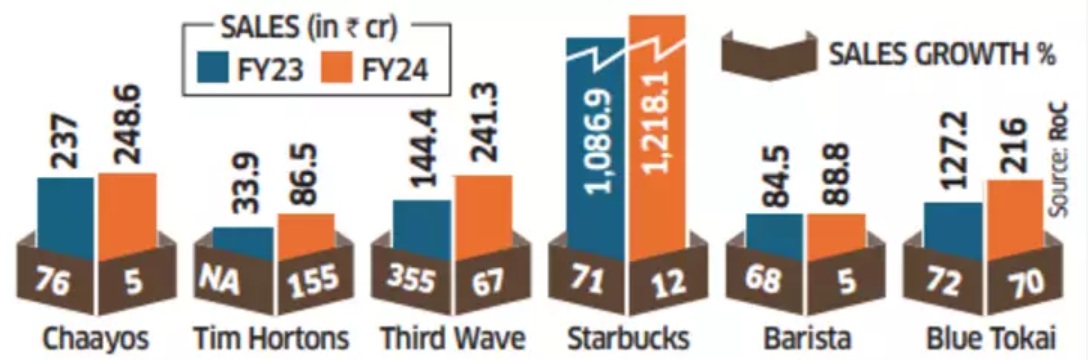
Starbucks, Barista, Chaayos and Third Wave Coffee are among café chains facing the brunt of a slowdown in discretionary consumer spending. The impact is more severe for these retailers as they opened hundreds of new stores last fiscal year even as losses widened. To be sure, smaller chains such as Tim Hortons and Blue Tokai have bucked the trend.
Experts attribute the expansion rush to the urge among these retailers – both chains and standalone stores – to outpace competition. In certain instance, it led the same retailer to add stores in the same location, impacting its own growth instead of growing the pie.
At Rs 250 to Rs 350 for a cup of coffee, most chains target affluent, discerning coffee enthusiasts with artisanal brewing and experiential consumption, restricting the consumer base.
Devangshu Dutta, founder of retail consulting firm Third Eyesight, said the number of outlets have been expanding since 2022.
This was true for not just the new brands but also existing ones, Dutta said. “Cafe density in larger cities has gone up dramatically in the last couple of years.”
Growth rate fell to just 5% in FY24 from nearly 70% at Barista and Chaayos while Starbucks’ sales growth declined to 12% in FY24 from 70% in FY23. Third Wave saw sales growth slump to 67% from 355% during the period. Cafe Coffee Day posted a 9% increase in FY24, though sharply slowing from 59% a year ago.
Tim Hortons, however, more than doubled its sales last fiscal, its first full year of operations. Blue Tokai also bucked the slowdown trend with a 70% growth in FY24, compared to 73% in FY23.
Blue Tokai cofounder Matt Chitharanjan believes growth in India’s out-of-home coffee market is more than just a caffeine surge—reflecting the country’s shifting economic fabric. “Coffee consumption is strongly linked to income growth and India has reached a tipping point where it will support growth in the segment and should only accelerate going forward,” Chitharanjan told ET. “We have not seen any slowdown in coffee consumption and our positioning is also more product centric instead of just a cafe, which helped in double-digit same store sales growth.”
Tim Hortons, a Canadian coffee chain, which opened its first outlet in India in 2022, plans to have over 100 stores in the next three years. British coffee and sandwich chain Pret A Manger too launched its first shop in Mumbai as part of a franchise agreement with Reliance Brands. It plans to open up to 100 stores over the next five years. Third Wave and Blue Tokai are running more than 250 stores combined while Starbucks had over 330 stores as of March-end.
Tata Starbucks—the equal JV between Tata Consumer Products and US-based Starbucks Corp—said store footfalls have become a concern and the company has tweaked portfolio and pricing to attract traffic. Last year, the chain introduced classic hot and iced coffee starting at Rs 150 for a small cup, about 20-30% cheaper than regular coffee offered at Starbucks and other cafe chains.
“The stress is being seen across the quick service restaurant segment. It’s an overall consumer spending issue, especially in urban areas. And my hypothesis is probably food inflation is higher than what we think,” Sunil D’Souza, MD at Tata Consumer Products said during the December quarter earnings call.
Globally as well as in India, coffee growers have been hit with uncertain weather conditions while geopolitical factors are also affecting supply chains, which in turn, lifted prices to a record high. “The biggest challenge is erratic weather and climate change which has sent coffee prices to a 50-year high, but we will have to see how it impacts our pricing and profit after the current harvest,” said Chitharanjan at Blue Tokai.
(Published in Economic Times)
