
admin
May 26, 2023
Chloe Cornish in Mumbai and Eleanor Olcott in Hong Kong, Financial Times
May 26 2023
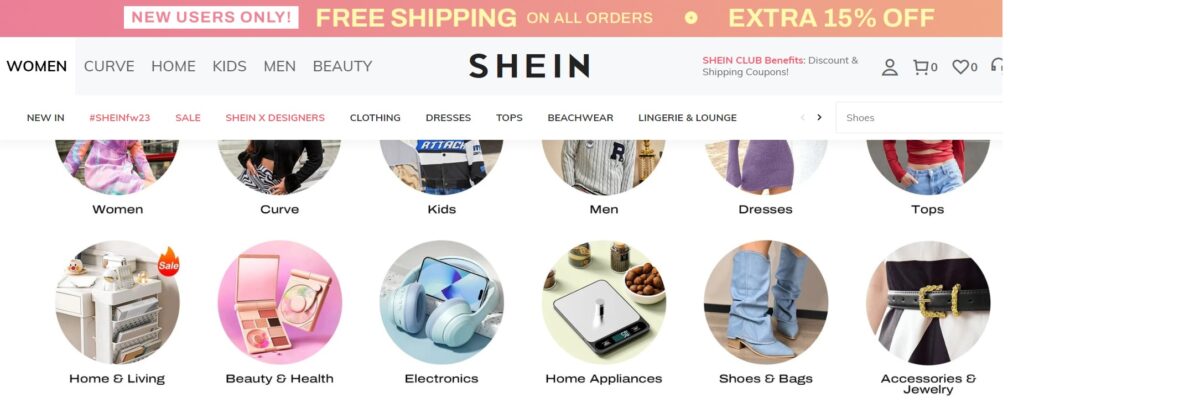
India’s biggest company Reliance Industries is seeking to dominate the country’s $10bn online domestic fashion market, striking a deal with Shein that will allow the rapidly growing Chinese retailer to return to the world’s most populous nation.
The retail unit of billionaire Mukesh Ambani’s petrol-to-telecoms conglomerate will tie up with Shein three years after India banned the online retailer’s app in its attempt to freeze Chinese companies out of the local market in retaliation for border clashes that had left at least 20 Indian soldiers dead.
“We can confirm Shein’s partnership with Reliance Retail and have no additional comment at this time,” said Shein, declining to answer questions about the structure of the deal. Reliance did not respond to queries about the partnership, which was first reported by the Wall Street Journal.
The addition of a low-priced offering gives India’s biggest listed company by market capitalisation an important boost in its battle to dominate the country’s growing online fashion retail market, which was worth $10bn in 2022, according to analyst estimates.
As part of the licence agreement, which was recently approved by the government, Shein will receive a percentage of profits generated from its fast fashion sales in India, people familiar with the deal said, while Reliance will help Shein build a supply chain with India’s garment industry for global exports.
The move into Indian sourcing comes as Shein diversifies its supply chain outside the coastal province of Guangdong in southern China, where it has 8,000 suppliers, mostly located in the garment hub of Panyu. Pandemic-era supply chain bottlenecks, rising labour costs in China and geopolitical tensions between Beijing and Washington have propelled multinational companies, including Apple and clothing retailer Mango, to migrate parts of their supply chains out of the country.
Shein, which does not sell in China, has been seeking to distance itself from its home country. Last year, it made its Singapore arm the de facto holding company, rapidly expanding its workforce there and shifting some of its operations from its China headquarters in Nanjing.
Shein will seek to minimise delivery times by having more manufacturing centres around the world. India, meanwhile, hopes to benefit from multinationals’ “China plus one” movement, a strategy that seeks to avoid investing only in China and aims to diversify supply chains to other countries.
Reliance has signed agreements with international luxury brands ranging from Balenciaga to Burberry, catering to India’s small but growing demographic of super-rich consumers. In addition, it has nearly 13,000 bricks-and-mortar stores across the country selling affordable apparel.
“Reliance’s other international brand partnerships are more premium, being luxury or designer brands,” said Devangshu Dutta, chief executive of consultant Third Eyesight. “India is still a relatively low per capita income economy. The bigger opportunity is in brands which are euphemistically called value brands, and that’s where Shein is positioned.”
For Shein, access to the Indian market will allow the company to boost sales as the pace of its expansion in Europe and the US begins to lose steam, according to people briefed on its growth figures.
The Financial Times reported that in a recent presentation to investors, Shein forecast that gross merchandise value — the total value of merchandise sold on its platform — will almost triple by 2025 to $80.6bn compared with the figure last year.
The lofty revenue projections come ahead of a much anticipated initial public offering, which promises to be one of the largest listings of a Chinese-founded company in years.
In fashion ecommerce, Reliance lags behind Myntra, one of India’s oldest ecommerce players, which merged with Walmart-backed Flipkart in 2014. Myntra accounts for around half of the online fashion market in India, according to Satish Meena, an independent ecommerce analyst based in Gurgaon.
“Myntra is the nucleus” for online fashion, said Ankur Bisen, senior partner at retail consultancy Technopak Advisors, adding that its “cohort” of shoppers is primarily young and urban. “With the Reliance and Shein partnership, they would like to get into this cohort and break the monopoly of Myntra,” Bisen said.
Meena estimates that Reliance’s ecommerce fashion business Ajio has about 4 per cent of market share, while Bisen put Ajio among the “long tail” of ecommerce fashion ventures behind Myntra. Reliance’s JioMart online shop also sells clothes, alongside groceries and electronics.
“If you look at Reliance as a company, it’s about dominance and it’s about long term,” Dutta said.
(Published in the Financial Times)
admin
November 4, 2022
Christina Moniz, Financial Express / BrandWagon
November 4, 2022
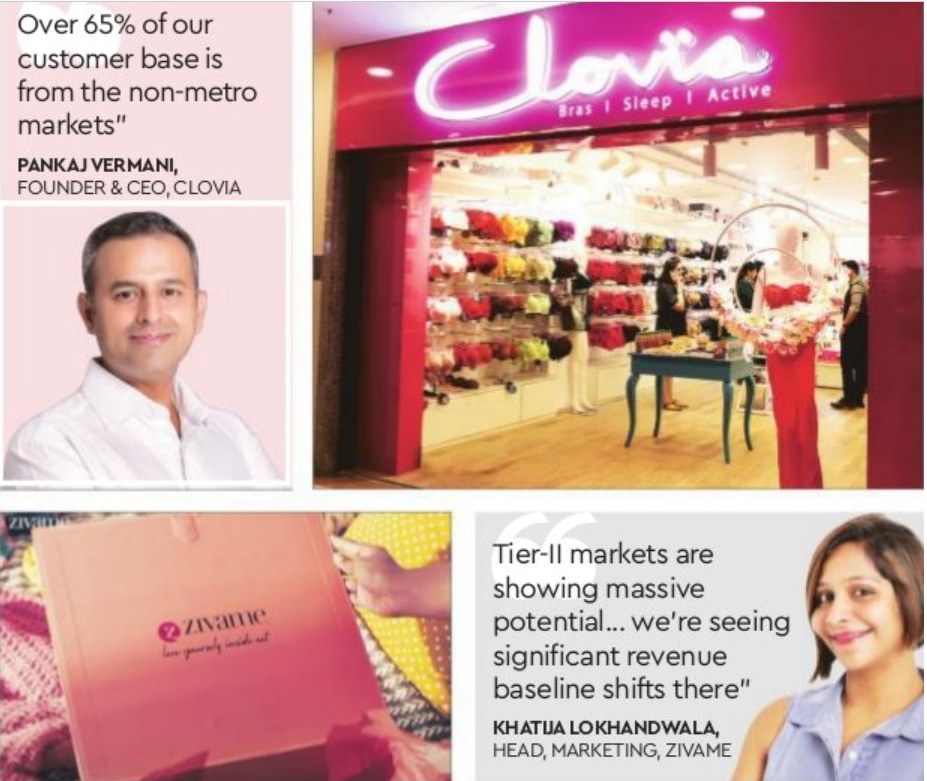
Direct-to-consumer (D2C) lingerie brands, often credited with transforming the category and the way women shop for innerwear, are expanding their offline footprint in response to growing demand from tier-II markets and beyond. Zivame, whose journey began online just over a decade ago in 2011, has grown its offline presence to over 120 stores and also sells through over 4,000 partner outlets. In its recently concluded Grand Lingerie Festival, Zivame saw its sales grow three times,with a 120% increase in new customer acquisition. “Tier-II markets are showing massive potential and though tier-1 remains our highest revenue contributor, we are seeing significant revenue baseline shifts in tier-II locations,” says Khatija Lokhandwala, head of marketing at Zivame. The company has announced that its focus will be retail expansion in the second half of this fiscal, going beyond metros and tier-I markets.
Another decade-old D2C player in the innerwear segment, Cloviais eyeing the immense opportunity presented by smaller markets with aggressive expansion plans in place. “Clovia currently has 45 exclusive brand outlets in the country and has been diversifying its product range, with plans to open 130 outlets by the end of this fiscal. Ours has always been a mass- market brand, and most of the repeat customers come from tier-II and tier-III markets,” explains Pankaj Vermani, founder and CEO, Clovia. He notes that over 65% of its customer base is from the non- metro markets, and average order values are 20% higher in these cities compared to the metros. Earlier this year, Reliance Retail Ventures acquired an 89% stake in Clovia’s parent company (Purple Panda Fashions) for Rs. 950 crore. Vermani adds that Clovia will ben- efit from the conglomerate’s scale and retail expertise, driving up growth and love for the brand. Reliance Retail had picked up 15% stake in Zivame back in 2020.
Shaping the market
The women’s innerwear market in India is set to double to reach $11-12 billion by 2025, according to a report by RedSeer. Aside from the key segments of bras and panties, ancillary products like athleisure, sleepwear, swimwear and lounge wear are also boosting the lingerie category’s growth in the country, as is evident from the widening portfolios of leading brands. The online segment for women’s innerwear is expected to become a $1 billion market by 2025.
Experts believe there is a large opportunity for companies to grow since 60% of the $6-billion women’s intimate wear market in India is unorganised, and the category is still largely underserved.
“The lingerie market is an example of improving supply feeding into a growing demand, and the increasing demand expanding the opportunity for more brands to step in. Larger cities, with their higher income profiles and demand concentration, are the logical first-choice market for companies such as Zivame,” points out Devangshu Dutta, CEO, Third Eyesight.
The competition in the large cities is greater, with a plethora of Indian and global brands, which is why Dutta recommends that e-commerce led companies should push aggressively in smaller markets to drive sustained growth.
The fact that D2C brands have better data sets at their disposal to glean insights about Indian women and their concerns when buying innerwear has also worked in their favour.
“Intimate wear shopping can be overwhelming for a lot of women. Finding the right size and choosing styles for their specific needs requires an environment free of embarrassment and judgement. At Zivame, we help women choose the right size and perfect fit, ensuring a private, comfortable and discreet shopping experience,” says Lokhandwala.
While lingerie can sometimes be prohibitively expensive, Vermani points out that Clovia’s feedback-led design approach helps it keep pricing competitive.
The brand creates each product in small quantities, and uses technology to predict future sales based on customer feedback, thereby determining the right quantities for production. He states, “With this approach, we have created a fashion brand that is low on cost, high on consumer appeal and efficient in inventory, leading to better margins and cash flows.”
(Published in Brandwagon, Financial Express)
admin
September 5, 2022
Akanksha Nagar, Financial Express
September 5, 2022
Can you give a brand a second shot at life?
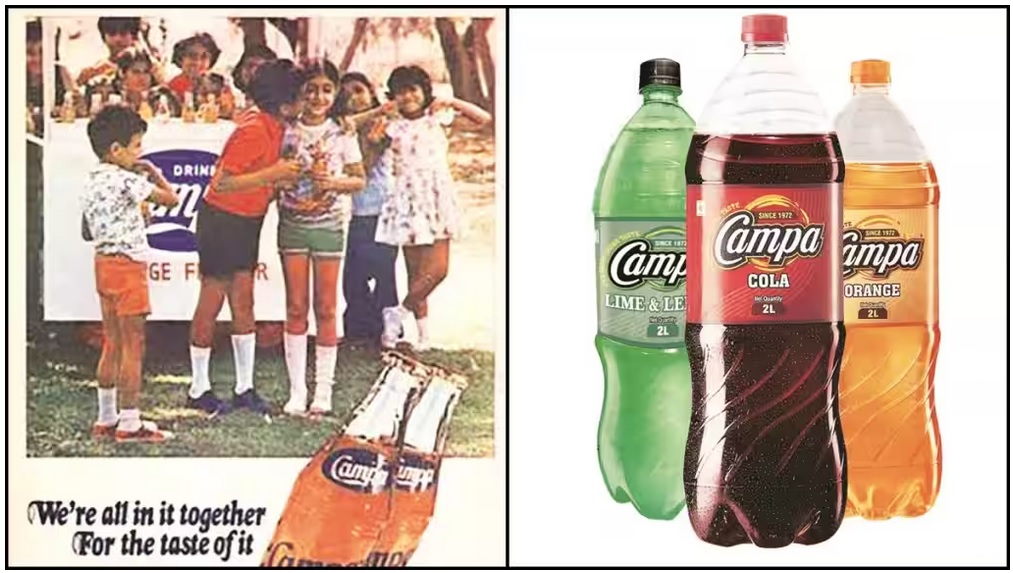
Reliance Retail Ventures certainly thinks so. It has acquired Campa-Cola for an estimated `22 crore from Delhi-based Pure Drinks Group on the assumption that it will not only be able to revive the five-decade-old brand but can also use it to springboard into the dog-eat-dog soft drink market in India.
It will not be a cakewalk surely. The ones who were fans of the brand—which was launched in the 70s—have moved on, and younger customers have little or no association with the brand.
Samit Sinha, managing partner, Alchemist Brand Consulting, believes that Reliance must have been very keen on getting into the soft drinks category as a part of its overall strategy of retail expansion. In any case, it hasn’t had to shell out a bomb for the brand so it is a less audacious gambit than starting from scratch. There is one other factor that might work in its favour—which is the formula, the taste of which had near widespread acceptance in its heyday.
Sandeep Goyal, managing director, Rediffusion Brand Solutions, who is handling a similar resurrection of Garden Vareli sarees, says giving an old brand like Campa-Cola a new life will be far from easy—the Campa-Cola generation is now in their sixties and therefore there is very little monetisable value in the nostalgia.
RESURRECTION RULES
Breathe life into an old brand if:
1. The market presents an opportunity to refresh the brand without compromising on its core promise
2. There are positive connotations for the brand that can be built upon in the current market context
3. The company has the resources and inclination to be a “caretaker” or “steward” of the relationship that had been created between the brand and its customers
Courtesy: Devangshu Dutta, CEO, Third Eyesight
Launch versus resurrect
From the looks of it, Campa-Cola will have to fight sip for sip, bottle for bottle.
Rohit Ohri, chairman and CEO, FCB Group India, who had managed the Pepsi account for more than a decade, says it will be difficult for a new brand to find space in a market dominated by multinationals like Pepsi and Coke. While the residual equity can help get the foothold, the real challenge would be to woo a younger consumer set.
Naresh Gupta, co-founder and CSO, Bang In The Middle, concurs: “When you try to resurrect a brand, you do it knowing that the brand isn’t doing well or has been out of circulation. That is big baggage for the brand to wipe out. Often the residual awareness and following are limited to the audience that is less likely to be your core audience today.”
There is also the fact that young people in the metros are moving away from colas, preferring healthier drinks or niche artisanal products instead. At the same time, soft drink is an impulse category and needs a large dose of salience to fly off the shelf.
Gupta says Reliance can try and build on the Indian-ness that Campa-Cola exudes. His guess is the old brand will be used as a calling card in trade and there would be a host of new launches that build upon it. “Campa-Cola may fuel a lot more fresh fizzy drinks launch from Reliance,” he adds.
That said, just the sheer time an old brand has spent on the shop-shelves would give Campa-Cola an edge over any new brand that its current owner might want to launch. An old brand can appear to be proven, experienced and secure, while a new brand could be seen as untested, raw, and risky. An old brand may have had a positive relationship with the consumer but may have been dormant due to strategic or operational reasons. In such a case, reviving the brand is clearly a good idea, says Devangshu Dutta, chief executive, Third Eyesight.
Reliance could have launched a new brand but if the existing brand has residual awareness or connection, it could be the pivot around which other brand properties can be built. Here, the new owner also has the benefit of having a wide retail network. As on March 31, 2022, Reliance Retail operated 15,196 stores across 7,000-plus cities with a retail area of over 41.6 million sq ft. This, if nothing else, will give Campa-Cola a start any new brand will die for.
(Published in Financial Express)
admin
September 2, 2022
Written by Christina Moniz
Retail chains are on an expansion spree, riding on growing demand from a young consumer cohort
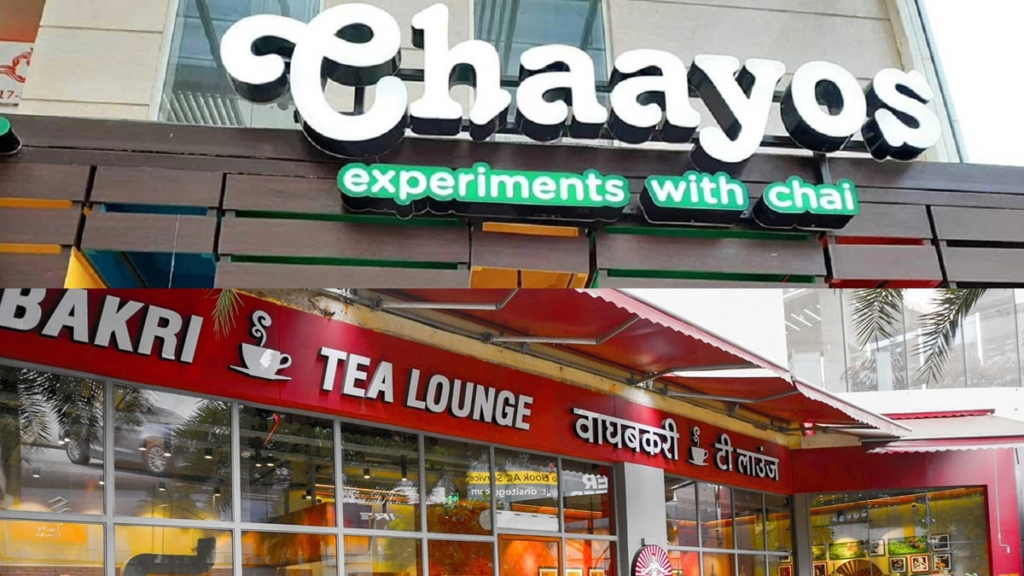
Just about a month back, Wagh Bakri Tea Group, the third largest packaged tea company in India with a turnover of over `1,500 crore, opened its 15th tea lounge in Noida’s upscale DLF Mall of India.
A little over two years ago, Chaayos’ physical footprint was 75 outlets across the country. Currently, its store count is 200.
Just about a month back, Wagh Bakri Tea Group, the third largest packaged tea company in India with a turnover of over `1,500 crore, opened its 15th tea lounge in Noida’s upscale DLF Mall of India.
A little over two years ago, Chaayos’ physical footprint was 75 outlets across the country. Currently, its store count is 200.
Get the drift?
Today the humble cuppa is much bigger than an excuse for roadside tittle-tattle. The rash of tea lounges and bars have taken what used to be, at its best, a social lubricant, and turned it into a `700-crore market.
Homegrown tea café chains have been quick to cash in on the out-of-home demand from a young consumer cohort, offering snacks, groovy ambience and even free wi-fi connectivity. Chains such as Chaayos, Chai Point and Wagh Bakri’s Tea Lounge are ramping up their offerings to cater to a segment for whom coffee shops were the default hang-out zone. Up until now.
But how sustainable are they, given that 80% of the tea drinking market is unorganised? Pramod Damodaran, CEO, Wagh Bakri Tea Lounge, says brands in this segment are catering to the “need state of the consumer”, whether it is meetings,family outings, a quick rest after shopping at the mall or a quiet moment in airports, offices or hospitals. “We elevate the tea drinking experience and make it premium, almost akin to how tea drinkers in the past would enjoy their tea at fancy hotels, but we offer the experience at affordable prices,” he says. While coffee chains offer muffins and croissants with their beverages, Wagh Bakri pairs its teas with pakoras, samosas and vada pav, which resonate more with the average Indian consumer.
Growing the market
Nitin Saluja, founder, Chaayos, draws parallels with global coffee brand, Starbucks. “Before Starbucks launched in the US, there were very few good quality coffee retail outlets. In the Indian context, before chai cafes were launched, consumers could barely enjoy a good cup of tea in a hygienic retail space outside their homes,” he says.
The pandemic, too, played its part in getting consumers to choose hygienic options. That is why home delivery, which was 20% of Chaayos’ revenue prior to the pandemic, now hovers around 30-35%.
The success of chai chains is a reflection of evolving consumer preferences. Saluja says despite the presence of huge international and homegrown brands in the coffee retail segment, the category earns an annual revenue of around 1,500 crore. “In comparison, there are only 3-4 homegrown chai café players, but their combined annual revenue is around700 crore. Only chai retail chains in India can replicate the success of coffee chains in the West,” he says.
Damodaran says his chain is not competing with coffee chains but rather catering to the growing need for cafes. It is for this reason that the brand also offers coffee across its outlets. Wagh Bakri has 15 tea lounges and 10 tea kiosks (Tea World) across Maharashtra, Gujarat and Delhi NCR but plans to ramp up its footprint in the North, West and South over the next three years.
“The industry can ensure long-term health only by capturing the value offered by out-of-home consumption in modern branded formats, packaged branded sales in modern retail and direct-to-consumer models,” sums up Devangshu Dutta, CEO, Third Eyesight.
Source: financialexpress
admin
August 3, 2022
Written By Ratna Bhushan

Large restaurants have increased the amount of discounts and promotional offers by 15-20% on their own apps compared with those offered by aggregators Swiggy and Zomato, to offset steep commissions and search optimisation fees being charged by the aggregators and reduce the dependence on them, industry executives said.
India’s largest quick service chain, Domino’s Pizza which operates 1,625 outlets, launched multiple “free rewards offers” on its own app last weekend, across delivery, takeaway and dine-ins.
While Zomato and Swiggy charge commissions of 15-30% on every order, new tech platforms like ThriveNow and Google-backed DotPe levy only 3-5%. These food tech platforms allow restaurants to set up their own digital services.
Domino’s, McDonald’s, Social, Punjab Grill, deGustibus Hospitality, Street Foods of India, Wow!Momo and Pizza Hut are among the ones offering higher discounts on their own apps.
For large brands, orders from their own apps are averaging anywhere between 10% and 25%, though smaller ones are still relying heavily on the aggregators for scale, executives said.
“Our focus is to increase promotions and give more value through our own delivery platforms to entice customers to transact and reduce dependence on more expensive aggregators,” said Rohit Aggarwal, director at Lite Bite Foods, which operates Punjab Grill, Artful Baker and YouMee. He said close to 20% of the company’s delivery business was now through its own platforms.
Executives said the relationship between restaurants and aggregators involved both a huge benefit and cost.
“There’s the inherent benefit which restaurants reap from the aggregators in terms of scale and last-mile delivery, specially for the mid-sized restaurants which don’t have the budgets to set up their own deliveries. But the restaurants are also dealing with the very steep cost of commissions,” said Devangshu Dutta, chief executive of retail consultancy Third Eyesight.
Some brands that offer direct deliveries are also focusing on the nascent but emerging subscription-based meal services and menu customisation.
“It is extremely important for restaurants to take back some control of their digital landscape, rather than being totally dependent on the aggregators. This will not only save them huge delivery costs but also give them access to more customer data; aggregators have thrived on discounts, which is funded almost entirely by the restaurants,” said Anurag Katriar, chief executive of Indigo Hospitality.
In addition to third-party delivery operators such as Dunzo and Shadowfax, which work either through logistics aggregators or directly with the restaurants, brands are also delivering through their own fleet.
Riyaaz Amlani, chief executive at Impresario Handmade Restaurants, which runs Social, Smoke House Deli and Salt Water Cafe, said: “We are offering the best price on our own platforms and our discounts are in the range of 20-25%.”
For large brands, orders from their own apps are anywhere between 10% and 25%, though smaller ones are still relying heavily on the aggregators for scale, executives said.
In addition to third-party delivery operators such as Dunzo or Shadowfax which work either through logistics aggregators or directly with the restaurants, brands are also delivering through their own fleet. Some that offer direct deliveries said they were also focusing on the nascent but emerging subscription-based meal services and menu customisation.
Mid last year, over a dozen large restaurant chains had collaborated to start a #OrderDirect movement, amid escalation of a long-standing tussle between restaurants and aggregators. The food services chains alleged that aggregators charged steep commissions and masked critical customer data.
According to estimates by the National Restaurant Association of India, the annual food services market in India is of about Rs 4.2 lakh crore and could grow to Rs 7.7 lakh crore by 2025.
India’s largest quick service chain, Domino’s Pizza which operates 1,625 outlets, launched multiple “free rewards offers” on its own app last weekend, across delivery, takeaway and dine-ins.
While Zomato and Swiggy charge commissions of 15-30% on every order, new tech platforms like ThriveNow and Google-backed DotPe levy only 3-5%. These food tech platforms allow restaurants to set up their own digital services.
“We’ve grown 40% this quarter over the previous quarter, enabling restaurants to set up their own direct ordering platform; we expect to see further escalation in demand in the upcoming festive season,” said Dhruv Dewan, cofounder at Hashtag Loyalty, which operates ThriveNow.
Jubilant Foodworks, the master franchise for Domino’s Pizza in India, had acquired a 35% stake Hashtag Loyalty late last year.
Thrive charges a 5% commission and is working to increase its scale from 11,300 restaurants at present, Dewan said.
Domino’s, McDonald’s, Social, Punjab Grill, deGustibus Hospitality, Street Foods of India, Wow!Momo and Pizza Hut are among the ones offering higher discounts on their own apps.
For large brands, orders from their own apps are averaging anywhere between 10% and 25%, though smaller ones are still relying heavily on the aggregators for scale, executives said.
“Our focus is to increase promotions and give more value through our own delivery platforms to entice customers to transact and reduce dependence on more expensive aggregators,” said Rohit Aggarwal, director at Lite Bite Foods, which operates Punjab Grill, Artful Baker and YouMee. He said close to 20% of the company’s delivery business was now through its own platforms.
Executives said the relationship between restaurants and aggregators involved both a huge benefit and cost. “ .
“There’s the inherent benefit which restaurants reap from the aggregators in terms of scale and last-mile delivery, specially for the mid-sized restaurants which don’t have the budgets to set up their own deliveries. But the restaurants are also dealing with the very steep cost of commissions,” said Devangshu Dutta, chief executive of retail consultancy Third Eyesight.
Some brands that offer direct deliveries are also focusing on the nascent but emerging subscription-based meal services .
“It is extremely important for restaurants to take back some control of their digital landscape, rather than being totally dependent on the aggregators. This will not only save them huge delivery costs but also give them access to more customer data; aggregators have thrived on discounts, which is funded almost entirely by the restaurants,” said Anurag Katriar, chief executive of Indigo Hospitality.
In addition to third-party delivery operators such as Dunzo and Shadowfax, which work either through logistics aggregators or directly with the restaurants, brands are also delivering through their own fleet.
Riyaaz Amlani, chief executive at Impresario Handmade Restaurants, which runs Social, Smoke House Deli and Salt Water Cafe, said: “We are offering the best price on our own platforms and our discounts are in the range of 20-25%.”
For large brands, orders from their own apps are anywhere between 10% and 25%, though smaller ones are still relying heavily on the aggregators for scale, executives said.
In addition to third-party delivery operators such as Dunzo or Shadowfax which work either through logistics aggregators or directly with the restaurants, brands are also delivering through their own fleet. Some that offer direct deliveries said they were also focusing on the nascent but emerging subscription-based me .
Mid last year, over a dozen large restaurant chains had collaborated to start a #OrderDirect movement, amid escalation of a long-standing tussle between restaurants and aggregators. The food services chains alleged that aggregators charged steep commissions and masked critical customer data.
According to estimates by the National Restaurant Association of India, the annual food services market in India is of about Rs 4.2 lakh crore and could grow to Rs 7.7 lakh crore by 2025.
Source: economictimes
