
admin
May 21, 2019
Written By Sangeeta Tanwar

Two of India’s leading retail chains are currently preparing the ground for their full-fledged e-commerce forays, albeit in totally different ways.
While the Kishore Biyani-led Future Group, which operates the popular Big Bazaar hypermarket chain, is busy listing its labels on Amazon, rival Reliance Retail is withdrawing its products from all e-commerce platforms, as parent Reliance Industries (RIL) gears up to launch its own online marketplace.
For both the traditional players, cracking online sales is important as they prepare for a future beyond high street retail.
Online sales in India will balloon from last year’s $18 billion (Rs1.25 lakh crore) to $170 billion by 2030, Jefferies India predicted recently. This potential aside, Indian e-commerce is still nascent and retailers are still perfecting their strategies.
“E-commerce is now a game of two dimensions, one of scale and the other of last-mile ubiquity. Whoever gets this right, will manage growth, revenue, and customer acquisition,” said Anil V Pillai, director of the independent marketing firm Terragni Consulting.
As for the Future Group, it thinks the best way to achieve this is by riding piggyback on Amazon’s proven capabilities in scale and last-mile delivery.
How the plan evolved
In 2016, the Future Group had made its first e-commerce acquisition by buying out the struggling furniture retailer FabFurnish from its German incubator Rocket Internet. Biyani had hoped to find synergies between the startup and his group’s furniture brand Hometown.
A year later, hit by heavy losses, FabFurnish was shuttered. Biyani downplayed the move saying his losses were “compensated” as the company had learnt “enough” from the episode.
The move now to partner Amazon seems to have stemmed from that learning.
Over the past month, the two have been trying to make joint plans, including in distribution, warehousing, and creating products for Amazon and its grocery format, Pantry. Also, Future group brands, including Big Bazaar, are being aligned with Amazon Now, which promises delivery of everyday essentials within two hours, suggest media reports.
A more serious handicap will be Amazon controlling Future Group’s data and customer relationships in the partnership. “In e-commerce, ownership of customer relationship and data, which offers consumer insights, is the real asset,” points out Devangshu Dutta, CEO of Third Eyesight, a consulting firm focussed on retail and consumer products.
Vianello agrees: “When you have your own e-commerce venture, as Reliance Retail plans, you are the owner of the data and you can slice and dice it to come up with exciting product offerings and improved service experience.”
This is one of the advantages that RIL might have seen in going it alone.
Going solo
“Reliance Retail has taken a more integrated approach towards e-commerce,” observed Dutta. “The company is set to leverage its pan-India retail presence and Reliance Jio’s (RIL’s telecom business) data capabilities to roll out an e-commerce platform,” explained Dutta.
The synergy between Reliance Jio and Reliance Retail is a big advantage. The retailer has about 10,000 stores across 6,500 towns in India, while Jio has a subscriber base of 306 million. After bringing many Indians online with Jio’s affordable data offerings, Reliance now hopes to get most of them to start shopping online as well.
The challenge, though, would be in getting the last-mile delivery right. “Reliance Retail could be at a disadvantage here compared to the Future Group, which has its delivery mechanism in place courtesy its partnership with Amazon,” suggested Vianello.
Moreover, like with Jio, consumers will expect heavy discounts from Reliance’s e-commerce venture as well, which may be difficult to sustain given the initial investments. “Biyani’s (online) launch involves lower upfront costs, while Reliance Retail’s will be resource hungry since it’s an almost greenfield project,” pointed out Pillai, adding, “Reliance’s challenge is the overwhelming perception about the group being a price warrior and disrupter.”
So, which strategy will triumph? Everything comes down to execution. “Success in retail, including e-commerce, is about more and more customers choosing to transact with you repeatedly. Achieving this is a difficult and ongoing process. There are no guaranteed or permanent winners,” says Dutta.
Source: qz
Devangshu Dutta
December 27, 2016
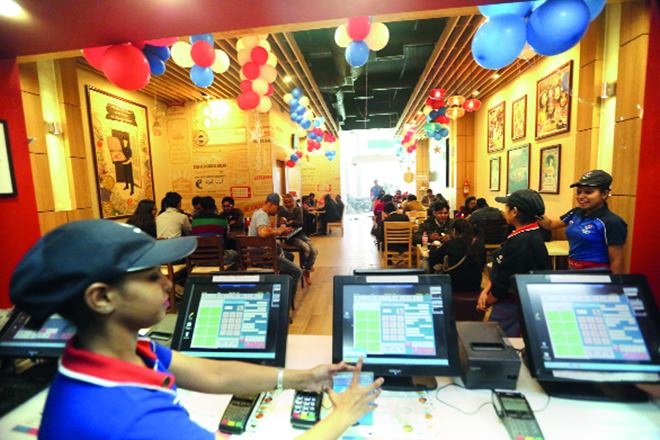
When American fast food standard bearers McDonald’s and Domino’s Pizza stepped into India in the mid-1990s, the market was just ripe enough for take-off.
McDonald’s and later Domino’s Pizza can be credited with not just growing the consumer appetite for fast food but also for fostering an entire food service ecosystem, including fresh produce, baked goods, sauces and condiments, and cold chain technology.
India has been typically difficult for business models driven by scale, replicability and predictability. The customer is price sensitive, operating costs are high and non-compliance of business standards is a frequent occurrence. In this environment, these brands have reinvented the meaning of meals, snacks and treats.
Their growth has set the stage for other international players and also set business aspirational standards for Indian food entrepreneurs and conglomerates alike.
Product experimentation has also been an important part of their success; it keeps excitement in the brand alive and help improve footfall. However, how far a product sustains and whether it becomes a menu staple can’t be predicted accurately. New products also need significant investment in both supply chain and front-of-house changes in standardisation-oriented QSRs, so the new product launch cannot be undertaken lightly. This is one reason these successful QSR formats don’t overhaul their menus drastically but make changes incrementally.
For these market leaders, future scale and deeper penetration is only feasible with higher visit frequency. For growth in middle-income India, they need to become a significantly cost-competitive option to be seen as more than a ‘treat’ or celebration destination.
So, while both McDonald’s and Domino’s Pizza have invested significantly in Indian flavours and menu offerings, perhaps it’s also best for them to reconcile with the fact that there will be a significant part of the consumer’s heart, stomach and wallet that will remain dedicated to indigenous offerings.
In a global environment that’s turning hostile to fast food, India isn’t a quick-fix growth market, but it’s certainly one to stay invested in, for the longer term.
And I have no doubt that as much as these companies aim to change India, over time India will also change them.
(Also published in Brand Wagon, The Financial Express)
admin
May 12, 2015
A seminar was organised on the 12th of May in Zeist (the Netherlands) on “the Opportunities & Challenges for Dutch (Semi-) Processed Food Companies in India”. Highlights of a report and other insights were presented by Devangshu Dutta, chief executive of Third Eyesight. Other entrepreneurs who also shared their experiences in India, and the Dutch agricultural counsellor, Wouter Verhey, was present at the event.
The sessions included:
You can download a summary of the report via this link: India – Opportunities Challenges for Dutch Processed Food Companies

admin
November 6, 2014
India has a rich culture and ecosystem of social enterprises, non-profits and many other social purpose organisations that serve the needs of many segments of society within a vast landscape. However, for a foreign investor looking for impact investing or other philanthropic opportunities in India, it can often prove to be a challenging journey. Devangshu Dutta (Third Eyesight/PVC Partners) and the Audrey Selian (Artha Platform) together provided a landscape overview of India, highlighted key challenges and pitfalls to look out for, and shared an insider view for international investors in this first part of AVPN’s India series.
Devangshu Dutta
October 25, 2014

These are thoughts shared in an emailed interview with the AgriBusiness and Food Industry magazine (published in the November 2014 issue.)
A Perspective on the Indian market:
Our first word of advice to companies that are looking at India as an evolving and large market, is to acknowledge the fact that that it has very diverse cuisines and food cultures.
Both Indian and international companies wishing to enter this market for the first time need to understand and acknowledge that one-size certainly does not fit everyone.
The variety of finished products needed requires food companies to address smaller quantities and to have flexible production.
Therefore, suppliers of capital equipment and technology also need to be able to think about how they can make their solutions more flexible to adapt to changing market needs, and also to price them appropriately for the Indian market. Simply extending solutions that work in large, developed markets such as Western Europe and North America is not the best approach.
I would use the example of one of our clients, a manufacturer of bakery automation equipment, who have approached the market with an open mind. After initial investigations they have gone back to the drawing board and created production lines that have smaller capacity, can produce multiple products including Indian specialities, and which are techno-commercially more feasible for an Indian customer to adopt.
There is no reason to think that India’s food industry should follow exactly the same development curve as the west. The population is much larger, with significantly lower income, and needs that are far more diverse and changing far more rapidly than in most other economies. The technical and technological models for India need to be strongly focussed on four major attributes:
Agricultural, horticultural and animal husbandry practices and technologies, as well as those in the downstream sectors such as food processing, need to perhaps even look at setting new benchmarks for accessibility and long-term sustainability.
Food processing and the Indian consumer market:
Food processing has been part of human history since we learned to transform hunted, gathered and farmed raw products into new foods through curing, cooking, culturing etc. This processing has been driven by mainly two major factors: to make the raw material into a product that is more palatable and easily consumed (for example, from raw grains to bread), or to extend the storage life of the raw material (for example, in the form of cheese, pickles, or sweets, or using cooling and freezing).
However, during the last century, processing has been driven mostly by “convenience” by providing partly or fully cooked options, to reduce the time spent by individuals in cooking and to instead apply that time to activities outside home. Social structures in India are changing, as individuals are migrating out of their home-towns to other locations within the country. The number of households is increasing dramatically, while cooking time and cooking skills are both declining. With this, out-of-home consumption as well as partially or fully-cooked packaged foods are bound to rise, leading to greater need of food processing capacities.
Also, with increasing industrialisation of food manufacturing, standards have become important both for efficiency and for safety. We’re seeing signs of such development happening in recent years in India as well – expectations of both consumers as well as regulatory authorities are higher with each passing year. The industry needs to invest proactively in better technology and processes in all areas – cultivation, handling, processing, packaging, storage and transportation – to raise the standards of hygiene, safety, traceability etc.
Food productivity needs urgent attention:
India is among the largest producers of many agricultural products. However, our yields per head of workforce, per animal, per hectare, or per litre of water consumed can be improved significantly. Not only is the population growing, but per capita consumption of most products will rise as the economic situation of each family unit changes. Better practices, technologies and know-how need to be acquired and applied to dramatically improve Indian agricultural productivity.
An interesting model of development to look at is the “golden triangle” approach followed by the Netherlands – active and intensive cooperation between the government, academic institutions and the private sector.
So far, by and large, academic institutions in India have limited themselves to “teaching” and have stayed away from actively collaborating with industry. Academic institutions and the industry typically connect only for the occasional “lecture” by senior individual from industry, or during the time of recruitment of fresh talent. Government largely limits itself to creating macro-level policies. More effective communication and coordination between these three legs could help to dramatically improve the standards in the agricultural and food sector in India and make the nation not just self-sufficient but significantly more competitive in both cost and quality of the final products.
Similarly, active collaboration within the industry itself is important to achieve combined growth, which can only happen if companies step beyond the usual industry association framework.
Local production and service of food processing equipment is an important factor:
In cases where the market is large enough, local production of the equipment should certainly be investigated because it can help to bring down the initial capital cost for customers, and also provide a quicker service and support base.
A first step that a company takes is to create a local presence, either through a distributor or agent, or by directly opening a sales and service office of its own. However, most international companies need to gain a certain degree of confidence in the market, both in terms of sustained demand and in terms of operating conditions, before they would invest in manufacturing in India, since it takes a whole different level of management commitment as well as financial involvement.
With the announcement of the government’s “Make in India” initiative, hopefully more international companies will come forward to take advantage of the changing operating environment in the country.
