
admin
February 21, 2024
The ability of fashion businesses to endure and thrive in the face of stiff competition and changing market dynamics is all about adapting to innovation, customer-centricity, and strategic planning. The correlation between high performing fashion business and product innovation is undeniable.
This panel discussion brings Design and Business Heads together to brainstorm on how fashion companies can devise strategies to drive innovation to remain competitive, meet evolving consumer expectations, and stay ahead of the race.
Moderator: Devangshu Dutta, Founder & Chief Executive, Third Eyesight
Panelists:
admin
February 21, 2024
Sharleen D’Souza, Business Standard
Mumbai, 20 February 2024
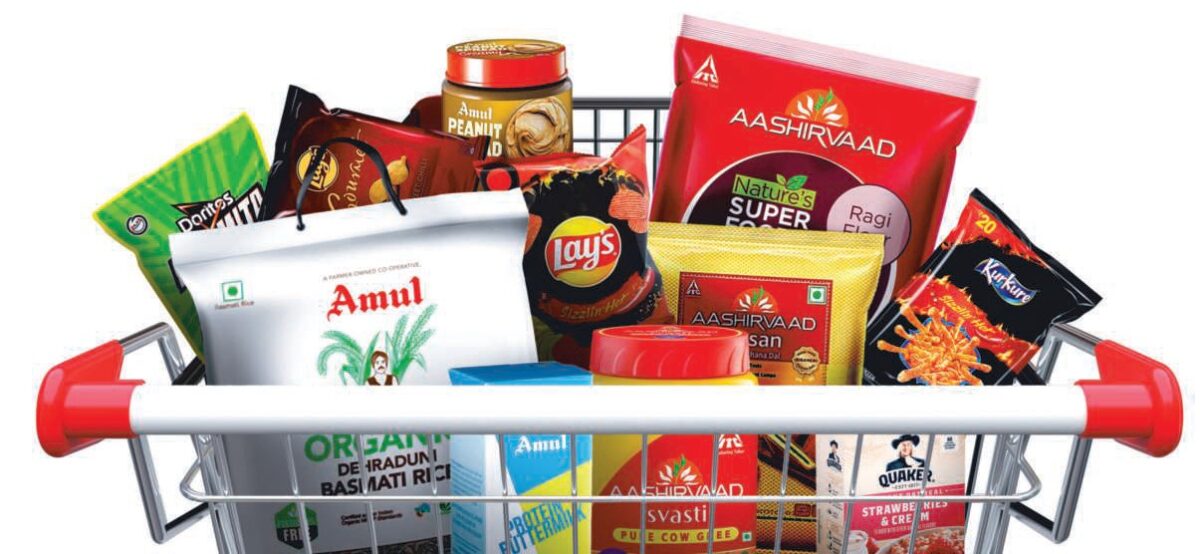
Over the past year, Amul has undergone a transformative journey, evolving from a dairy-centric entity to a comprehensive foods company.
Since 2022, PepsiCo India, too, has embarked on extensive launches in the food category.
Not to be left behind, ITC, which has been introducing an average of 100 fastmoving consumer goods (FMCG) products across categories every year, has also launched a number of packaged food items.
The shelves in stores are packed. The options on e-commerce platforms are dizzyingly aplenty. The consumer is spoilt for choice. Which flavour of oats to go for? What packet of chips to pick? Should one reach out for those mouthwatering frozen snacks or think healthy and opt for atta (wheat flour) cookies?
Companies are pulling out all possible goodies in the form of packed food.
It is a strategic shift initiated during the pandemic and which has proven to be a lasting trend. During the pandemic, when other businesses were curtailing expenses, food companies started launching new products as consumers turned to packaged food.
Amul identified a growing preference for purity during the pandemic, and realised that this preference was here to stay. The company aggressively expanded its product range, venturing beyond dairy into items such as organic dal, atta, and basmati rice.
“We noticed that consumers were moving from unbranded to branded products, and were increasingly seeking out those that would boost their immunity,” says Jayen Mehta, managing director, Gujarat
Cooperative Milk Marketing Federation. Even later, as the world moved out of the pandemic, the preference for packaged foods continued.
Convenience foods, which had gained prominence during the pandemic, sustained their popularity. The widespread adoption of modern retail formats, including brick-and-mortar, e-commerce and quick commerce, proved to be further growth enablers for packaged foods. These formats facilitate the display of entire product ranges to a larger consumer base, says brand expert Devangshu Dutta, founder at Third Eyesight, and that helps.
Growing platter
Today, while Amul’s flagship product, packaged milk, is recording double-digit growth, Mehta says the company is also focusing on premiumisation by introducing artisanal cheese and products such as
Amul High Protein Buttermilk, high protein lassi and shakes, and whey protein.
ITC’s diverse launches, meanwhile, include lump-free Aashirvaad Besan, frozen breads, Dark Fantasy centre-fill cookies, and a variety of Master Chef frozen snacks such as paneer pakoda and onion rings, B
Natural fruit juices, Aashirvaad Svasti ghee, and so on.
Last year, as the focus turned to millets, and 2023 was declared International Year of Millets, the Kolkata-headquartered conglomerate saw a healthy business opportunity. It launched ITC Mission Millet with
an array of millet-based products: Sunfeast millet cookies, Aashirvaad millet mixes, YiPPee! millet-based noodles, Candyman Fantastik chocsticks with millets, and more.
“The company will continue with its focus on consumer-centric innovation and product launches across its portfolio,” says Hemant Malik, executive director, ITC. A finger on the consumer’s pulse, product research and development through ITC’s Life Sciences and Technology Centre, and an extensive omnichannel distribution infrastructure are helping the game.
PepsiCo India, too, is in the race to capture a growing share of the packaged food market. How serious the company is about this can be gauged from the fact that since 2022, its launches in the packaged food category have been the highest since it entered the food space in 1995.
It is not even two months into 2024 and PepsiCo has already launched three flavours in oats: masala magic, herby cheese, and mixed berries.
Last year, it had four launches and introduced seven new flavours in Doritos and Kurkure. And in 2022, it launched five new products and eight new flavours in Doritos, Quaker Oats and Lay’s.
In Lay’s, it went premium and launched Lay’s Gourmet.
Sravani Babu, associate director and category lead at Quaker Oats, says while the category is nascent compared to other FMCG segments, it is growing in double digits. So, the three new flavours were a
considered call.
While “basic oats continue to be the leading segment in the category,” she says, with these new flavours, the company is looking at oats as not just something one eats for breakfast. With PepsiCo keen on broadening the oats portfolio, the bowl is expected to see even more variety in the time to come.
Food in a jiffy
Quick commerce, which promises deliveries within 10 minutes, has also accelerated in-home consumption trends, said Saumya Rathor, category lead of potato chips at PepsiCo India, in an interview.
Consumer habits, she said, take decades to evolve, but the pandemic hastened that shift. So, the convenience-driven traction for packaged foods has persisted. E-commerce and quick commerce have only expanded packaged snack penetration across the country.
In response to the growing demand, PepsiCo India has announced its first food manufacturing plant in Nalbari, Assam, with an investment of Rs. 778 crore ($95 million). Scheduled to be operational in 2025,
this expansive facility spans 44.2 acres and underscores the company’s desire to make the most of the rising consumption trends in the foods sector.
Other food companies, including ITC and Amul, have also embraced an assertive stance, launching products strategically.
The trajectory indicates a promising future for India’s packaged food sector. The shelves are set to overflow.
Size of the packaged foods market: In 2022, India’s packaged food market size was $2.7 billion and it is projected to reach $3.4 billion by 2027
(According to Statista)
(Published in Business Standard)
admin
November 4, 2023

Faizan Haidar, Economic Times
4 November 2023
Some of the super-luxury brands that have opened stores at the recently inaugurated luxury mall, Jio World Plaza in Mumbai, have put in a condition that at least four top brands – such as Louis Vuitton, Gucci, Cartier, Burberry, Tiffany, Valentino, Bulgari, Zegna, Giorgio Armani and Bottega Veneta – should be present in the same complex, to ensure the position of their brands is not diluted.
ET has seen copies of the agreements between Reliance Industries, the owner of Jio World Centre, and five brands, accessed through data analytic firm CRE Matrix.
Reliance Industries and the brands did not respond to emails seeking comment till press time on Friday. Brands often have an exclusivity clause with the mall where they don’t want competing brands near their stores. However, in the high-end segment, to ensure a similar buyer profile, they want similar stores nearby. Jio World Plaza already meets the condition with several of these super-luxury brands having opened their outlets there.
“If at least four among the mentioned brands are not open within six months of us starting the operation, we should be entitled to a reduction of the licence fee by 25% for the period that this criteria remains unfulfilled,” Christian Dior Trading, which will operate Dior, has said in the agreement.
Dior will pay ₹21.56 lakh in monthly rent for a 3,317 sq ft space in the complex. Gucci has given a list of six luxury brands – Louis Vuitton, Dior, Cartier, Bulgari, Valentino and Burberry – and demanded that at least four have to be represented in the shopping centre.
Louis Vuitton, Cartier and Bulgari have also put in similar conditions. Most of them have kept the right to terminate the agreement after serving the notice for nine to 12 months.
“In the super-luxury segment, most of the brands complement each other and that is why they want the presence of these brands next to each other. Good mall developers also go with zoning of brands and don’t want to mix the super-luxury brands with the premium or mid to premium brands. As more luxury brands are contemplating India entry, we will see more luxury spaces coming up,” said Devangshu Dutta, founder of retail consulting firm Third Eyesight.
India only has a handful of malls that give space exclusively to super-luxury brands.

admin
October 26, 2023
Sagar Malviya, Economic Times
26 October 2023
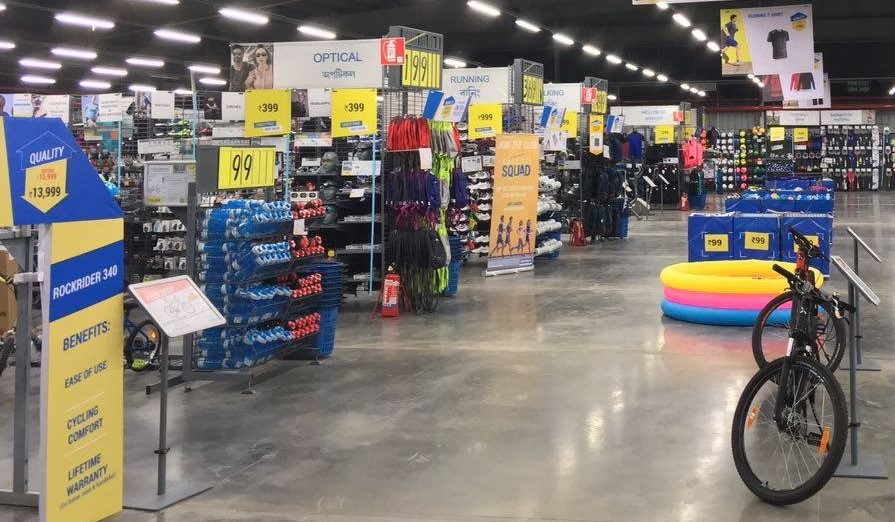
Surging demand for fitness wear and sports equipment for disciplines other than cricket and football helped Decathlon’s India unit expand sales 37% to Rs 3,955 crore in FY23. With more than 100 large, warehouse-like stores selling products catering to 85 sporting disciplines, the French company is bigger than Adidas, Nike and Asics all put together in India.
In FY22, sales were Rs 2,936 crore, according to its latest filings with the Registrar of Companies. The retailer, however, posted a net loss of Rs 18.6 crore during the year ended March 2023 compared to a net profit of Rs 36 crore a year ago.
Experts said a host of factors – from pricing products about 30-40% lower than competing products to selling everything from running shoes, athleisure wear to mountaineering equipment under its own brands – has worked in its favour. “They have an extremely powerful format across different sporting activities and have something for both active and casual wear shoppers. For them, the market is still under penetrated with the kind of comprehensive product range they sell for outdoor sports beyond shoes and clothing,” said Devangshu Dutta, founder of retail consulting firm Third Eyesight. “Even their front end staff seem to have a strong domain knowledge about products compared to rival brands.”
By selling only private labels, Decathlon, the world’s biggest sporting goods firm, controls almost every bit of operations, from pricing and design to distribution, and keeps costs and selling prices low.
Decathlon uses a combination of in-house manufacturing and outsourcing to stock its shelves. In fact, it sources nearly 15% of its global requirement from India across sporting goods. And nearly all of its cricket merchandise sold globally is designed and made in India.
(Published in Economic Times)
admin
August 26, 2023
Several new-age startups in the D2C space in India are being acquired by bigger FMCG companies.
