
admin
November 18, 2025
Chris Kay, Krishn Kaushik and Andrea Rodrigues in Mumbai
Nov 18 2025
Just before dawn, Kashif Sameer joins dozens of couriers zipping across Mumbai to deliver items stocked in a basement of a shopping mall run by Reliance Industries.
“I make between 20 and 30 deliveries in a day,” said the 25-year-old, who had just driven a mile across the chaotic roads of the Indian megacity to drop off groceries ordered 15 minutes earlier. “It is very popular with customers.”
The buzzing activity at the so-called dark store, a mini-warehouse operated by Reliance’s ecommerce platform JioMart, is part of a renewed push by the conglomerate’s chair and Asia’s richest man, Mukesh Ambani, to reassert his company’s position in India’s retail market.
It has added hundreds of dark stores to operate a total of nearly 20,000 physical outlets this year — almost double its pre-pandemic size — as it battles for dominance against Blinkit, Swiggy and Zepto in the country’s ballooning quick-commerce market.
“It’s a question of who runs out of money first,” said Arvind Singhal, chair of retail consultancy The Knowledge Company. “We will see some kind of a shakeout.”
Despite its large network of physical stores, Reliance has yet to corner the domestic consumer market like it did with telecoms a decade ago. It faces entrenched competition from established domestic and international rivals, as well as millions of kiranas, family-run convenience stores.
The sprawling Tata Group operates a wide range of consumer businesses, while global multinationals such as Unilever and Nestlé are important players in India’s household goods market.
Reliance Retail, the division that contains all of the conglomerate’s consumer-facing units, had shed tens of thousands of employees and closed underperforming stores following a bloated build-out during the Covid-19 pandemic and slowing middle-class spending.
But India’s most valuable company, which has a market value of more than $225bn and operates across oil refining, telecoms and entertainment, is expanding its retail reach again.
Reliance Retail’s latest results point to a rebound. In the quarter ending September, the unit reported revenue of about $10bn and profit of $390mn, up 18 and 22 per cent respectively from the previous year.
“Reliance’s scale in retail now is unmatched in India,” said Devangshu Dutta, chief executive of consumer advisory company Third Eyesight, in reference to the breadth of the conglomerate’s business. “This scale is unique in India and rare in global retail.”
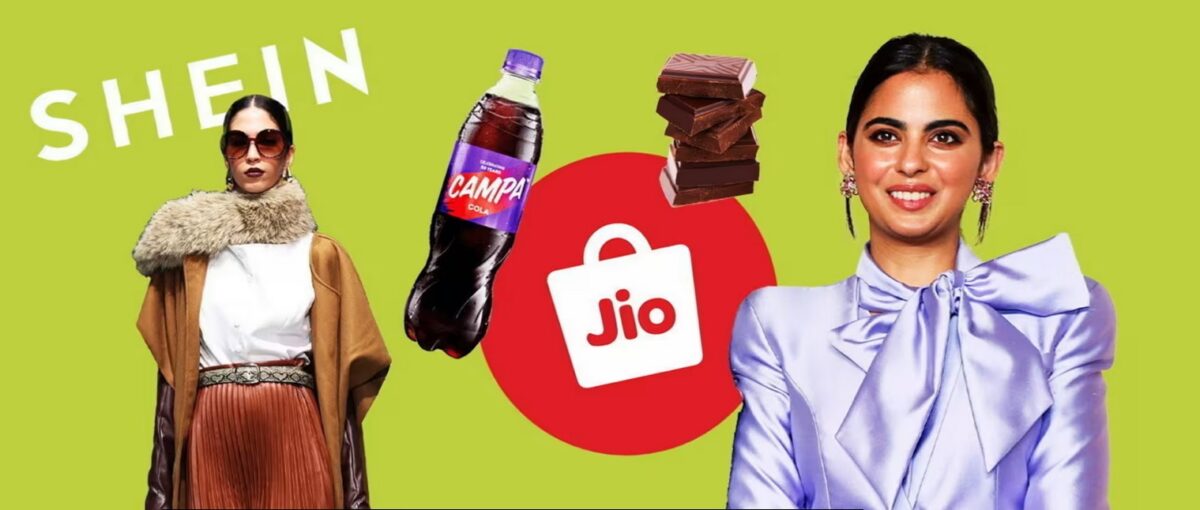
Ambani’s retail ambitions are being led by his 34-year-old daughter, Isha. In August, she detailed plans for Reliance’s consumer brands subsidiary, which has a portfolio including Lotus Chocolate and the recently revived nostalgic Indian soft drink Campa Cola, to reach $11.7bn in revenue within five years.
Ultimately, the goal was to “become India’s largest FMCG company with a global presence”, said Isha Ambani during Reliance’s annual meeting.
The company told the Financial Times that it continued to “reinforce its position as India’s largest retailer, expanding its nationwide network”.

While Ambani originally indicated that he wanted to list Reliance Jio Infocomm, the telecoms unit, and Reliance Retail by 2024, people familiar with the company said the retail unit was not ready to go public. The billionaire said the Jio listing could happen in the first half of next year.
“Competitive intensity in every category in the discretionary retail side has picked up very sharply,” said Karan Taurani, executive vice-president at Elara Capital, who does not expect Reliance Retail to float for at least two years. “New competitors, new brands have come in and they are challenging the larger incumbents.”
The Ambanis, who operate as gatekeepers for foreign companies seeking access to India’s massive but challenging business landscape, have sought to cement their position through a spate of partnerships with western retail brands.
Foreign brands including West Elm, Pottery Barn and Superdry have stores in Reliance’s shopping malls in upmarket Mumbai. However, those joint ventures have largely struggled to gain traction with shoppers in India, where the per capita income remains less than $3,000.
The conglomerate’s foreign brands business housing these joint ventures lost Rs2.7bn ($30mn) in the financial year through March 2025, according to the latest available accounts. The Knowledge Company’s Singhal called Reliance’s push to bring international names to India “a vanity project”.
Reliance’s high-profile partnership with fast-fashion retailer Shein has also been underwhelming. The company returned to India this year under Reliance’s wing after being booted out in 2020 when relations between New Delhi and Beijing soured following military clashes along their disputed border.
Shein’s app has been downloaded just 11mn times, according to market intelligence firm Sensor Tower. Its discount prices are largely matched, if not undercut, by many Indian ecommerce and fashion retailers, say analysts.
Reliance is investing heavily in quick commerce, where deliveries are promised in 30 minutes or less. Bank of America estimates the market could reach $128bn by 2030.
The field is at present dominated by Blinkit, Swiggy and Zepto, which together control more than 90 per cent of the quick commerce delivery market and compete with Amazon and Walmart-owned Flipkart. None of the companies are profitable.
The Ambanis are eager to catch up. Over the past six months, Reliance has built about 600 dark stores across cities to plug gaps in its vast store network. By contrast, market leader Blinkit operates about 1,800 dark stores.
In quick commerce, “we have to be there because everybody is”, said a person close to the conglomerate. “It is a long-term strategy.”
On a call with analysts last month, Reliance Retail’s finance chief Dinesh Taluja admitted to delays in entering quick commerce. But he insisted that Reliance offered better prices, more variety and wider reach across smaller Indian cities where it is often the only formal retailer.
“The competition today is mainly in the top 10, 20 cities,” Taluja said. “We are present in almost a thousand cities. Competition will take many years to reach where we already have a head start there.”
Still, Reliance was facing an uphill battle, warned Elara’s Taurani. “JioMart is making a late entry,” he said, “it will be very tough to disrupt players here.”
(Published in Financial Times, all copyrights owned by FT)
admin
November 13, 2025

Saumyangi Yadav,Entrepreneur
Nov 13, 2025
India’s consumer landscape is undergoing a decisive shift in 2025. While D2C brands that once thrived on digital-only distribution are now aggressively building an offline footprint, legacy FMCG majors are simultaneously acquiring digital-first brands to strengthen their portfolios and tap into new consumer behaviours.
As analysts suggest, these trends signal a maturing phase for India’s D2C ecosystem, one that blends physical retail and strategic consolidation.
Offline Push Accelerates
According to a recent CBRE report, ‘India’s D2C Revolution: The New Retail Order’, D2C brands leased nearly 5.95 lakh sq ft of retail space between January and June 2025, accounting for 18 per cent of all retail leasing during this period, up sharply from 8 per cent in the first half of 2024. Fashion and apparel dominated the expansion, contributing close to 60 per cent of D2C leasing, followed by homeware and furnishings and jewellery at about 12 per cent each, while health and personal care brands accounted for roughly six per cent. The shift is equally visible in the choice of retail formats: 46 per cent of D2C leasing went to high streets, 40 per cent to malls, and the remaining to standalone stores, reflecting the category’s growing focus on visibility, trial and experiential discovery.
Experts suggest that it represents a strategic pivot to blended engagement.
As Devangshu Dutta, CEO of Third Eyesight, notes, “India’s D2C surge is powered by digital-first consumers, tremendous improvement in seamless logistics, and low-cost market entry, supported subsequently by substantial amounts of investor capital chasing those startups that stand out from the competition. Yet, lasting success demands a more holistic view: the divide between online and offline is a business construct, not a consumer reality. The larger chunk of retail sales still happens through physical channels and, for brands that want to be mainstream, an omnichannel presence is absolutely essential.”
This also aligns with the broader market outlook. The India Brand Equity Foundation (IBEF), in its Indian FMCG Industry Analysis (October 2025), estimates the value of India’s D2C market at USD 80 billion in 2024, with expectations of crossing USD 100 billion in 2025. Much of this growth is being led by categories that combine frequent purchase cycles with strong digital discovery, beauty, personal care, and food and beverage segments where consumers are open to experimentation but demand authenticity, transparency, and a compelling product narrative.
“The Gen Z and millennial consumer cohorts value newness but also authenticity and unique product stories, which are best communicated in spaces that are controlled by the brand,” Dutta added, “In the launch and growth phases, this could be the brand’s digital presence including website and social media, but over time this can include pop-up stores, kiosks, shop-in-shops and even exclusive brand stores.”
CBRE’s data reflects this shift clearly, with D2C brands increasingly opting for flexible store formats and high-street locations to maximise traffic and visibility.
M&A Gains Momentum
Parallel to the offline push is a noticeable wave of consolidation. Large FMCG companies are accelerating acquisitions to capture emerging consumer niches and strengthen their digital-native capabilities.
In recent years, Hindustan Unilever has acquired Minimalist; Marico has bought Beardo, Just Herbs, True Elements, and Plix; ITC has taken over Yoga Bar; and Emami has secured full ownership of The Man Company. These deals, reported widely across business media in 2024 and 2025, point to the need for established companies to fast-track entry into high-growth, ingredient-forward, and youth-focused categories without the lead time of in-house incubation.
“Legacy FMCG companies are acquiring D2C brands to rapidly gain access to new consumer segments, product innovation, and digital-native capabilities, including direct engagement and insights. Such deals enable large companies to diversify portfolios, accelerate entry into trending segments by-passing the initial launch risks, and rejuvenate their brands with modern digital marketing expertise,” Dutta explained.
Challenges and Risks
But the acquisitions do not come without risk and challenges, analysts warned.
“However, integrating D2C operations also poses challenges, including cultural differences, the risk of stifling entrepreneurial agility, and the need to harmonise data and omnichannel strategies. The ability to nurture acquired brands without diluting their distinctive appeal will determine acquisition success,” Dutta added.
Yet even as the ecosystem expands, challenges remain. Offline stores add operational complexity, inventory planning, staffing, last-mile logistics, and real-time data integration. Still, the bottom line is that India’s D2C sector is moving into a hybrid era defined by tighter omnichannel integration, sharper product storytelling, and portfolio realignment through acquisitions.
(Published in Entrepreneur)
admin
September 22, 2025
Christina Moniz, Financial Express
22 September 2025
It is already the largest player among organised fumiture makers with over 15% of the market. With 1,000 stores, it has the widest retail store footprint among organised players. The 102-year-old brand is also the second-largest revenue con-tributor to the parent enterprise.
So why is Interio tinkering with its name, logo and colour attributes?
“We want to move away from being viewed as a functional brand to more of a design-led lifestyle one. We have a wider range of offerings that are more modular and aesthetic,” says Reshu Saraf, head of marketing communications at Interio by Godrej.
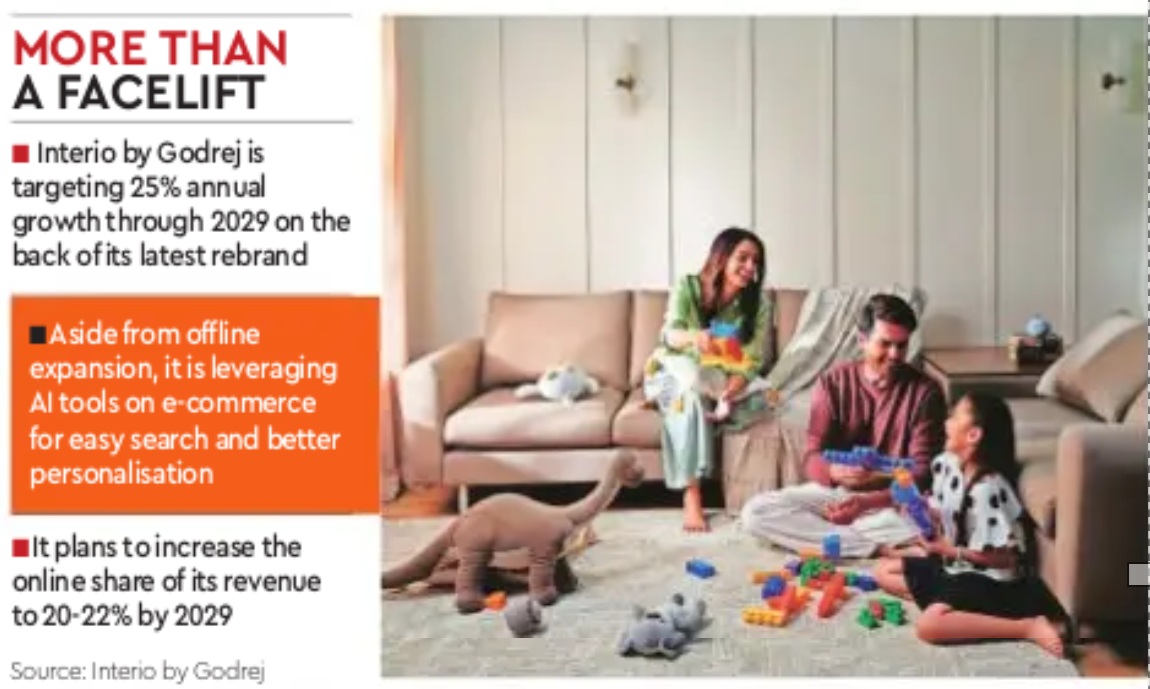
As a first step, it has a new logo and name change – from Godrej Interio to Interio by Godrej. The brand has earmarked ₹50 crore towards an integrated campaign across TV, digital, outdoor and in-store branding to promote its new proposition over the next year. Overall, it will invest ₹300 crore in expansion and technology with the goal to more than double revenues to ₹10,000 crore by FY29.
Younger consumers don’t see furniture as utility but as lifestyle, observes Puneet Pandey, strategy head and managing partner, OPEN Strategy & Design. “By moving from ‘solid and sturdy’ to ‘stylish and aesthetic’, the brand earns the right to play at higher price points as well. Design-led positioning will also unlock repeat purchase since people no longer wait a decade to change their furniture based on utility; they want constant upgrades to refresh their living spaces as their tastes evolve,” he notes, adding that Interio needs to make the marketing leap from “catalogue to culture”.
Saraf says the brand is also building differentiation with its customer experience. “We’re using digital tools for store walkthroughs and visualisers to help visualise our products in the home. Our product portfolio, which is deeply personalised ane tailored for Indian sensibilities, it is a major differentiator that few other brands offer,” she points out.
E-commerce is also a focus area with the brand looking to increase the revenue share from 15% to 20-22% by 2029. The company is leveraging Al to improve the search functionand sharpen personalisation. Saraf adds the that offline too, the brand will have large format experience centres to help people envision what their rooms could look like, along with mid-size and small-format stores.
Interio also plans to widen its retail store footprint from 1,000 to 1,500 by 2029.
As per industry estimates, the Indian furniture market is set to grow at 11% annually to reach $64.1 billion by 2032 from $30.6 billion in 2025. It is this growth momentum that Interio is looking to cash in on.
Built-in differentiation
Although a significant chunk of Interio’s business comes from its home remodelling services, within the furniture category, it competes with global players like IKEA and digital-first brands like Pepperfry. The challenge for Interio in this market is to embed the design-led positioning in its productsandcus-tomer experience, says Nisha Sam-path, managing partner at Bright Angles Consulting.
One of its biggest advantages is the Godrej brand. “The Godrej brand stands for many values prized in interiors such as quality, trust, reliability and durability with a ‘Made in India’ tag. However, the brand has not been so successful in building an image of cutting-edge design and innovation. These are new values that can make the brand more contemporary,” she remarks.
Devangshu Dutta, CEO of Third Eyesight concurs, pointing out aside from nimble competition, Interio’s key challenges also come from the dual pressures of increasing consumer expectations for rapid delivery and customisation on the one hand, with aggressive price competition on the other.
(Published in Financial Express – Brandwagon)
admin
September 17, 2025
Sowmya Ramasubramanian, Mint
17 September 2025
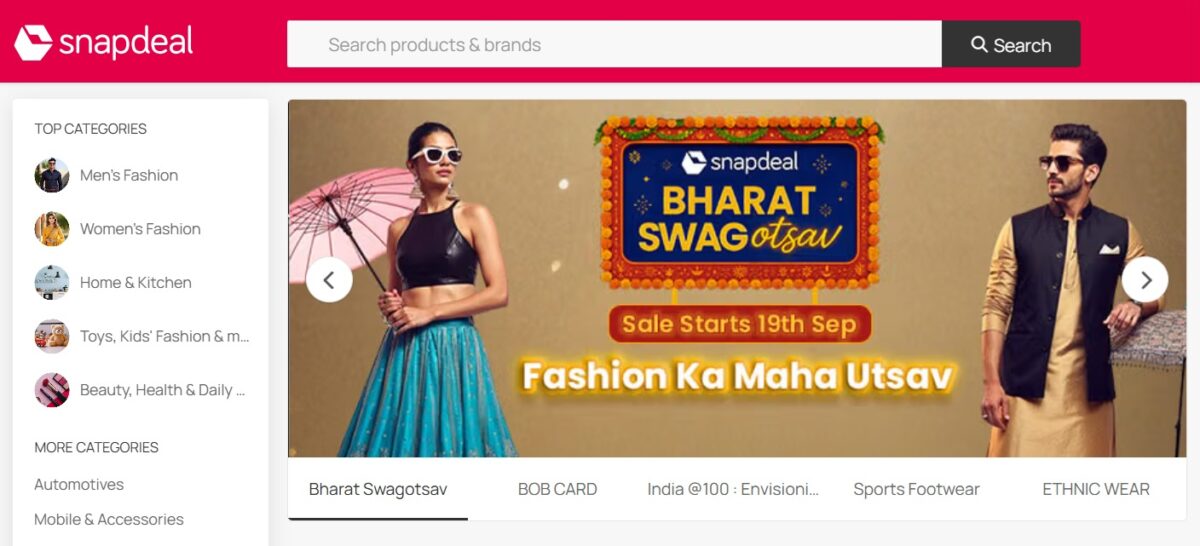
Snapdeal, run by AceVector, is relying on strong growth in fashion and apparel to strengthen its position in the competitive e-commerce space, especially during the high-stakes festive season when customer loyalty is low. According to CEO Achint Setia, the company has seen its fashion and lifestyle categories triple in growth this year, though exact figures remain undisclosed.
“Fashion has been a standout category this year and, in fact, has been possibly the fastest-growing one so far. Overall, lifestyle [including fashion, home decor, and kitchen] already accounts for 90% of our business today, and fashion is a major driving force,” Setia told Mint in an interview.
Setia was appointed to the role in January, replacing Himanshu Chakrawarti, who led Snapdeal and its subsidiary Stellaro Brands for three years. Setia has over two decades of experience across marketing and strategy roles in firms like Myntra, Viacom18 Media, and Zalora Group.
While the festival season is a key period for all consumer-facing brands and platforms, this year is important for Snapdeal as it is currently waiting for the Securities and Exchange Board of India (Sebi) clearance to list in the public markets.
“Approval from Sebi before the end of the financial year is crucial for Snapdeal. If they don’t get it, or if they have to refile, they’ll need to update their IPO documents with a full year of financial data. This means the festive season performance will be key in shaping investor sentiment, especially in a volatile market,” said a senior e-commerce executive, asking not to be named.
The firm filed its draft papers for an IPO reportedly to raise ₹500 crore through the confidential route in July, which allows it to withhold public disclosure of IPO details until later stages. Setia declined to comment on the progress of the filing.
Despite its early entry, Snapdeal is yet to make a mark among the top e-commerce players in the country by both market share and volume of transactions. For context, industry estimates show Flipkart as the market leader with 48% share, followed by Meesho and Amazon. The Indian e-commerce market is projected to grow at a compound annual growth rate (CAGR) of 21% and reach $325 billion dollars in 2030 as per an October 2024 report by Deloitte.
Founded in 2010 by Kunal Bahl and Rohit Bansal, Snapdeal was initially launched as a daily deals platform and later pivoted to a full-fledged marketplace in 2011. Over the years it raised more than $1.8 billion in funding from Softbank, Alibaba group, Foxconn and Blackrock among others. However, intense competition and the absence of a distinct growth strategy have gradually eroded Snapdeal’s momentum in the e-commerce space.
Snapdeal largely caters to cities outside metropolitan areas where value retail has picked up in recent years. Within this, fashion remains the top growth driver-with more than 80% of orders placed priced below 1599 and 80% of them com-ing from small town India, accord-ing to CEO Setia. “For us, it’s about the value-conscious mindset that could be sitting out of anywhere,” he noted.
Over the last few months, Snapdeal has invested substantially in in-house festive campaigns, as well as technology and tools for returns forecasting and logistics. According to Setia, it has also expanded its seller portfolio, adding more from key clusters like Tirupur, Surat, Ludhiana, and Agra.
According to a September 2024 report by market research firm Centrum, the mass-market fashion segment accounts for 56% of India’s total apparel market.
However, offline continues to account for more than half the sales, with Tata’s Trent, D-Mart, and Vishal Mega Mart offering a sufficient selection of price-conscious consumers in smaller towns.
While small-town India offers a wide online shopping-savvy market waiting to be captured, Meesho has raced past Snapdeal in those geographies, especially in value commerce.
“For a very long time, Snapdeal has been positioned as an e-commerce platform for Bharat, but it doesn’t necessarily hold a strong position. Meesho, Flipkart and Amazon have expanded their presence in these markets over the years, which means competition is so much more now,” said Devangshu Dutta, founder and chief executive officer at consulting firm Third Eyesight.
(Published in Mint)
admin
September 15, 2025
Shabori Das & Sagar Malviya, Economic Times
15 September 2025
ITC Foods is making a strategic entry into fresh packaged foods including short shelf-life cookies, cakes, and chapatis, among others, part of its broader aim to ride the surge in quick commerce demand, said Hemant Malik, chief executive of the food division of ITC.
The move is also prompted by the cigarette-to-snack maker’s aim to capture India’s growing appetite for convenience-led, freshly-made food with shelf life of a few days, instead of 12-24 months for other food products, with quicker fulfilment systems.
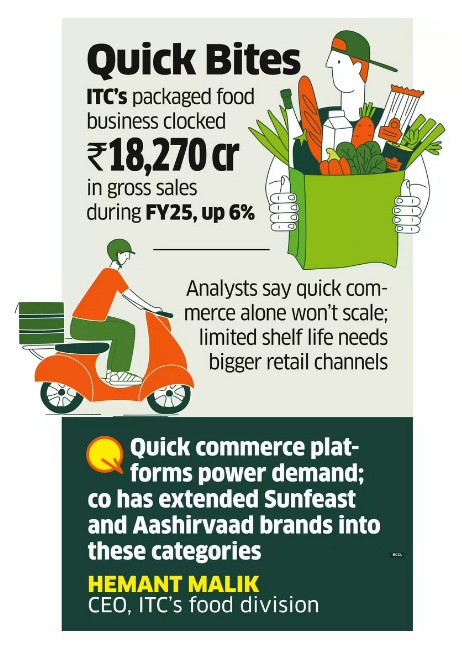
“There is a growing consumer demand for fresh packaged food products, powered by enhanced accessibility and convenience provided by the surge in quick commerce platforms,” Malik told ET, adding that the company has extended its Sunfeast and and Aashirvaad brands into these categories.
ITC has created a hyper-local production and distribution ecosystem to enable next-day delivery from oven to doorstep in a country where supply chains are often fragmented and 75% of the sales are through local kiranas. The company said its small-batch model, scaled across urban micro-markets, will help maintain freshness while sidestepping the usual constraints of long-haul logistics and warehouse storage.
“We are leveraging tech-enabled capabilities, supply chain efficiencies including hyper-local agile production and rapid fulfilment together with focus on fresh sourcing,” Malik added.
Analysts however noted that relying solely on quick commerce won’t ensure scale while limited shelf life could require bigger retail channels including modern and general trade.
“These products will need to move fast. So inventory management in terms of space for quick commerce will be challenging,” said Devangshu Dutta, founder of retail consulting firm Third Eyesight. “And in case of quick commerce, it will need to have catchment focus as not every micromarket in a city will have demand for such products.”
“In the case of large FMCG companies, scalability is always what is needed, and quick commerce alone will not help with that. Eventually modern trade and general trade for these shorter shelf life products will be considered,” he said.
ITC’s packaged food business clocked ₹18,270 crore in gross sales during FY25, up 6% on-year.
Quick commerce platforms such as Blinkit, Swiggy Instamart, and Zepto have made it easier than ever to deliver ultra-fresh products within hours–and they have been tapped by local bakeries and direct-to-consumer companies including Theobroma, Baker’s Dozen, and Id Fresh.
Over the past few months, mainstream companies including Hindustan Unilever, Marico, Adani Wilmar and Parle have carved out separate sales and distribution teams for quick commerce, responding to the need for a faster turnaround in stocking as well as a distinct portfolio for the segment.
(Published in Economic Times)
