
admin
August 6, 2025
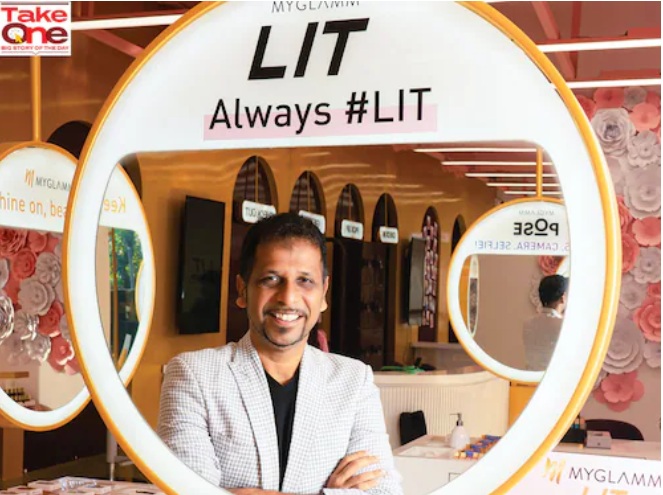
Naini Thaker, Forbes India
Aug 06, 2025
It’s a known fact that of the thousands of startups founded each year, only a small fraction survive—and even fewer scale to become unicorns. Rarer still are those unicorns which, after reaching dizzying heights, come crashing down. The Good Glamm Group is one such cautionary tale.
Once celebrated as a unicorn that cracked the code on content-to-commerce, the company’s meteoric rise was matched only by the speed of its unravelling. At the heart of its downfall lies a critical misstep: The relentless pursuit of growth through acquisitions and brand launches, even as cracks in its house-of-brands model began to show. Instead of pausing to consolidate and build sustainably, Good Glamm doubled down—prioritising valuation over viability.
That strategy came to a head on July 23 when founder and CEO Darpan Sanghvi announced the dissolution of the group’s house-of-brands structure. In a LinkedIn post, Sanghvi confirmed that lenders would now oversee the sale of individual brands, effectively ending the company’s vision of building a digital-first FMCG conglomerate.
Despite raising $30 million in 2024 and undergoing multiple rounds of restructuring, the group failed to integrate its acquisitions or generate sustainable profitability. With key investors such as Accel and Bessemer Venture Partners exiting the board and leadership turnover accelerating, the company’s ambitious empire—built on rapid expansion and aggressive brand aggregation—has now been reduced to a lender-led breakup.
In the aftermath of the announcement, Sanghvi offered a candid reflection on what went wrong. “In hindsight, it wasn’t one decision, one market force, or one acquisition. It was three levers we pulled, which together, turned Momentum into a Trap,” he wrote in a LinkedIn post. According to Sanghvi, the group’s downfall stemmed from doing “too much, too fast and too big”.
He elaborated: “At first, Momentum feels like your greatest ally. Every headline, every funding round, every big launch is a shot of adrenaline. And you start believing you can do more and more and more. But momentum has a dark side. If you stop steering and go in a hundred different directions, it doesn’t just carry you forward, it drags you faster and faster until you can’t breathe.”
Where The Model Broke?
In October 2017, Sanghvi launched direct-to-consumer (DTC) beauty brand MyGlamm. Most brands at the time were big on selling on marketplaces such as Amazon or Nykaa. However, Sanghvi believed, “We wanted to be truly DTC and not just digitally enabled. We believed that to own the customer, the transaction needs to happen on our own platform.”
But the biggest challenge with being a DTC brand is its customer acquisition cost (CAC). Towards the end of 2019, the company was spending about $15 (over ₹1,000) to acquire a customer to transact on their website. “Around the same time, our revenue run rate was ₹100 crore. We were spending about $0.5 million to acquire 30,000 customers a month. That’s when we realised it was time to solve the CAC problem,” Sanghvi told Forbes India in 2022. In an attempt to find a solution, Sanghvi turned to the content-to-commerce model.
And then, started the acquisition spree. According to Sanghvi, with a single brand in a single category one can’t build scale. He told Forbes India, “The most you can scale it is ₹1,000 crore, if you want a company that’s doing ₹8,000 or ₹10,000 crore in revenue, it has to be multiple brands across multiple categories.” In hindsight, this perspective might be debatable.
As Devangshu Dutta, founder of consultancy Third Eyesight, points out, the “house of brands” model is essentially a modern-day consumer-facing business conglomerate—and its success hinges on multiple factors working in harmony. While there are examples globally and in India of such models thriving, both privately and publicly, the reality is far more nuanced. “Brands take time to grow, and organisations take time to mature,” Dutta notes, emphasising that rapid aggregation of founder-led businesses under a single ownership umbrella is no guarantee of success.
In recent years, Dutta feels the influx of capital into early-stage startups and copycat models—often seen as lower risk due to their success in other geographies—has shortened business lifecycles and inflated expectations. The hope is that synergies across the portfolio will unlock outsized value, but that rarely plays out as planned. “It is well-documented that more than 70 percent of mergers and acquisitions fail,” he adds, citing reasons such as weak brand fundamentals, lack of synergy, inadequate capital, limited management bandwidth, and internal misalignment.
In the case of Good Glamm, these fault lines became increasingly visible as the group expanded faster than it could integrate or stabilise.
Scaling Without Steering
In FY21, the company had losses of ₹43.63 crore, which rose to ₹362.5 crore in FY22 and went up to ₹917 crore in FY23. Despite the mounting losses, Good Glamm marked its entry into the US market, in a joint venture with tennis player Serena Williams to launch a new brand—Wyn Beauty by Serena Williams. The launch was in partnership with US-based beauty retailer Ulta Beauty.
For its international expansion, it invested close to ₹250 crore over three years. “We anticipate that the international business will account for 25 to 35 percent of our total group revenues by the end of next year. This strategic focus on international expansion is pivotal as we prepare for our IPO in October 2025,” he told Forbes India in April 2024.
Clearly, things didn’t pan out as expected. As Sanghvi rightly points out, it was indeed a momentum trap. “You tell yourself you’ll fix the leaks after the next milestone. But the milestones keep coming, and so do the leaks. Soon, you’re running from fire to fire, never realising that the whole building is getting hotter. And somewhere along the way, you lose the stillness to think,” he writes on his LinkedIn post.
Dutta feels that a strong balance sheet is the most fundamental requirement, “to provide growth-funding for the acquisitions or for allowing the time needed for the acquisitions to mature into self-sustaining businesses over years. In the case of VC-funded businesses, the pressure to scale in a short time can go against what may be best for the business or for its individual brands”.
The Good Glamm Group’s fall is a reminder that scale alone doesn’t build resilience. Its story reflects the risks of expanding faster than a business can integrate, and of prioritising valuation over value. The house-of-brands model can work—but only when backed by strategic clarity, operational discipline, and patience. This is less a warning and more a reminder for founders: Scale is not success, and speed is not strategy.
(Published in Forbes India)
Devangshu Dutta
March 30, 2010
Last week, Starbucks unveiled its strategy for profitable global growth, having taken approximately US$ 600 million out of costs in since January 2008.
About 3 years ago in a leaked memo, chairman Howard Schultz had raised concern about how, in the race to scale and to become consistent, Starbucks was losing sight of all critical things that had made it successful in the first place. (“The Commoditization of the Starbucks Experience – Soul Searching by Howard Schultz“).
In January 2008, Schultz took on an active role as CEO in a bid to stem the rot (“Leadership Change at Starbucks – The Barista Returns“).
These two years have been eventful. Shortly after Schultz stepped in, Starbucks announced that it would close 600 under-performing stores in the US. That was well before the “financial tsunami”. In 2009, another 200 in the US and 100 globally were identified for closure, and the company also scaled back on its 2009 expansion plan for 200 new stores.
At its shareholders’ meeting last week, Starbucks presented a more confident face, and outlined a return to growth with plans to expand its presence and “accelerate profitable growth in both the U.S. retail business and in key international markets”. (This profitable growth mantra was also recited in last year’s shareholder meeting.)
However, while the business is looking better, it is far from fixed.
The environment is different. Globally, consumer wallets are leaner, competitors are meaner, and Starbucks may yet need to shrink further; the fat ain’t all in the latte.
Yet, there must be much good in the business if, for all its faults, it still gets imitated around the world.
According to Starbucks, it currently has less than 4 percent of the U.S. coffee market with its 6,800 own and 4,400 licensed stores, and less than 1 percent of the global coffee market even with 2,000+ company stores and 3,500 licensed stores. The company sees that as enough headroom to grow.
Schultz has promised to put the tough lessons learned in the last two years to good use. The company currently has approximately 200 fewer stores than it did at the beginning of 2009 even after new store openings during the year. (To put the current number of 16,700+ stores in perspective, the company had a total of “only” 2,600 stores in Q1-2000.)
But there’s something to think about. If the entrepreneur needs to step back in to fix things gone horribly corporate (bland) and wrong, maybe it’s time to acknowledge that there’s a logical limit to the size and scaling-up capability of personalized experience businesses.
Or, as a friend says, scale can be a logical outcome of excellence but excellence is never the logical outcome of scale.
It remains to be seen whether this round of growth will come from the company’s natural strengths or whether Starbucks will return to growth-by-steroids as Schultz eases on the controls.
Devangshu Dutta
October 14, 2008
If you’re like me, then at any given point of time you have a vague idea about what is in your refrigerator, but not quite. That must why we end up buying stuff that duplicates what is already in the fridge.
Here’s an example of what that translates into for me:
At other times, it is the semi-consumed half-loaf of bread that gets trashed half-way through its fossilization process. Or the new flavour of cheese spread, where the price offer may have been tastier than the spread itself.
I sure there will be at least some among you who would have similar stories. (I would be shattered if I’m told that I am the only one with these tales of inadvertent consumption!)
In the normal course, we would not call ourselves excessive consumers. For the most part, we believe we display rational shopping behaviour. We make our lists before leaving for the market and we generally know which shop or shops we want to stop in at. So, why do we end up doubling or trebling our purchases, when we aren’t actively “consuming” double or triple the amount of food?
Well, the lords of marketing spin have mapped their way into our minds. In a strategy that has been proven over centuries, we are offered things ‘free’ or at a significant discount. The very thought of getting something for free, or for less than what it is worth, is so seductive and irresistible.
(As an aside, just look at what has happened during the last few years in the real estate market and the stock market – everyone thought that they were getting a good deal because the stuff was “worth actually more” than the amount they were paying. Not!)
We believe we are being rational in buying the three packs of juice at the price of two – never mind the fact that juice wasn’t on the shopping list in the first place. The danglers and end-caps jump out and ambush us, as we walk through the aisles. The samplers entice in their small voices: “try me”.
You might say that the really traditional kiranawala is the customer’s greatest friend and also a barrier against uncontrolled consumption.
By keeping the merchandise behind the counter or in the back-room, he maintains a healthy distance between the addiction source and all us potential shopaholics. In fact, he goes beyond the call of duty, and even prevents us from stepping anywhere near the merchandise by delivering to our homes.
The enticing deals and offers that you can’t see won’t hurt you. You won’t call to get that new, exciting BOGO (buy one-get one) offer, because you don’t know that it’s there in the store.
Unless, of course, the sneaky brand with its accomplice – the advertising agency – sidesteps him, and puts out the temptation in your morning newspaper.
By now, surely, you’re wondering whose side I am on.
Well, as a consumer and a customer, I am only on one side – mine!
As someone who is intensively involved with the retail sector, I’m also on the side of the brands and the retailers.
And believe me, we are all actually sitting on the same side of the table.
The years in this decade, after the recovery from the minor blip of dot-com busts, have been like one mega party and most people have forgotten that parties seldom last forever. And the morning after the wild party can start with quite a headache.
Retailers and brands have recently acted as if there is no end to multiplier annual growth rates, and consumers have been only to happy to prove them right. Until now.
Currently, we are passing through a fairly serious global economic correction which started in 2007. But it has only really hit hard in the last couple of months, as the headlines have increasingly started talking about recessions and depressions. Naturally, there are some people who have really lost money, others may be looking at the possibility of lower income. But even those people who sustain their current incomes are “feeling poor”, just as they were “feeling wealthy” when the markets were booming.
Of course, superfluous or discretionary expenditure such as movies in multiplexes, eating out etc. are the first to get hit. But should grocery retailers rest easy – after all, people still have to eat, right?
And how about deals, and multi-buy discounts – isn’t this the scenario where “more for less” will be the strategy which will work?
Well, I don’t believe it is quite so cut-and-dried, or quite so simple. The grocery shopping lists will not only become tighter, but will also be more tightly adhered to. Anything that looks like it may be a wasteful expense will be unlikely.
Remember the deals in the fridge? What you are throwing away now starts looking like money being put into the trash.
Pardon the seemingly sexist remark, but men: your wives will not let you get away with driving your trolleys irresponsibly into aisles where you are not supposed to be!
So how should retailers and brands respond?
Well, a good starting point would be to understand what the real market is. Let us not infinitely extrapolate growth figures on a excel spreadsheet on the basis of the early-years of new businesses. Let us not extrapolate national demand numbers from the consumption patterns of select suburbs of Delhi and Mumbai.
When we have the numbers right, let’s look at the business fundamentals at those basic levels of consumption. Is there a viable business model?
Is the business full of productive resources, or are we overstaffed with “cheap Indian labour”?
Is your modern retail business or your food / FMCG brand really providing value to the Indian consumer? For instance, two very senior people from large retail companies were very vocal this last weekend in stating that the value provided by local business to the value-conscious consumer was grossly underestimated by the industry.
I believe that best filter for business plans is the filter of business sustainability. How sustainable is the business over the next few years? What is the real demand? What are the true cost structures, and can these be supported on an inflationary basis year-on-year, or will you be squeezing the vendors for more margin at every stage until the relationship goes into a death spiral?
Let’s look at macro-economics. Are you actively looking at generating and spreading wealth and income around, or is your focus only on stuffing that third pack of juice into the fridge for it to go stale? If your strategy is the latter one then, to my mind, that is neither a sustainable economic model nor a sustainable business.
There’s more about the current and developing economic scenario, “realistic retailing” and other such issues, elsewhere on the Third Eyesight website and blog, including a presentation made at the CII National Retail Summit in November 2006 (download or read as a PDF). (The article based on that presentation is here.)
I really look forward to your thoughts and would welcome a dialogue on how you believe retailers and brands should work through the next few years as we unravel the excesses of the recent past.
Devangshu Dutta
February 26, 2007
It often seems like “Scaling Up = Dumbing Down.”
As an organisation starts to scale up, the challenge is getting everyone to work the same way as earlier. And Process with a capital “P” takes over.
In the absence of inspiring and totally involved leadership, it often is just a hop and a skip from Bureaucracy.
If a lot of people feel the same way, there may yet be hope for small businesses and the more personalized touch.
