
admin
May 20, 2024
Sagar Malviya, Economic Times
Mumbai, 20 May 2024
Spain’s Inditex, the owner of fashion brand Zara, saw its slowest ever sales growth in India, excluding the pandemic year, in FY24 as the world’s largest fashion group faced rising competition from global rivals in the clothing market that is increasingly getting cluttered.
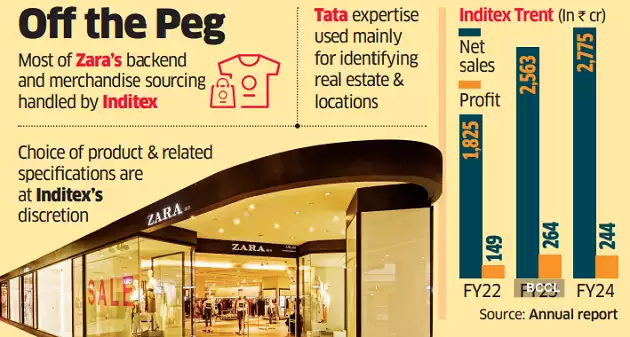
Inditex Trent, its joint venture with Tata that runs 23 of Zara stores in India, saw revenue rise 8% to Rs 2,775 crore last fiscal, significantly down from 40% growth a year ago, according to Trent’s annual report. Net profit was down too at Rs 244 crore, an 8% drop.
Zara has been a runaway success since its arrival in the country more than a decade ago but after initially doubling sales every two years, the brand’s rate of expansion had come down in the past few years. “The market is very competitive, and the challenges are real. Nevertheless, the opportunity pool and the size of the market means that there is space for multiple successful players. Trent remains well placed to navigate this next phase of growth by leveraging our platform and growth engines,” P Venkatesalu, chief executive officer at Trent, said in the report.
Trent that runs Westside has shifted focus on its lower priced fast fashion brand Zudio, which opened about four new stores every week on average last fiscal to take the total store count at 545 doors. Trent also has a separate association with the Inditex group to operate Massimo Dutti stores in India. The entity saw revenues rise 14% to Rs. 102 crore.
Experts said consumer demand has been affected in the past couple of years with brands having to work extra hard to get same-store growth and much of top-line growth has come for brands from store additions.
“Most international and premium Indian brands are competing for a relatively narrow slice of the population pie in the larger urban centres. While the Indian market is a bright spot amid the gloom in the world’s major economies, global pressures are likely to play a part in the confidence among brands to invest in expansion,” Devangshu Dutta, founder of retail consulting firm Third Eyesight, said, adding there is not necessarily “fatigue” for the brand.
“But if the contest for the consumer’s attention is more intense and the consumer’s choices are more fragmented across a wider choice of brands, that will definitely have an impact on any individual brand’s performance.”
Being the world’s second most-populous country, India is an attractive market for apparel brands, especially with youngsters increasingly embracing western-style clothing. Most of Zara’s back-end and merchandise sourcing are handled by Inditex, while the Tata expertise is mainly for identifying real estate and locations.
(Published in Economic Times)
admin
May 8, 2024
At the recent Phygital Retail Convention in Mumbai, Devangshu Dutta anchored an engaging “Fireside Chat” with Bhavana Jaiswal of IKEA India and Kapil Makhija of Unicommerce , on retailers engaging with their customers across channels and formats, and the opportunities as well as challenges in managing experiences seamlessly across online and offline interfaces.
Watch the video at this link:
admin
May 6, 2024
Sesa Sen, NDTV Profit
6 May 2024
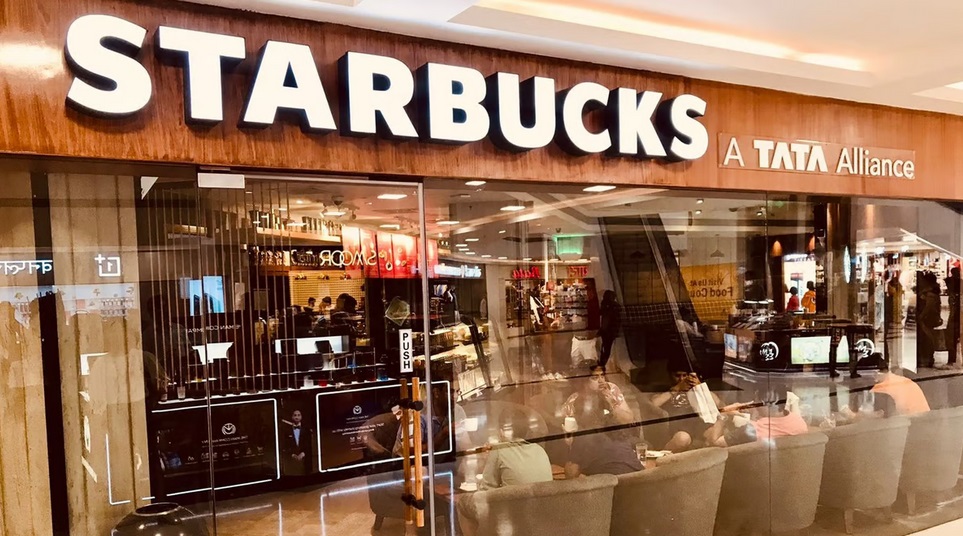
Starbucks Corp., the world’s largest coffee chain, posted its slowest sales growth in India since the pandemic. The coffee giant is struggling to bring in as much business as it has in the past as consumers reduce their visits even as it prepares for ambitious store expansion in a tea-drinking nation.
The India unit formed in partnership with the Tata Group clocked net sales of Rs 1,218 crore, a growth of 12%, during the year ended March 2024, according to Tata Consumer Products Ltd.’s latest investor presentation.
The Seattle-based retailer experienced a compounded annual growth rate of 21.89% between FY17 and FY23 in the world’s most populous nation. The only exception to this trend was in FY21, when sales plunged by 33% as shops were forced to shut down due to the impact of Covid-19.
“Tata Starbucks had a subdued quarter given the overall trends that we’re seeing in the QSR [quick service restaurants] business,” said Sunil D’Souza, managing director and chief executive officer at Tata Consumer Products.
He, however, indicated that March was an improvement over February, and April was even better than March. “So, we see a better trend right now, and we remain focused on the larger India opportunity.”
Tata Starbucks Pvt. Ltd. took 11 years to scale its operations to a revenue of over Rs 1,000 crore. Although the joint venture turned positive at the EBITDA level for the fiscal year 2023, it continues to be loss-making. In the year ending March 2023, Tata Starbucks posted a net loss of Rs 25 crore on a turnover of Rs 1,087 crore, according to filings with the Registrar of Companies. The net profit figures for fiscal 2024 are not available yet.
The coffee chain has seen its popularity take a major hit over the last two quarters, ending in March and December, with a meagre 7% increase in sales during each period. This is a marked shift from its historical track record of double-digit growth, suggesting that consumers are now looking for more budget-friendly cafe experiences.
“Consumers have turned slightly more conservative with their spends, which is affecting both the frequency and of transactions,” according to Devangshu Dutta, head of retail consultancy Third Eyesight.
According to him, new store openings rather than an increase in sales at existing ones could drive growth.
The other reason is that the coffee market is more competitive today, with most local peers selling at price points lower than Starbucks, Dutta said.
Starbucks competes with Bengaluru-based Cafe Coffee Day and foreign entrant Barista, among others, in the country’s $400 million market. It also faces competition from private equity-backed Third Wave and Blue Tokai, which have opened about 200 stores between them in the last three years.
Since opening its first cafe in October 2012, Tata Starbucks’ store count has grown to 421, implying that on average, each outlet generated roughly Rs 3 crore in revenue from coffee, snacks, and merchandise sales in FY24.
The dwindling sales come at a time when the company plans to open 1,000 cafes in India. To meet the target, it seeks to open one new store every three days.
Starbucks added 29 net new stores between January and March, achieving a record of 95 stores opening in a year, according to the presentation.
The coffee chain had earlier said it plans to enter tier-2 and tier-3 cities in the country and increase the number of its drive-through, airport-based and 24-hour cafes. It also aims to double its headcount to 8,600.
To lure consumers back after a rough start to the year, the coffee giant is launching new products like a boba-inspired summer beverage.
“Over the past 11 years, the India market has grown to become one of Starbucks’ fastest-growing markets in the world,” Laxman Narasimhan, chief executive officer, Starbucks, said in a statement during his India visit earlier this year. “With a growing middle class, we are proud to help cultivate the evolving coffee culture while honouring its rich heritage.”
Starbucks faces challenges not only in India but also globally. A disastrous fourth quarter that saw a slowdown in store visits promoted Starbucks Corp. to lower its expectations for its full-year sales and profit. Its revenue for the January–March period dropped 2%, the first since the end of 2020.
admin
April 24, 2024

Mumbai, 24 April 2024
Sharleen Dsouza, Business Standard
With the Supreme Court cracking down on Patanjali over misleading advertisements, the advertisement industry is concerned. While industry players acknowledge that some degree of exaggeration in claims is common, the Supreme Court’s firm action signals an impending shift.
On Tuesday the SC said that its interest was not limited to Patanjali but all those Fast-Moving Consumer Goods (FMCGs) and drug companies that mislead consumers through their advertisements.
And Patanjali is not the first one to have crossed the line of puffery. There have been many cases in the past, like Horlicks Ltd versus Zydus Wellness Products where the former sought for a permanent injunction against Zydus for the broadcast of false advertisement.
Similarly, in Rajendra versus Union of India, the Bombay High Court restrained any good or service sale claiming it had supernatural and miraculous powers.
“Puffery in advertising is as old as advertising. There is always an element of exaggeration. Over the years, the government has looked the other way. Guys on the ground should take companies and brands to task and have largely been in cahoots with most of the brands,” said Sandeep Goyal, chairman and managing director of Rediffusion Brand Solutions.
Goyal believes that the SC coming down heavily on Patanjali would be a deterrent for other brands. “Puffery or not is for someone to figure out. In most food products, FSSAI doesn’t care. Who is to identify these ads? I think the SC has done something. This won’t deter other brands and get them to make claims which are within the realm of what is correct,” Goyal said.
A question of ethics
Industry experts point out that the primary objective of advertisement is to stimulate desire in the consumer’s mind. This happens by hook or by crook.
“Misleading a consumer has become inherent in advertising to a certain extent. I think this is dangerous when it comes to food, as it is basic nutrition. If you are embedding misleading information or mis-stating facts in ads then it has a real impact on whoever the customer or consumer is of that product. It is good that the issue has been highlighted,” said brand expert Devangshu Dutta, founder of Third Eyesight.
Then there is the Advertising Standards Council of India and discussions about ethical standards within the industry.
But Dutta believes there is a clear disconnect between what advertisements should say and what actually transpires. “I hope it gets acted upon from the government’s side as well. Self-regulation doesn’t seem to work. We all wish that it works, but it doesn’t. If it becomes more stringent, then it will be good overall,” he said.
While FMCG players are concerned about the stringent action of the Supreme Court, they believe that this will lead to improved advertisement regulation.
Ensuring compliance
Speaking on condition of anonymity, a senior executive of a leading FMCG company said, “The industry is already disciplining itself due to the growing consumer awareness, stringent ASCI guidelines and the impact of influencer marketing. This will further ensure that misleading ads will be few and far in the future.”
Some companies also ensure that their ads adhere to ASCI guidelines before launching them. “We run our ads with ASCI before we release them. This practice has worked in our favour,” said another executive on condition of anonymity.
In its hearing, the SC had said, “We are of the opinion that the issue relating to implementation of the relevant provisions of the Drugs and Magic Remedies Act and the Rules, the Drugs and Cosmetic Act and the Rules, and the Consumers Act and the relevant rules needs closer examination in the light of the grievances raised by the petitioner…not just limited to the respondents before this court but to all similarly situated/ placed FMCGs who have… misleading advertisements, and (are) taking the public for a ride… affecting the health of babies, school going children and senior citizens who have been consuming products on the basis of the said misrepresentation.”
(Published in Business Standard)
admin
April 15, 2024
Sagar Malviya, Economic Times
Mumbai, 15 April 2024
Spanish fashion company Inditex said it will launch youth clothing brand Bershka and Zara Home in India this year.
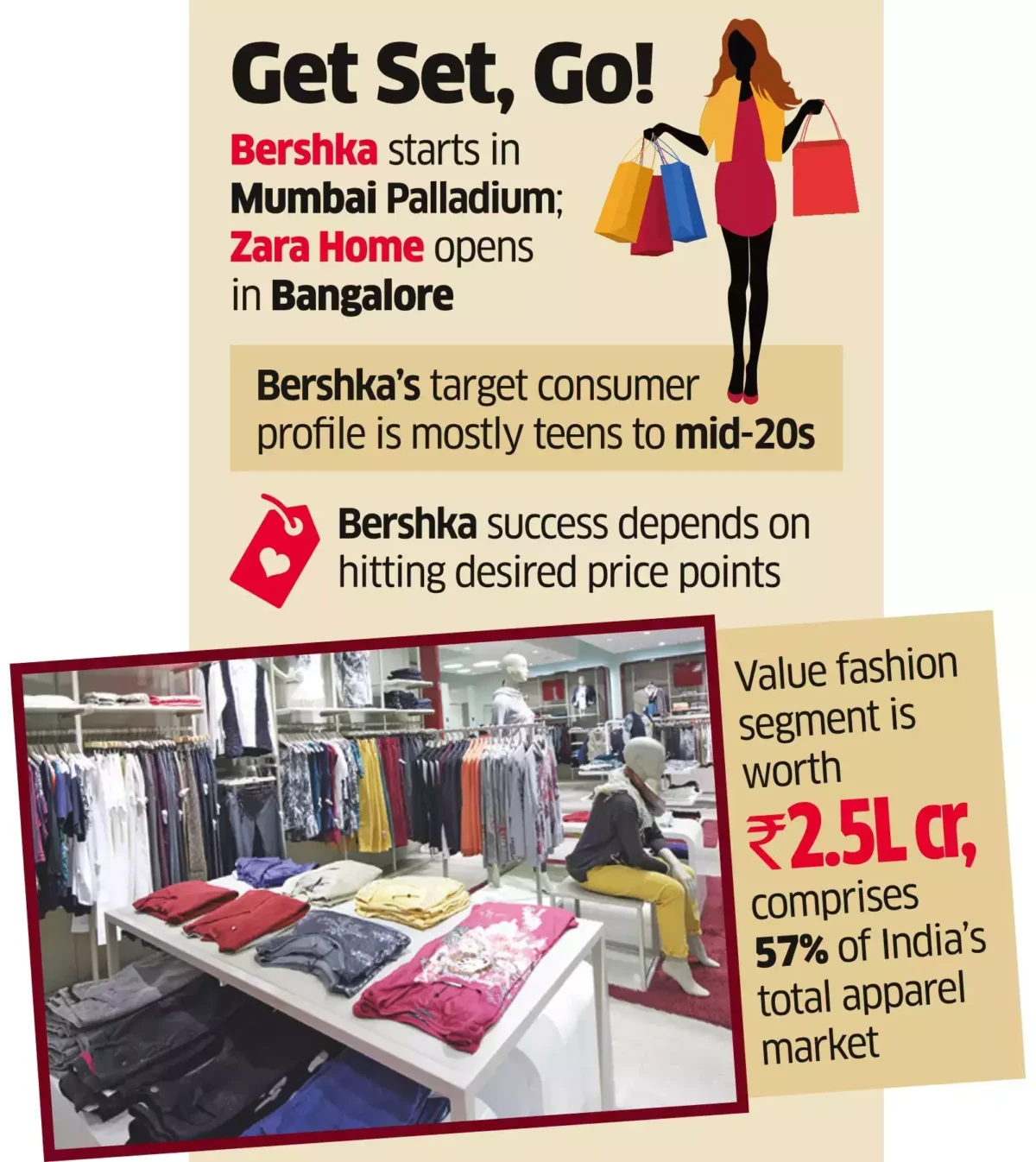
“Bershka will open its first store in Mumbai Palladium, and Zara Home will open in Bangalore,” it said in its latest annual report.
Inditex had launched fast fashion brand Zara in 2010 and premium clothing brand Massimo Dutti eight years ago. Its new offering, Bershka, will pitch it directly against Reliance Retail’s Yousta, which too targets the younger consumer segment.
Being the world’s second most-populous country, India is an attractive market for apparel brands, especially with youngsters increasingly embracing Western-style clothing. Fast fashion brands such as Zara and H&M became runaway successes soon after they entered the country.
Experts said Bershka’s target consumer profile is mostly teens to mid-20s, slightly younger than that of Zara, which is pitched at 20-40-year-old fashion-driven customers.
“The product assortment is different, with a higher share of knits, fewer dresses and more casual overall compared to Zara, keeping in line with the lifestyles of the customer group. So in that sense it wouldn’t cannibalise Zara in any serious way, though some of the younger set among Zara buyers could migrate some of their purchases to Bershka,” said Devangshu Dutta, founder of retail consulting firm Third Eyesight. “The biggest question is, can they hit the price points that young Indian fashion consumers want as with domestic brands such as Zudio, Yousta and others, or will consumers overlook higher prices for the style mix and a European brand pull in significant numbers to make the brand viable.”
According to a recent report by Motilal Oswal, the ₹2.5 lakh crore value fashion segment accounts for 57% of the total apparel market and is one of the largest and fastest-growing segments. A substantial untapped opportunity beyond the metros and tier-1 cities, driven by better demographics, higher incomes and greater customer aspiration, has compelled several big players to enter a market that was previously dominated by regional and local operators.
Since its inception in 2016-17, Zudio has seen considerable expansion and reached nearly 400 standalone stores, outpacing most apparel brands primarily due to its competitively priced products with an average selling price of ₹300. Following the success of Zudio, a unit of the Tata Group’s Trent, the segment has seen the entry of national retailers in the affordable youth clothing segment such as Yousta by Reliance Retail, Style-Up by Aditya Birla Fashion and Retail and Shoppers Stop’s InTune.
(Published in Economic Times)
