
admin
August 18, 2023
Viveat Susan Pinto, Financial Express
August 18, 2023
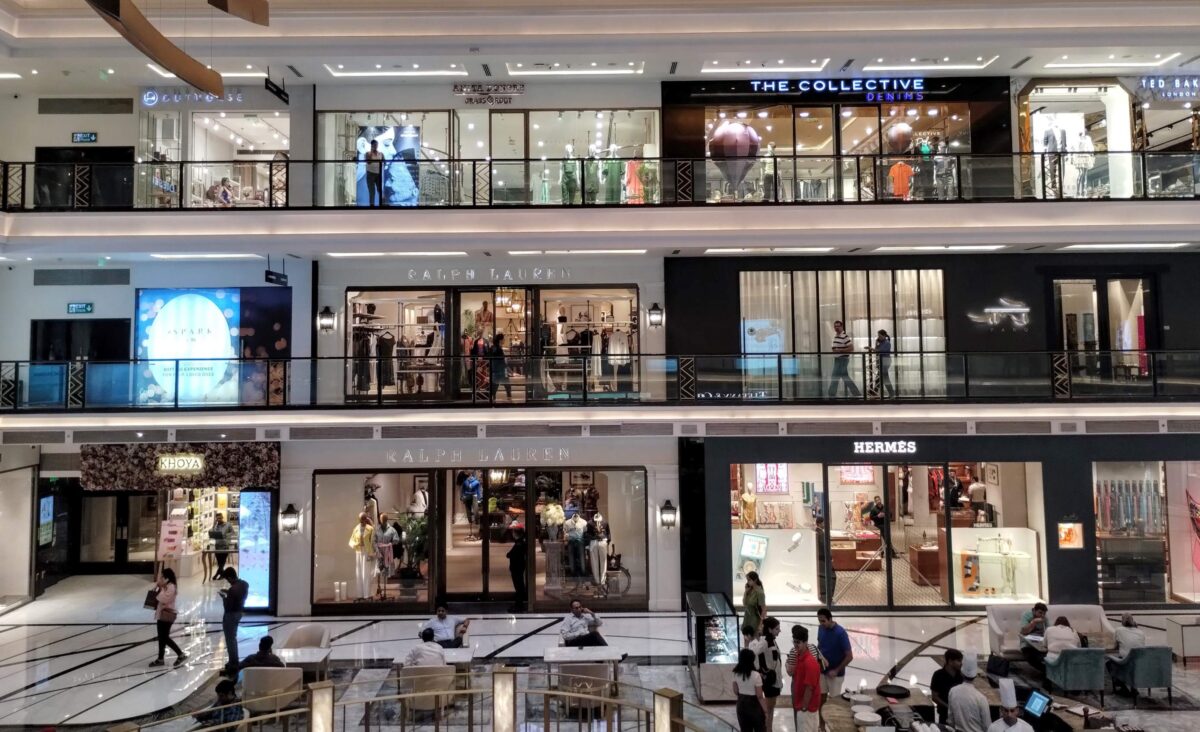
Retail activity in the country is set to increase with some 20 foreign brands likely to enter India in the next 6-8 months, according to retail consultants and experts. This is double the number of about 10 foreign brands that would enter India annually in the pre-pandemic period.
An attractive retail market and growing affluence and consumer tastes are among the key reasons for the interest shown by foreign brands in India, said experts. Also, large groups such as Reliance and Aditya Birla are open to partnerships with foreign brands, with Reliance Brands, part of Reliance Retail, in particular, being the most aggressive of the lot.
“Global markets are witnessing slowdown and recessionary concerns, which is hurting retail sentiment. In contrast, retail sentiment in India is upbeat despite food inflationary pressures. Spending across non-essential categories will also grow as the festive season nears,” said Abhinav Joshi, head of research, India, Middle East & North Africa at consultancy CBRE.
The consultancy on Thursday released a report which said that retail leasing activity in India had grown 24% year-on-year in the first half of CY2023, led by foreign and domestic brands. The second half of the year was also expected to see a strong double-digit rate of growth in terms of leasing activity, with overall retail leasing likely to touch 5.5-6 million sq. ft. at the end of the CY2023, second only to the peak of 6.8 million sq. ft. seen in CY2019.
Of the names eyeing an India-entry in the next few quarters include labels such as Italian luxury fashion brand Roberto Cavalli, American sportswear and footwear brand Foot Locker, Armani Caffe, the luxury cafe brand of Armani, British luxury brand Dunhill, Dubai’s Brands for Less, Old Navy and Banana Republic from Gap, Chinese brand Shein, Maison De Couture from Valentino, Spanish luxury brand Balenciaga, EL&N, a UK-based boutique cafe, Galleries Lafayette from Paris, Kiabi, Mavi, Damat, Dufy, Tudba Deri, Avva, Boohooman and Miss Poem, all apparel brands from Turkey and Europe, say industry sources.
Barring Galleries Lafayette which has tied up with Aditya Birla Fashion and Retail for its India entry, most other names are either talking to Reliance Brands (part of Reliance Retail) or have tied up with the company, persons in the know said. For instance, Balenciaga, EL&N, Shein, Gap’s Old Navy and Banana Republic, Armani Caffe, Maison de Couture from Valentino have tied up with Reliance Brands for their India entry. Executives at Reliance Brands were not immediately available for comment.
Most of these brands are eyeing a presence in cities such as Mumbai, Delhi-NCR, Bengaluru and Hyderabad in the first phase of launch, before expanding their presence to other cities such as Pune, Ahmedabad, Chennai and Kolkata.
“The India retail opportunity is a compelling one, which most foreign retailers don’t want to miss,” says Devangshu Dutta, chief executive officer at Gurugram-based consultancy Third Eyesight.
“Some of the brands who’ve come earlier have also tasted success especially in the fast fashion category. This is an indication that brand awareness is growing and that people are ready to spend on global products as discretionary incomes grow,” he says.
On Wednesday, Japanese fast fashion retailer Uniqlo said that it was setting up two new stores in Mumbai in October, after launching 10 stores in the north over the last four years. The company’s chief executive officer Tomohiko Sei indicated that the retailer was open to new markets and store openings, but would focus on Mumbai for now.
CBRE says that Mumbai has seen retail leasing grow by 14.6% year-on-year in the first half of CY2023 on the back of a push by foreign brands to acquire space in the city. Delhi-NCR, meanwhile, reported a higher 65% year-on-year growth in retail leasing in the first half of the year, led by retail activity by both foreign and domestic brands.
(Published in Financial Express)
admin
June 29, 2023
Dia Rekhi & Faizan Haidar, Economic Times
New Delhi, June 29, 2023
Fast Retailing, the parent company of Uniqlo, is looking to set up a significant manufacturing presence in India through about 20 ‘production partners’, multiple people aware of the development told ET.
One of the world’s most valuable clothing retailers, Uniqlo already has a cluster of production partners in India and is looking to expand this network through a significantly large investment, they said without sharing any estimated amount.
“The investment amount will be significant because Uniqlo is serious about India and views it as an important market,” one of the persons said. “Unlike the existing facilities in India, which cater more towards exports, the production partners that Uniqlo will bring to India will be specifically meant for the domestic market.”
One of the company’s production partners that ET spoke to confirmed that their current mandate is to produce only for exports.
Uniqlo, which is Asia’s biggest clothing brand, had said India is one of the top priority markets for them where consumers are increasingly shifting from ‘fast-fashion’ to long-lasting essentials and functional wear.
The company’s ambitions for India are considerable with its CEO Tadashi Yanai indicating that he wants Uniqlo to become the “best-selling retailer in India”.
The Japanese brand opened its first door in September 2019, but stringent lockdown measures announced to contain the outbreak of the pandemic in March 2020 delayed the expansion plan.
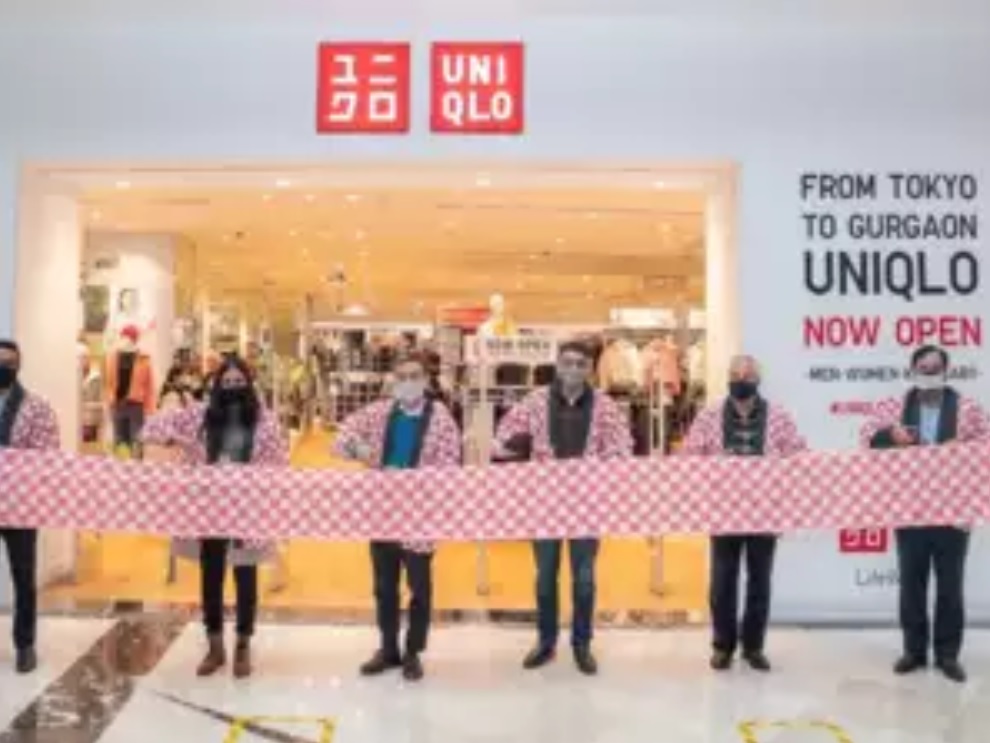
The brand is now planning to enter Mumbai and Bangalore. It has already opened stores in Lucknow and Chandigarh after Delhi.
Uniqlo does not own any factories. Instead, it outsources production of almost all its products to factories outside Japan.
As per a report titled ‘The Uniqlo case: fast retailing recipe for attaining market leadership position in casual clothing’, this model allows Uniqlo to keep its breakeven point low and improve return on investment.
“As we expand our global sales, we continue to grow our partner factory network in countries like Vietnam, Bangladesh, Indonesia, and India,” the company has stated on its website.
As per its list of garment factories, as on March 1, 2023, Uniqlo has 227 factories in China, 54 in Vietnam, 33 in Bangladesh, 13 in Indonesia, and 16 factories in India and Japan among several other locations.
As the world’s second most-populated country, India is an attractive market for apparel brands, especially with youngsters increasingly embracing western-style clothing.
Over the past decade, global brands Zara and H&M became market leaders in the fast fashion segment in India.
“For global brands, India should be one of the most logical sourcing hubs given its large vertically integrated manufacturing sector on the one hand and the large, growing domestic market driving demand on the other hand,” Devangshu Dutta, founder of retail consulting firm Third Eyesight, told ET. “However, its weight in the sourcing baskets has historically been low due to several reasons, in spite of China being visible for decades to the management teams of brands and retailers as a concentrated sourcing risk,” he said.
Uniqlo’s existing production partners in the country include Shahi Exports, Brandix Lanka, Tangerine Design, Maral Overseas, Shingora Textiles, Silver Spark Apparel, SM Lulla Industries Worldwide and Penguin Apparels.
As per Fast Retailing’s first-half results, the company said its revenue was 1.4672 trillion yen, or around $10.2 billion, and that its operating profit had risen to 220.2 billion yen ($1.53 billion), bolstered by strong performances from operations in several regions, including India where it said it generated significant increases in both revenue and profit.
With regard to Uniqlo International, in particular, it said revenue stood at 755.2 billion yen ($5.25 billion), while operating profit was 122.6 billion yen ($852.93 million).
The company said regions like India “reported significant revenue and profit gains as they enter a full-fledged growth phase”.
(Published in Economic Times)
admin
February 23, 2023

India’s economy is in focus globally, and is also at an inflection point.
Join Devangshu Dutta at the Asia-Pacific conference of UFI, The Global Association of the Exhibition Industry. Registration Link: https://lnkd.in/dq89_rY3
See you at UFI Asia-Pacific Conference in Kuala Lumpur!
admin
July 8, 2022
Akash Podishetty & Krishna Veera Vanamali, Business Standard
New Delhi, 8 July 2022
India’s $900 billion retail market has emerged as one of the most dynamic industries and is expected to reach anywhere between $1.3-$1.5 trillion by 2025. The organized retail is seen gaining 15% market share in the overall retail space, while food & grocery and apparel and lifestyle may account for 80% of India’s retail market by 2025.
Large market offers big opportunities. And it looks like Reliance Retail has seized it, with its massive omni-channel retail play of physical stores, B2B with kiranas and e-commerce.
The company went on an acquisition spree and partnerships in the last three years, adding to its portfolio some of the biggest names, including Hamleys, Dunzo, Zivame etc.
It has also partnered with famous global retail chain 7-Eleven. Catering to India’s affluent consumers, Reliance, meanwhile, houses some of the most iconic brands such as Versace, Armani Exchange, GAP, GAS, Jimmy Choo, Michael Kors among others. The premium segment has become one of the fastest growing categories.
Also firming up its inorganic play, the company is planning to acquire dozens of niche local consumer brands to build a formidable consumer goods business.
Arvind Singhal, Chairman and Managing Director, Technopak Advisors says, there’s focus on physical retail expansion. Reliance is looking to cater to both price conscious and brand conscious customers, while trying to capture as much of the private consumption market as possible, he says.
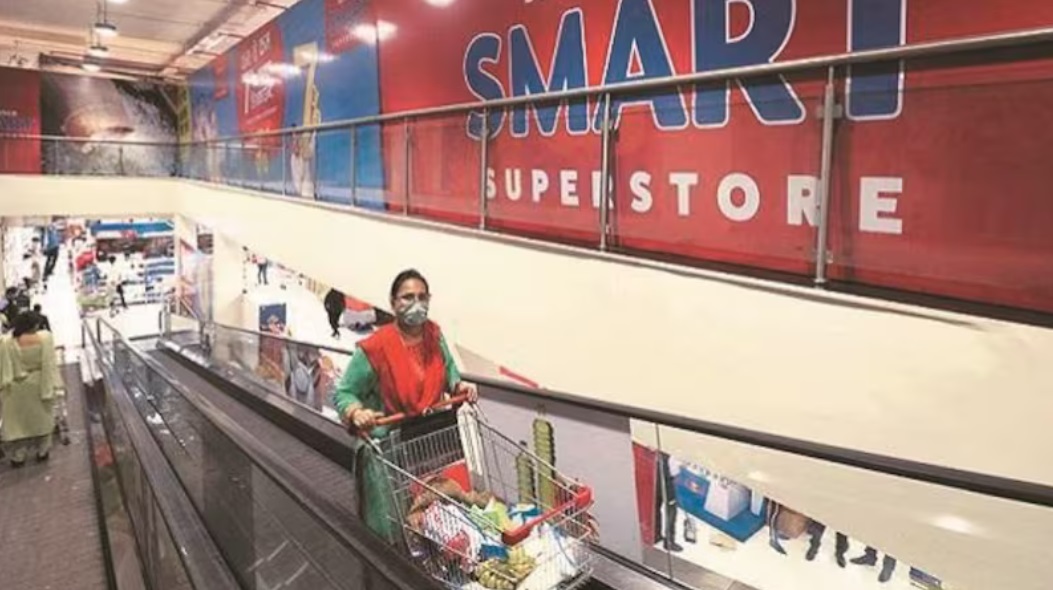
Reliance Retail’s competitors are nowhere close to even put up a fight. The company has over 15,000 offline stores across categories, compared with DMart’s 294 stores or Aditya Birla Fashion’s 3,468 outlets.
Reliance retail’s revenue has grown five times in the last five years and the core retail revenue of $18 billion is greater than competitors combined, according to a Bernstein report.
Speaking to Business Standard, Devangshu Dutta, CEO, Third Eyesight, says, Reliance wants a decent share of Indian consumers’ wallet. From that perspective, Reliance still has a long way to go, he says. As consumer preferences evolve, Reliance too should adapt.
An undisputed leader in the domestic market, the aim of Reliance, according to Mukesh Ambani, is to become one of the top 10 retailers globally. Part of this bet is based on the premise that incomes and consumption power of Indians will increase across the board in coming years. However, could the uneven recovery that different segments of the population have seen stop the pie from growing larger and prove to be a dampener for Ambani’s ambitions?
(Published in Business Standard)
admin
January 24, 2022
Written By Devika Singh
The entry of Jubilant FoodWorks will intensify competition in the fried chicken segment, where KFC so far has maintained its stronghold.

Popeyes, founded in 1972 in New Orleans, Louisiana, has over 3,400 restaurants in over 25 countries around the world. Popeyes (Wikimedia Commons)
Jubilant FoodWorks, the franchisee for Domino’s Pizza, will launch the iconic US-based fried chicken brand Popeyes, known for spicy New Orleans-style fried chicken and chicken sandwiches, in India on January 19 with the unveiling of the first outlet in Bengaluru.
“Popeyes was founded in 1972 and has been one of America’s most popular and fastest-growing chicken brands. Popeyes aims to delight Indian guests with the bold and delicious flavours of its Louisiana-style chicken,” the company said in a filing to stock exchanges.
“The success of the brand lies in its traditional and unique technique of hand breading, battering, and marinating its fresh chicken for 12 hours in bold Cajun seasonings,” the company added.
Popeyes runs over 3,400 restaurants in 25 countries.
With the entry of Jubilant FoodWorks, the competition is set to intensify in the fried chicken segment, where KFC has maintained leadership in the country so far.
“KFC has enjoyed a free run in the fried chicken market. There are some local players in this segment but no large QSR (quick service restaurant) player had a presence in it until now. With Popeyes as a competitor, now Jubilant FoodWorks is stepping into that opportunity,” said Devangshu Dutta, chief executive at consulting firm Third Eyesight.
While launching its initial public offering (IPO) last year, Devyani International, the largest franchisee of Yum! Brands (which owns KFC), had stressed the advantage it has over other QSRs in the country.
“We have no competition for KFC in India,” Ravi Kant Jaipuria, chairman, Devyani International, had said at the time. Devyani International runs 284 KFC India stores across 107 cities and the brand contributes more than half of its revenues. Sapphire Foods, which too launched its IPO last year, is another major franchise for KFC in India.
Both the companies already compete with Jubilant FoodWorks in the pizza segment as they also operate Yum! Brands-owned Pizza Hut in India. Jubilant FoodWorks with Domino’s Pizza, however, has clear leadership in the pizza market. Sample this: Pizza Hut currently has 500 stores in India, of which 317 are run by Devyani International; Jubilant FoodWorks, on the other hand, already has 1,335 outlets of Domino’s Pizza in India.
Now with the launch of Popeyes, Jubilant FoodWorks, it seems, wants a chunk of the fried chicken pie too.
Westlife Development, which holds the master franchise for McDonald’s in southern and western India, also has set its sight on the fried chicken segment in India. In an interview with Moneycontrol in September last year, Smita Jatia, managing director of Westlife Development, shared an ambitious plan to become a market leader in the segment. The company has already introduced fried chicken in its 125 stores in South India and plans to soon launch the food item in the western region too.
Clearly, the fried chicken market is certainly headed for interesting times as several new QSR players vie for a share of it. According to experts, the segment also offers the next avenue for growth for QSR players. “While fried chicken was the first to take off in Southeast Asia, in India, pizza and burgers found takers given the preference towards wheat-based cuisine in some parts of the country,” said Rajat Tuli, partner at global management consulting firm Kearney.
“However, as Indians become more experimental with food and trying out different cuisines, the fried chicken segment offers the next arena for growth to QSR companies,” he added.
Tuli also believes that the segment has enough space for a couple of players. “The QSR space is poised for over 20 percent growth in the next five-six years and hence there is enough headroom for multiple players to grow in it,” he said.
‘Veg options and no MSG’
The Popeyes India menu will feature the signature Cajun-flavoured Chicken Sandwich and Popeyes signature Chicken in Classic and Spicy flavours. The Indian menu will also feature an array of vegetarian options and will also have rice bowls and wraps. The entire India menu has no flavour enhancer monosodium glutamate (MSG), and the chicken is antibiotic-free, said Jubilant FoodWorks.
In a statement, Shyam S. Bhartia, chairman, and Hari S. Bhartia, co-chairman, Jubilant FoodWorks, said, “We are excited to introduce the Popeyes Louisiana Kitchen brand to chicken-loving Indian consumers. We are confident that Popeyes will not only delight guests but also strategically complement our portfolio and fortify JFL’s leadership in the QSR domain.”
Popeyes will start with its flagship store in Bengaluru’s Koramangala on January 19, followed by stores in New BEL Road and Kammanahalli soon thereafter. The brand will have its own app (Android and iOS) and mobile website.
To ensure a smooth and seamless delivery experience, Jubilant FoodWorks has built its in-house delivery fleet with e-bikes to enable zero-emission delivery. The company is also taking precautions given the pandemic situation.
“Safety protocols like daily temperature screening for all employees and frequent sanitisation of the restaurant are being implemented and frequent sanitisation of bikes will be conducted. All delivery riders will be compulsorily wearing face masks and gloves while following the frequent hand sanitisation protocol,” it added.
Source: moneycontrol
