
admin
February 21, 2024
The ability of fashion businesses to endure and thrive in the face of stiff competition and changing market dynamics is all about adapting to innovation, customer-centricity, and strategic planning. The correlation between high performing fashion business and product innovation is undeniable.
This panel discussion brings Design and Business Heads together to brainstorm on how fashion companies can devise strategies to drive innovation to remain competitive, meet evolving consumer expectations, and stay ahead of the race.
Moderator: Devangshu Dutta, Founder & Chief Executive, Third Eyesight
Panelists:
admin
September 25, 2023
Akanksha Nagar, Financial Express
September 25, 2023
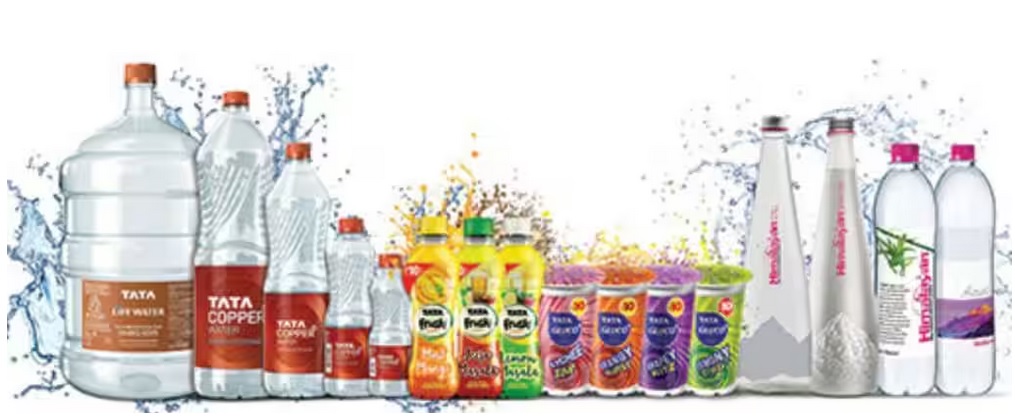
Adding to the fizz in the energy drink market, NourishCo, a division of Tata Consumer Products (TCP), has unveiled Say Never — a caffeine-based energy drink priced at Rs 10 for a 200 ml cup — in two variants of red (berries) and blue (tropical flavours). In its initial phase of launch, the brand will be available largely through general trade outlets in Karnataka and some key markets of the north, including Delhi, NCR, Uttar Pradesh and Bihar. Vikram Grover, MD, NourishCo Beverages, TCP, says, “With Say Never we are celebrating the heroes who carve their own path.”
As a functional beverage, the energy drinks segment has grown by leaps and bounds in recent years to stand at Rs 3,500 crore in 2022. Experts reckon the market will touch Rs 10,000 crore by 2027. Red Bull is the category leader with a 61% market share of the market.
PepsiCo’s debut of Sting a few years ago at an inviting Rs 50 for 250 ml (as opposed to Red Bull’s Rs 125 for 250 ml can) had shaken up the category. With a 7% market share Sting has surpassed PepsiCo’s older products like Mountain Dew to become the company’s fastest-growing brand. Charged by Thums Up kept up the buzz for Coca-Cola during the 2023 edition of the Indian Premier League on Star Sports. Grover says Say Never will stand out for two reasons — the attractive price point and the cup delivery format, which the company has used with Gluco+. “The rapid growth in this energy segment in the recent past has come on the back of price disruption, and we feel that we can take that disruption forward,” he adds.
As energy drinks still operate in a niche segment with a premium play, an affordable price point can be a game-changer, say experts. “Affordability is a significant driver in India, especially for pre-teens, teens and college students,” says Devangshu Dutta, CEO, Third Eyesight. For many years energy drinks were treated as a niche premium opportunity, but the availability of lower price options has opened up the mass market as demonstrated by PepsiCo’s Sting in PET bottles with a much lower price point.
While the cola giants have an obvious advantage in terms of shelf space accessibility, given the market’s trajectory even smaller players stand a good chance to create a space for themselves. “Clarity in positioning, techniques to make the brand stand out, and ensuring availability with strong distribution and replenishment is imperative to get ahead,” Dutta suggests.
TCP plays in the energy space with Tata Gluco+, a glucose-based energy drink targeting a young consumer set; for Say Never the target is the youth between the ages of 18 and 35.
Besides pricing, what will be make or break is marketing muscle and a differentiated appeal, says Samit Sinha, managing partner, Alchemist Brand Consulting. “Say Never can position itself as a party-drink — akin to how Red Bull is equated with active lifestyles. There are enough opportunities to create nuanced differences in attributes, functional benefits and most of all, emotional benefits.”
NourishCo contributes 4% to the TCP overall business and in Q1 of FY23, its recorded a strong revenue growth of 60%. TCP’s flagship drink Tata Gluco+ registered a growth of 61% in the same period.
(Published in Financial Express)
admin
June 29, 2023
Dia Rekhi & Faizan Haidar, Economic Times
New Delhi, June 29, 2023
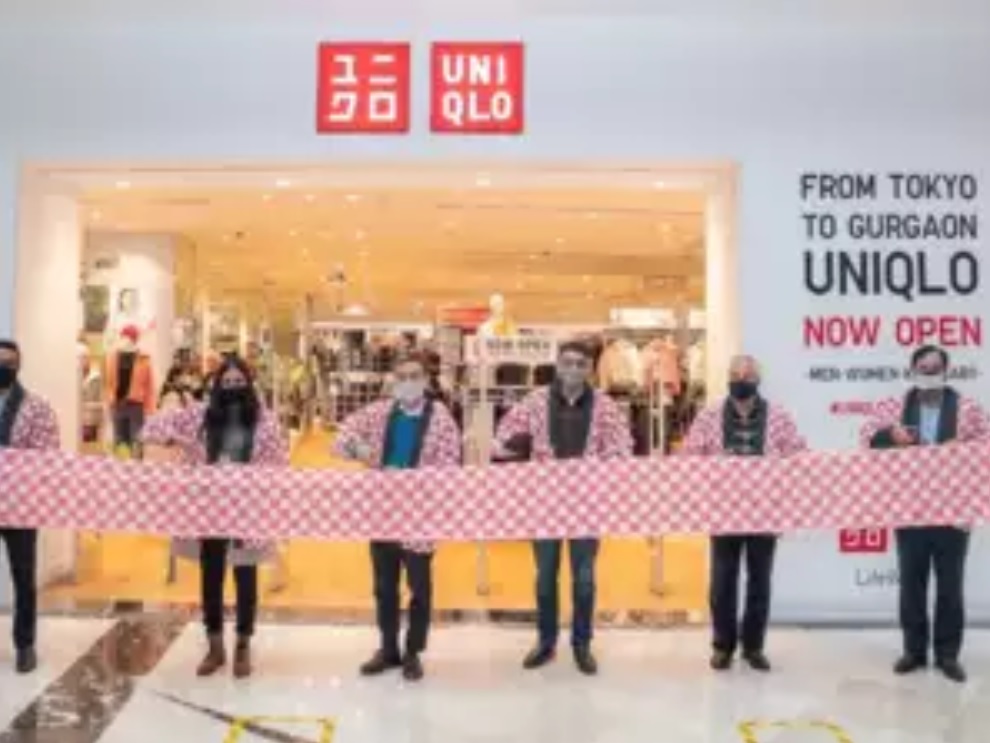
Fast Retailing, the parent company of Uniqlo, is looking to set up a significant manufacturing presence in India through about 20 ‘production partners’, multiple people aware of the development told ET.
One of the world’s most valuable clothing retailers, Uniqlo already has a cluster of production partners in India and is looking to expand this network through a significantly large investment, they said without sharing any estimated amount.
“The investment amount will be significant because Uniqlo is serious about India and views it as an important market,” one of the persons said. “Unlike the existing facilities in India, which cater more towards exports, the production partners that Uniqlo will bring to India will be specifically meant for the domestic market.”
One of the company’s production partners that ET spoke to confirmed that their current mandate is to produce only for exports.
Uniqlo, which is Asia’s biggest clothing brand, had said India is one of the top priority markets for them where consumers are increasingly shifting from ‘fast-fashion’ to long-lasting essentials and functional wear.
The company’s ambitions for India are considerable with its CEO Tadashi Yanai indicating that he wants Uniqlo to become the “best-selling retailer in India”.
The Japanese brand opened its first door in September 2019, but stringent lockdown measures announced to contain the outbreak of the pandemic in March 2020 delayed the expansion plan.
The brand is now planning to enter Mumbai and Bangalore. It has already opened stores in Lucknow and Chandigarh after Delhi.
Uniqlo does not own any factories. Instead, it outsources production of almost all its products to factories outside Japan.
As per a report titled ‘The Uniqlo case: fast retailing recipe for attaining market leadership position in casual clothing’, this model allows Uniqlo to keep its breakeven point low and improve return on investment.
“As we expand our global sales, we continue to grow our partner factory network in countries like Vietnam, Bangladesh, Indonesia, and India,” the company has stated on its website.
As per its list of garment factories, as on March 1, 2023, Uniqlo has 227 factories in China, 54 in Vietnam, 33 in Bangladesh, 13 in Indonesia, and 16 factories in India and Japan among several other locations.
As the world’s second most-populated country, India is an attractive market for apparel brands, especially with youngsters increasingly embracing western-style clothing.
Over the past decade, global brands Zara and H&M became market leaders in the fast fashion segment in India.
“For global brands, India should be one of the most logical sourcing hubs given its large vertically integrated manufacturing sector on the one hand and the large, growing domestic market driving demand on the other hand,” Devangshu Dutta, founder of retail consulting firm Third Eyesight, told ET. “However, its weight in the sourcing baskets has historically been low due to several reasons, in spite of China being visible for decades to the management teams of brands and retailers as a concentrated sourcing risk,” he said.
Uniqlo’s existing production partners in the country include Shahi Exports, Brandix Lanka, Tangerine Design, Maral Overseas, Shingora Textiles, Silver Spark Apparel, SM Lulla Industries Worldwide and Penguin Apparels.
As per Fast Retailing’s first-half results, the company said its revenue was 1.4672 trillion yen, or around $10.2 billion, and that its operating profit had risen to 220.2 billion yen ($1.53 billion), bolstered by strong performances from operations in several regions, including India where it said it generated significant increases in both revenue and profit.
With regard to Uniqlo International, in particular, it said revenue stood at 755.2 billion yen ($5.25 billion), while operating profit was 122.6 billion yen ($852.93 million).
The company said regions like India “reported significant revenue and profit gains as they enter a full-fledged growth phase”.
(Published in Economic Times)
admin
September 16, 2022
Over the past five years, legacy players have made a slew of investments in D2C startups.
Marico has acquired men’s grooming brand Beardo, beauty brand Just Herbs and breakfast brand True Elements. Similarly, Emami acquired vegan cosmetics brand Brillare Science and grooming brand The Man Company. It recently picked up a minority stake in nutrition company TruNativ. Colgate-Palmolive and Reckitt both hold minority stakes in Bombay Shaving Company, whereas Wipro Consumer Care has invested in The Ayurveda Company. ITC has invested in baby and mother care brands Mother Sparsh and Mylo.
Devangshu Dutta explained the reasons behind the trend of larger FMCG companies acquiring D2C brands.
admin
June 29, 2021
Devika Singh, Moneycontrol
29 June 2021
Post-COVID, the sanitiser market will shrink considerably and there will be room only for old trusted brands or bulk low margin suppliers, suggest experts.
 Every one in two urban households are now using sanitisers, as per data from Kantar.
The pandemic has triggered a gold rush in the health and hygiene sector, particularly sanitisers – even if temporarily.
A severely underpenetrated category in the pre-pandemic period, sanitisers have witnessed massive adoption amongst the consumers since March 2020.
According to data from Kantar, annually, before the pandemic struck (March 2019 – February 2020) hand sanitiser penetration was about 1.2 percent; on an average in a month only 0.1 percent of the urban households bought the product.
However, during the first 12 months of the pandemic, the category reached nearly 50 percent penetration, a quantum leap.
It means everyone in two urban households are now using sanitisers, as per data from Kantar, the world’s leading data, insights, and consulting company.
Overall, the hygiene category had witnessed a huge spike in sales as the first wave of the COVID-19 pandemic struck the country in March last year.
Although the sales declined as the cases subsided, the demand jumped up again with the second wave of the pandemic.
Several companies had made a beeline for the category and joined the sanitiser gold rush.
According to data from Kantar, as many as 350 brands of sanitisers were launched in the first three months of the pandemic.
Consumers are also buying more products in the hygiene category such as vegetable cleaners and surface disinfectants.
Data from Kantar shows that vegetable and fruit cleaners now have a penetration of 2 percent and surface disinfectants 1.5 percent.
“For a category that is driven by a limited number of brands and has not even been there for a year, it is a huge success,” said K Ramakrishnan, MD – South Asia, Worldpanel Division, Kantar.
Though the category overall has seen an increase in demand, industry and experts expect only a few big brands with a strong legacy in the hygiene segment to sustain in the long run.
Hence companies such as Marico have already started deprioritising the category.
“Of late, we have realised that it (sanitisers) is more of a tactical opportunity for us to provide consumers what they needed then,” Pawan Agrawal, CFO, Marico, said.
“These products do not fit into our scheme of things as we understood that consumers will go back to the legacy brands with strong equity in hygiene, and hence three-four brands will have a larger play in the segment,” he added.
Marico, hence, has decided to not make any fresh investments in the category going ahead.
Raymond Consumer Care, which sells sanitisers under its brand Park Avenue, too, has similar plans.
“We believe post-COVID, the sanitiser market will shrink considerably and there will be room only for old trusted brands or bulk low margin suppliers. Given this context, we will maintain strategic presence in the chemist channel, but this segment will not be a priority,” admitted Sudhir Langer, CEO – Raymond Consumer Care.
Other companies such as CavinKare plan to focus on flagship products such as handwashes.
Said Raja Varatharaju, GM Marketing – Personal Care, CavinKare: “As the demand for sanitisers continues to slow down, our core focus will remain on offering a bouquet of products under the health and hygiene portfolio as we move forward. We will increase and strengthen our focus on hand wash, as it is a flagship product in our portfolio.”
Reckitt’s Dettol, ITCs’ Savlon and Hindustan Unilever Limited’s (HUL) Lifebuoy are some of the top brands in the health and hygiene space, which are likely to benefit from this trend in the long run, indicate experts.
Consumers associate certain products and categories with certain brands and are inclined to buy from them, said Devangshu Dutta, Chief Executive at retail consultancy, Third Eyesight.
Hence, companies, which saw in the pandemic the chance to tap the short-term opportunity, do not want to focus on it any longer.
Source: moneycontrol
