
admin
June 30, 2023
Pooja Yadav, Afaqs
June 30, 2023
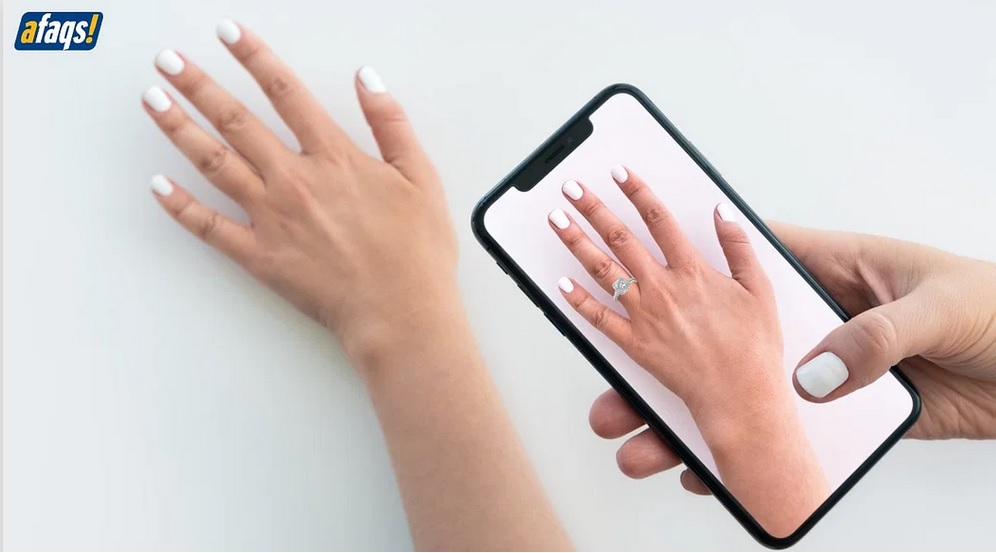
Over the last two-three years, we have seen technology innovations making its way into the Indian jewellery sector. Brands have been trying to transform the online jewellery segment by using various technologies like augmented reality (AR), artificial intelligence (AI), live video assistance, computer-aided design (CAD), computer-aided manufacturing (CAM), and more.
Despite the numerous innovations, the offline jewellery segment is still ahead of the online space, when it comes to sales. What makes the offline jewellery segment outpace the online segment?
The Indian e-commerce market is expected to grow to $111.40 billion by 2025 from $46.2 billion in 2020, as per an International Institute of Gemology report. While the segment remains to grow, what drives it back is the customer preference for physical jewellery stores.
Vipin Nair, marketing head & CRM at Malabar Gold & Diamonds, points out, “As of now, there seems to be no real alternative to trying on jewellery pieces in a retail store. Brands have been able to crack the logistics part, but not the ‘feel’ part. AR/VR has been around for a long time, but it doesn’t give you a feel of the jewellery pieces. It is a poor technology. The big purchases will continue to happen only in offline stores.”

Nair adds that despite the many challenges in the online space, it is now growing faster than before. “Earlier, there was a disconnect in the online segment. A customer had to wait for two-three weeks to receive a product. The online platforms seem to have cracked this business model, as whatever you like today, you can order and get it in a day’s time.”
Online jewellery segment started gaining popularity in 2020. In 2018, Tanishq started its e-comm website, and many other brands accompanied it in the online journey. What started with Tanishq has become a new journey for many start-ups and brands in the online space.
During Covid, the jewellery industry has been one of the worst-hit. Advent of online shopping and consumers relying on digital platforms during pandemic, helped brands strategise and invest more on online platforms.
According to Devangshu Dutta, founder and chief executive of Third Eyesight, trust is important when one is buying jewellery.
“It’s not a question of innovations. You can have virtual trials, whether it is online or in a store. But at the end, the customers have to see the piece and then buy it. Even if you are an online brand, you have to be able to offer an omnichannel experience. You have to enable in-home experience.”
As per Dutta, what’s required in this segment, is a change of mindset. “The share of online and modern retail will grow with time.”
Brands like Tanishq, Bluestone, Malabar, Kalyan Jewellers, Tata CLiQ, etc., are working on newer technologies. Then there are new players like the Aditya Birla Group that is set to foray into the branded jewellery retail business, with an investment of Rs 5,000 crore. The group’s new venture ‘Novel Jewels’ will have in-house brands in large-format exclusive retail stores across India.
Rashi Goel, founder and CEO, Performonks, says that the new brands entering the category, are trying to change the rules of the game. “These brands cater to working women, who want lighter, modern and fashionable pieces that they can match and wear with their outfits every day. So, the battle will be of brand building.”
“Tanishq offers light pieces, but tends to advertise heavy wedding jewellery, because that is in line with the category codes. The Aditya Birla Group will have to differentiate itself through the product experience. It will have to tell a brand story that takes the category narrative forward. If it is targeting young women looking for modern styles, it may benefit by having a direct-to-consumer (D2C) element (alongside retail stores in big cities). It could incorporate technology, where women can ‘try on’ jewellery virtually on the app.”
Recent trends
Citing the World Gold Council, Asian Lite International reports that there is a growing demand for lightweight and studded jewellery. Bridal jewellery alone accounts for at least half of the market share.
“Women prefer lightweight jewellery because it is practical and blends well with a modern lifestyle,” shares Nair of Malabar Gold & Diamonds.
Technology innovations may bring in some challenges, but they are also helping many people, in terms of convenience and choice. The online segment, which is still a fraction of the offline segment, is lately generating interest among digital savvy millennials.

Puneet Mansukhani, partner, KPMG in India, states that the online jewellery space has been garnering significant attention, especially amongst the millennials.
“Customer expectations are changing. Personalisation is playing a critical role. Technology involvement is increasing by the day, with AR taking the lead. However, the industry still has to tackle challenges around pilferage.”
On the upcoming trends, Mansukhani says, “Jewellery which is made to order with a modern look of hyper-personalisation (customised), is gaining importance, considering that value and convenience continue to be the top drivers of consumption.”
Manufacturers are increasingly focussing on producing lightweight pieces to satisfy the demands of young consumers, especially those who want to wear gold jewellery that matches with their western outfit every day, as per a World Gold Council report.
According to Third Eyesight’s Dutta, since fashion (lightweight) jewellery usually doesn’t cost much, “a consumer is not that invested in it. You can buy it online, like any other fashion product.”
The World Gold Council report adds that studded jewellery – known as ‘Polki’, ‘Kundan’ or ‘Jadau’ – has an estimated market share of 15-20%. The share of studded jewellery in North India is considerably higher. In South India, consumers are more inclined towards gold products, 60-70% of which are studded with diamonds and the remaining 30-40% are set with precious or semi-precious stones.
Jewellery landscape
In India, jewellery was traditionally purchased for investment purposes. People used to believe in buying heavy jewellery. But now, there’s a shift towards versatility and contemporary jewellery.
Nair states, “Contemporary designs are getting a lot of traction lately. It was not the case 10-15 years back. Lightweight jewellery is now in vogue and heavy jewellery is restricted to occasions like weddings. People now are looking for something practical. They are more into the design, quality, etc.”
Will the changing consumer preferences impact the bridal jewellery market?
Bridal jewellery dominates the gold jewellery landscape, with 50-55% of market share. Indians usually purchase gold for two occasions – weddings and festivals.
Around 11-13 million weddings take place in India every year. With women marrying at an average age of 22 and more than half of the country’s population below the age of 25, the demand for bridal jewellery will remain strong over the long-term, as per the World Gold Council data.
Going forward
The jewellery manufacturing landscape in India is largely unorganised and skill-intensive. Most jewellery pieces are still hand-crafted by artisans.
“Hence, the scale continues to be limited. Although we are gradually seeing jewellery retailers invest in large set-ups. We are also witnessing the overall jewellery market heading towards formalisation on the back of GST, government policies around hallmarking and exports,” shares Mansukhani of KPMG.
“For large players looking to enter this space, automation and focussing on in-house manufacturing, could help jewellers counter the high manufacturing charges.”
admin
May 6, 2023
Gargi Sarkar, Inc42
6 May 2023
With one of the largest consumer bases in the world, the Indian retail industry is on a constant upward spiral, thanks to the increase in the purchasing power of Indian consumers and the ever-increasing ecommerce adoption.
Notably, this has helped segments like online beauty and personal care (BPC) sustain and grow faster than the players in the offline space.
According to industry experts, the online BPC market has been growing in the range of 20% to 25% annually, compared to the offline segment at around 8% to 10% a year. According to a IMARC Group report, India’s BPC market size reached $26.3 Bn in 2022 and is expected to reach $38 Bn by 2028, growing at a CAGR of 6.45% between 2023 and 2028.
Notably, in their endeavour to capture this opportunity, new players are entering the BPC space, and the existing ones have started to scale their omnichannel presence.
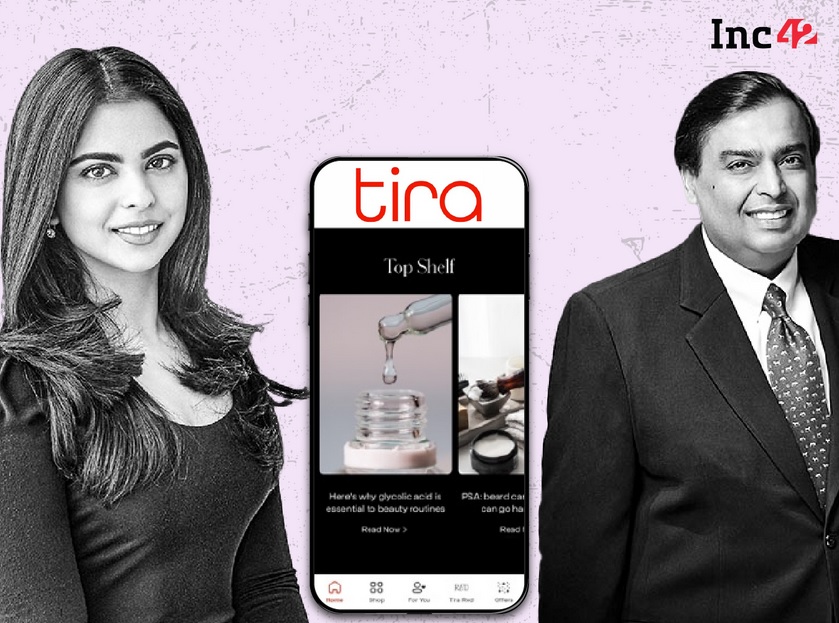
The newest entrant in the space is Reliance Retail. The retail major forayed into the BPC market with its omnichannel platform, Tira, earlier last month. Along with launching its app, Reliance Retail also opened its flagship Tira store in Mumbai.
It is crucial to note that existing marketplaces like Nykaa and Purplle, and D2C brands such as SUGAR Cosmetics and Mamaearth, too, have started expanding their offline footprint, after scaling up their online presence.
Similarly, offline retailers such as Loreal India, Sephora, and Hindustan Unilever’s Lakme have increased their focus on expanding their online presence via direct-to-consumer websites.

Given that Reliance’s Tira has entered the market with an omnichannel playbook, piggybacking on its parent’s cash reserves, it becomes all the more important to understand what impact it will have in the long run on the existing players and industry dynamics.
According to the industry experts that Inc42 spoke with, the beauty and personal care market offers more than enough opportunities for multiple players to grow, due to multiple favourable factors.
“The BPC segment remains one of the fastest growing categories in consumer retail because the penetration of beauty products has remained relatively low. With increasing awareness, and more disposable income, the BPC segment has witnessed decent growth. Now, since the segment is growing, there is a scope for multiple players to grow. That is why some of the big players have entered into the market,” Ashish Dhir, EVP (consumer and retail), 1Lattice said.
Despite Dhir’s optimism, it is pertinent to note that Nykaa saw some initial pressure on its share prices and overall stock performance with the launch of Tira. Brokerage firm Macquarie said that the entry of new players such as Tira could exacerbate the problems for Nykaa at a time when the competition in the segment is already tough.
In the past, Reliance’s entry into the fashion ecommerce space with Ajio impacted leading existing players like Myntra. Now that we already have an example from the past, coupled with a falling will to spend due to factors like rising unemployment and inflation, it will be interesting to see how Nykaa performs under such pressure.
How Tira Could Threaten Nykaa & Ilks Dominance In The Beauty & Personal Care Space
It is no wonder that Reliance Retail will look at disrupting the market to emerge as a market leader as it has done in every segment.
Compared to sectors such as apparel and telecom, the BPC segment is different, and it is not very easy to scale here the way Nykaa has done over the years, according to Karan Taurani, SVP Research, Elara Capital. He noted that many other players in the past tried to scale but failed.
“Nykaa has emerged as a winner due to several factors such as a superior consumer experience on the app, trustworthiness, and product variety. Currently, the product delivery time is also lesser on Nykaa compared to Tira, although the latter could improve it. Moreover, Nykaa has created a network of influencers over the years, and its approach on social media is very different,” Taurani added.
He, however, highlighted that there will be an initial consumer churn as some customers will try Tira as well, and whether the new venture, Tira, can retain all these customers will depend on the consumer experience it provides.
As per Taurani, marketplaces like Nykaa will see some sort of pinch in terms of demand but will not have a significant impact until Tira offers a differentiated experience. Right now, Tira has very few differentiating factors.
However, we should not forget that Reliance Retail is experienced in building brands and has the heavy financial backing to scale in the offline segment.
Given that many players do not have much experience in the offline segment, they may see a visible impact facing the retail giant in the offline BPC space.
It is important to note that Nykaa’s consolidated net profit fell 70.7% year-on-year (YoY) to INR 8.5 Cr in the December quarter of the financial year 2022-23 (FY23), despite the festive season.
In addition, Mumbai-based beauty ecommerce startup Purplle’s net loss almost quadrupled to INR 203.6 Cr in the financial year 2021-22 (FY22) from INR 52 Cr in FY21.
An optimistic Dhir, however, likes to believe that Tira would only increase the competition in the segment and would not impact the profitability of its rivals, at least in the near term.

Will D2C Beauty & Personal Care Brands Face The Heat?
Along with conglomerate-backed large players such as Tata Cliq and online marketplaces, there are several Indian startups and brands such as mCaffeine, Mamaearth, Sugar and Minimalist, which are looking to capture a big chunk of the ever-increasing BPC market pie.
According to an Inc42 report, BPC will remain one of the fastest-growing D2C segments between 2022 and 2030, growing at a CAGR of 27%.
Talking about Tira’s impact, experts said these (aforementioned) D2C brands will not see any major impact due to two factors.
“Firstly, these brands will have similar arrangements with Tira as they have with Nykaa. Secondly, these brands have created a loyal customer base for the products they offer and they have their recall,” Taurani said.
“While deep-pocketed companies can spend their way into buying the market share, all brands need to be prepared for the long term. Also, for these brands a clear positioning be crucial to stand out, not just in their product and service mix but also the overall customer experience specific to their target audience. This would also give opportunities to several beauty and personal care brands to profitably serve niches that may be too small for the larger companies driving for the market, “Devangshu Dutta, the founder of Third Eyesight, said.
Also, Nykaa and Purplle have a portfolio of private labels, which includes skincare brands such as Dot & Key, Earth Rhythm, and Good Vibes, among others. Hence, it will not be surprising if Tira launches its private labels or acquires small brands to grow its portfolio.
As brands like Dot & Key, and Good Vibes are already direct competitors to these D2C beauty brands, a new player can pose more challenges for them.
What Else Could Work In Tira’s Favour
“Our vision for Tira is to be the leading beauty destination for accessible yet aspirational beauty, one that is inclusive and one that harbours the mission of becoming the most loved beauty retailer in India,” Reliance Retail’s executive director Isha Ambani said at the time of launch in April 2023.
When Reliance entered new segments like telecom and fashion ecommerce with Jio and Ajio, respectively, many of the existing players struggled to sustain in the segment as the Mukesh Ambani-led conglomerate scaled up quickly, thanks to its strong financial position. Hence, it will work as the biggest favourable factor in the beauty and personal care space as well, industry experts believe.
Tira is also expected to lure customers with big discounts. “For Tira, a big chunk of revenue will initially go towards marketing and customer acquisition, at least for the first couple of years, as it is a new brand. More than marketing, Reliance will look at discounting more prominently. Reliance will try to give higher discounts compared to other players,” Taurani said.
He added that Reliance has some expertise in building new platforms, such as Ajio, and a rich talent pool and strong brand exposure.

While players like Tata Cliq, Purplle, and Myntra’s beauty segment have tried to scale up in BPC, none of these players has seen significant growth. Hence, the market consists of one large player, making it easier for a deep-pocket player like Tira to carve its positioning quickly and create a duopoly with Nykaa.
At the time of Tira’s launch, the company said that the brand would offer a curated assortment of the best global and home-grown beauty brands. In terms of its offline play, Reliance Retail can leverage partnerships with global beauty brands and suppliers to get better deals. As it is looking at an omnichannel play at an entry stage itself, it may be able to gain market share from smaller beauty retailers, especially in bigger cities.
The Tira offline store will have the latest beauty tech tools such as virtual try-on to create customised looks and a skin analyser that will personalise and assist consumers in making purchasing decisions based on their needs, the company said.
On the luxury side, Reliance Retail is also directly targeting the market which has higher margins and could eat into the margins of Nykaa easily. It must be noted that Nykaa’s Luxe is still in its infancy.
While it is true that Tira will increase the competition in the BPC segment, it is not likely to rewrite the industry’s future over the next couple of years. Tira currently has very few differentiating factors in both the online and offline segments. Additionally, in the offline segment, Tira has opened only one store while Nykaa already has 141 physical stores across 56 Indian cities, as shared in its Q3 earnings report.
Even though there are glaring differences, some industry experts see Tira’s journey to be the same as that of Nykaa, going ahead.
(Published in Inc42)
admin
April 13, 2023
Economic Times / ETRetail
April 13, 2023
There will be blood!
An all-out war has started in India’s FMCG space. At one end are the behemoths – HUL, P&G, Dabur, Marico, Tata Consumer, ITC, and others – and on the other side is the master disruptor, Reliance.
Known to change the market dynamics by venturing into new segments, Mukesh Ambani-owned Reliance Retail Ventures, a part of Reliance Retail, has now set its eyes on India’s over USD500 billion grocery retail market, as estimated by Euromonitor International. And the company is depending on its distribution channel and kirana partners to conquer this feat.
The strategy
In the last couple of years, Reliance Retail has been slowly and steadily developing a distributor ecosystem to take on the FMCG giants. However, its strategy is different from the incumbents.
Helmed by Isha Ambani, Reliance Retail has announced its plans to go big on FMCG with the help of local brands and manufacturers. During its AGM last year, the company mentioned that it intends on launching affordable products.
To carve a niche in the sector, it is using four primary moves:

What can we expect from each of these moves taken by Reliance to take over the FMCG market?
Reliance Retail has been a few years behind in entering the retail space. It entered the e-commerce market as well in 2016. But the delayed entry did not stop it from giving a tough competition to its competitors. Reliance is perhaps planning to repeat the success with its delayed foray into FMCG business as well.
Out of the INR50,000 crore grocery retail market of India, more than 75% is still dominated by kirana stores. And Reliance is not just eyeing the 25%, it is working with kiranas, and hence, targeting the whole market and not just the organised sector.
Let’s deep dive.
Reliance’s ‘selling ecosystem’
The grocery retail market of India constitutes nearly 67% of the country’s total retail market, according to Euromonitor International. Within the grocery retail, the channels are further divided by modern and traditional retailers. The former covers hypermarkets, supermarkets, and convenience stores, while the latter consists of kirana stores.


Kirana stores are the lifeline of grocery retail in India — 75% of all grocery sales happen via this channel. A presence across this channel is imperative for any FMCG brand.
The biggest FMCG conglomerates are available pan-India across majority of kirana stores with their cheapest SKUs as well – this could be the smallest SKU, for example sachets for shampoos, or the largest to make it cost efficient and allow consumers to buy in bulk; read products like detergents.
In India, the grocery retailing is always driven by value and availability, and not just cost.
Reliance Retail Ventures started interacting with the kiranas during the pandemic the way no one had done before. The company decided to become distributors. It sold both its own products, and competitive brands.

Conquering distribution
Distributors form the backbone of FMCG sales in India. While manufacturers sell with no credit timeline to distributors, the latter allows discounts to wholesalers, who then extend a 30-day period of credit line to retailers. Retailers then finally sell the product to consumers.
Reliance is now on its way to becoming one of the most aggressive distributors in the country.
Abhijit Kundu, senior vice-president-research, Antique Stock Broking Ltd, says, “Reliance’s focus on the FMCG industry started with the distribution business. They are essentially creating an entire ecosystem of their own. They are now distributors of their own brands, their acquired brands, and competitor brands, all. And here’s the best part, they are providing one of the deepest discounts to wholesalers as well.”
Almost three years ago Reliance started its distribution business. The company is now developing that and calls it the “selling ecosystem” in its annual report.

According to Reliance Retail’s FY22 annual report, “The company has expanded its physical footprint into tier-II and tier-III markets, bringing the benefits of modern trade to consumers in smaller towns.”
“Extending its reach even further to reach India’s 200 million households, the company is building one of the world’s largest distribution platforms under its ‘new commerce’ initiative by leveraging its extensive supply chain and sourcing capabilities, as well as New Age technologies, to support and enable millions of kirana and merchant partners across the country, assisting them to modernise, provide easy access to a diverse product portfolio, become more efficient and generate revenue,” the report states.
The MCA filing of Reliance Retail Venture’s FY21 report says, “In the lockdown period, Reliance Retail established itself as the ‘preferred’ partner to kiranas by ensuring uninterrupted supply of essential items. JioMart kirana service, now active in 33 cities, launched self-onboarding application, aiding rapid merchant additions.”
Speaking of the developing distribution network of its own by Reliance, Devangshu Dutta, founder, Third Eyesight, says, “Disintermediation, that is removal of middlemen, is a natural outcome of consolidation of the market. However, even in the most developed and some of the most consolidated consumer markets, intermediaries continue to exist because they provide value in terms of aggregation of demand from smaller markets or segments, as well as providing some financial buffer for both buyers and sellers.”
Working with kiranas
What is interesting is how Reliance Retail is engaging with the kirana stores and using their strength to its advantage. The company launched JioMart in December 2019, in phases.
“Reliance is working very smartly as a distributor. Instead of giving deep discounts on all brands, across SKUs, the company is providing deep discounts on the fastest-moving SKUs. Imagine you run a kirana store, technically no one has loyalty only to one distributor or wholesaler. Now, if as a kirana store owner you know you need 10 packets of let’s say Surf Excel, 1 Kg SKU, chances are that kirana will order the same from Reliance, as RRL knows that is the fastest-moving SKU, and hence will give the deepest discount on that. The discounts offered by RRL are almost 15%-20% higher than what any other distributor is providing right now,” says Kundu.
“The same kirana store owner will probably order other things from other distributors, depending on discounts again. What Reliance is doing is focusing on the volume game, and on the fastest-moving SKUs and brands, cause as a distributor they know these will move, no matter what,” he adds.
According to a Kotak Securities report in March 2021, the average number of distributors that a retailer works with is 10-15. And foods, which include staples, dairy, packaged foods, beverages and such contribute 75% of average daily sales.
The same report surveyed at the time of freshly launched JioMart selling ecosystem kirana partners in Mumbai, the count of which was 60, and majority of these kirana store retailers surveyed mentioned that JioMart has lower pricing than other distributors and offers better profit margins. Around 37% respondents also mentioned that Reliance pushed its own private labels while having all brands in stock.
Isha Ambani during the 45th Annual General Meeting of Reliance Industries Ltd mentioned that the company now has a merchant partner base of 20 lakh partners and is adding 150,000 partners every month. The company has five-year plans to cover 7,500 towns and 3 lakh villages.
“JioMart, delivering in over 260 towns, was rated India’s No. 1 trusted brand for online grocery. JioMart works on a hyperlocal delivery model and is India’s largest deployment of omni-channel capabilities,” she said.
“The FMCG and grocery business of Reliance, back in 2021-2022, was nearly INR55,000 crore – INR60,000 crore already. And this was even before the company was involved in brand sales of its own. This was primarily driven by its distributor business,” says Kundu of Antique Stock Broking.
Acquisitions and private labels
Dutta of Third Eyesight says, “Regarding the FMCG and food/beverage brand acquisitions by Reliance Retail, while they are relatively small, they feed into a strategy that side-steps the need to create brands from scratch – both, as private labels for its retail formats and other acquisitions for its broader expansion into other retail channels.”
“Creating new brands takes time and success is not guaranteed, no matter who is behind the brand. Riding on the goodwill and awareness of existing brands provides a shortcut, and further growth can be fuelled by additional resources,” adds Dutta.
Clearly, something Reliance Retail seems to believe as well. Or maybe it just wants to shorten the process of establishing its retail brands’ presence amongst consumers.
One of the biggest acquisitions of the company was Metro Cash & Carry, the German B2B wholesale company. Reliance acquired the latter in a 100% stake sale for INR2,850 crore. This would give a huge leg-up to Reliance’s already burgeoning “selling ecosystem” business.
Speaking about this acquisition Isha Ambani said in the press release, “We believe that Metro India’s healthy assets combined with our deep understanding of Indian merchant / kirana ecosystem will help offer a differentiated value proposition to small businesses in India.”
Metro India, which entered in 2003, was operating 31 stores across 21 cities. The company was servicing nearly 3 million customers via its B2B channel, of whom 1 million (customers) were frequent buyers. As of FY22, Metro Cash & Carry generated revenues worth INR7,000 crore and losses of INR49.7 crore, as reported by Tofler.
In 2021, Reliance Retail also acquired online milk and dairy products delivery platform, Milkbasket. As per its FY22 annual report, the company integrated Milkbasket with JioMart, and there were double the number of subscriptions on the Milkbasket platform. The company seems to have dairy leadership plans as well. Reliance Retail has recently got RS Sodhi, ex-managing director of Gujarat Cooperative Milk Marketing Federation (GCMMF), the parent company of Amul, onboard. Sodhi was associated with GCMMF for 40 years, out of which 12 years he held the position of managing director.
Besides, the company is also targeting the FMCG market with the help of private labels and acquiring brands. Over the last few years, Reliance Retail has spent nearly USD1.1 billion on brand acquisitions – this is across grocery and non-grocery segments.
Reliance Retail acquired Chaudhary brothers’-owned Campa Cola for INR22 crore, and relaunched the brand in March 2023. Moreover, the company has also announced its plans to acquire 50% of the 100-year-old Gujarat-based beverage company, Sosyo Hajoori Beverages.
Prior to that, it acquired 51% stake in Lotus Chocolate Company for INR74 crore and plans to take over an additional 26% of the latter eventually.
In the non-grocery FMCG category, the company has acquired lingerie brand Zivame for INR1,200 crore in 2020, 89% stake in Clovia — another more affordable brand compared to Zivame — for INR950 crore, offline lingerie brand Amante (owned by MAS Holdings) for an undisclosed amount, British toy retailer Hamleys for INR620 crore in an all-cash deal, majority stake in online furniture company Urban Ladder for INR182 crore, majority stake in online pharmacy retailer Nedmed for INR620 crore, and 26% stake of task-runner and quick-commerce app Dunzo for INR1,488 crore.
While not fast moving, but consumer goods nonetheless, Reliance Retail acquired couture fashion brands namely, 52% of Ritu Kumar for an undisclosed amount, 51% of Abu Jani and Sandeep Khosla, 40% of Manish Malhotra’s couture brand, and the company has joint ventures with Anamika Khanna and Rahul Mishra.
In terms of private label, the company recently launched Independence, which will have an array of staples such as edible oil, packaged atta, and packaged pulses, under its umbrella, along with biscuits. Reliance Retail also has private label brands such as Good Life, Snac Tac, Pure It, and Enzo. These brands cut across almost all grocery FMCG categories such as packaged foods inclusive of noodles, home cleaning, beauty and personal care including hand wash brands, dishwash, and floor cleaners.
The company is not limiting itself to only Indian brands – national or regional when it comes to its acquisition strategy. Reliance Retail in February 2023 acquired Sri Lanka-based Maliban biscuits, and plans to bring the brand to India, and clearly will now be targeting the biscuits category as well. Biscuits in India is nearly INR38,000 crore market, with leaders such as Parle Products, Britannia, and ITC.
The bottom line
Reliance Retail is targeting the FMCG market of India from all angles namely retail outlets, national and regional brands, private labels, and distribution.
However, it doesn’t end there. The company is also providing financial services with the help of Jio PoS terminals, which is used by kiranas for both transactions and supply chain management. Jio Financial Services is expected to become the fifth-largest fintech company in the country soon.
The company is not just foraying into the FMCG market, it is on its way to create an entire ecosystem in the FMCG market. While acquiring a consumer is obviously the end goal, it is targeting the spine of the FMCG retail of the country first – the kiranas.
The company has added 2,500 stores in FY22, taking the total count of retail stores to 15,000, covering 42 million square feet. It has also doubled its warehousing fulfilment area to 670 million cubic feet. Warehousing and distribution are at the core of its retail plans, clearly.
“Most retailers in India are small, family-run operations that operate at a subsistence level, and that receive the financial and operational support of the distributors and wholesalers. So, removing intermediaries from the distribution chain in India will take time, unless deep-pocketed players like Reliance decide to explicitly price them out of the market while also providing credit to retailers,” concludes Dutta.
(Published in Economic Times)
admin
July 8, 2022
Akash Podishetty & Krishna Veera Vanamali, Business Standard
New Delhi, 8 July 2022
India’s $900 billion retail market has emerged as one of the most dynamic industries and is expected to reach anywhere between $1.3-$1.5 trillion by 2025. The organized retail is seen gaining 15% market share in the overall retail space, while food & grocery and apparel and lifestyle may account for 80% of India’s retail market by 2025.
Large market offers big opportunities. And it looks like Reliance Retail has seized it, with its massive omni-channel retail play of physical stores, B2B with kiranas and e-commerce.
The company went on an acquisition spree and partnerships in the last three years, adding to its portfolio some of the biggest names, including Hamleys, Dunzo, Zivame etc.
It has also partnered with famous global retail chain 7-Eleven. Catering to India’s affluent consumers, Reliance, meanwhile, houses some of the most iconic brands such as Versace, Armani Exchange, GAP, GAS, Jimmy Choo, Michael Kors among others. The premium segment has become one of the fastest growing categories.
Also firming up its inorganic play, the company is planning to acquire dozens of niche local consumer brands to build a formidable consumer goods business.
Arvind Singhal, Chairman and Managing Director, Technopak Advisors says, there’s focus on physical retail expansion. Reliance is looking to cater to both price conscious and brand conscious customers, while trying to capture as much of the private consumption market as possible, he says.
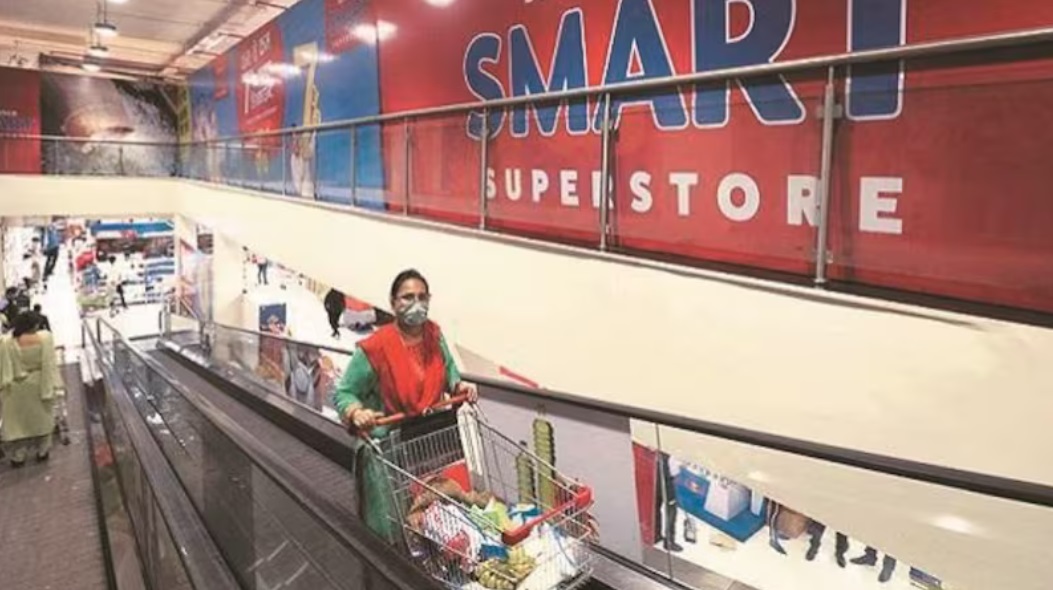
Reliance Retail’s competitors are nowhere close to even put up a fight. The company has over 15,000 offline stores across categories, compared with DMart’s 294 stores or Aditya Birla Fashion’s 3,468 outlets.
Reliance retail’s revenue has grown five times in the last five years and the core retail revenue of $18 billion is greater than competitors combined, according to a Bernstein report.
Speaking to Business Standard, Devangshu Dutta, CEO, Third Eyesight, says, Reliance wants a decent share of Indian consumers’ wallet. From that perspective, Reliance still has a long way to go, he says. As consumer preferences evolve, Reliance too should adapt.
An undisputed leader in the domestic market, the aim of Reliance, according to Mukesh Ambani, is to become one of the top 10 retailers globally. Part of this bet is based on the premise that incomes and consumption power of Indians will increase across the board in coming years. However, could the uneven recovery that different segments of the population have seen stop the pie from growing larger and prove to be a dampener for Ambani’s ambitions?
(Published in Business Standard)
admin
April 21, 2021
Debojyoti Ghosh, Fortune India
April 21, 2021
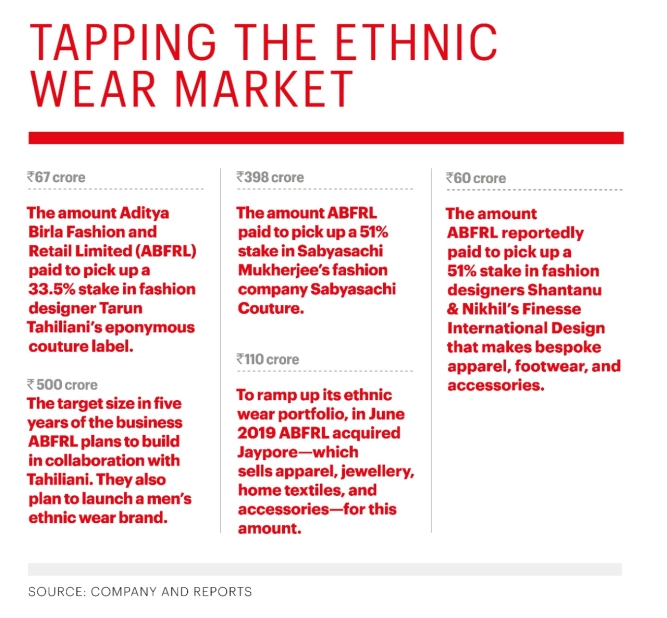
Billionaire entrepreneur Kumar Mangalam Birla-led retailer Aditya Birla Fashion and Retail Limited (ABFRL) has continued its build-up in the ethnic wear market with its fourth deal since 2019 and second this year. In February, the Mumbai-based fashion retailer picked up a 33.5% stake in fashion designer Tarun Tahiliani’s Goodview Properties—that will own and operate the designer’s eponymous couture label—for ₹67 crore. That was a month after ABFRL acquired a 51% stake in Kolkata-based designer Sabyasachi Mukherjee’s company, Sabyasachi Couture, which sells garments, accessories, and fine jewellery, for ₹398 crore.
ABFRL, which owns fashion brands such as Louis Philippe and Van Heusen, said in a statement that ethnic wear “is a large and growing market with a significant opportunity to build scale” and expects it to be an important category over the next few years.
Experts note the two recent deals come as the luxury industry, including fashion, has been hammered by the pandemic. The year-long shutdown in global travel has slowed over a decade of growth across luxury categories. Indeed, the global fashion industry’s profit is expected to have slumped about 93% in 2020, according to a report by consulting firm McKinsey and The Business of Fashion in December.
“[Luxury] business has been hit hard during the pandemic, like all fashion and retail businesses. And a significant injection of money is needed to maintain the business momentum, and to scale it further,” says Devangshu Dutta, chief executive of retail consultancy Third Eyesight.
In March, Italy’s billionaire Agnelli family—best known as the founders of automaker Fiat—acquired a 24% stake in French luxury shoemaker Christian Louboutin for $642 million. Three months before that it paid $95 million for a controlling stake in Shang Xia Paris, a Chinese luxury goods business founded by French luxury brand Hermès and Chinese designer Jiang Qiong Er.
Many fashion firms have used the Covid-19-induced slowdown to reshape business models, streamline operations, and sharpen their customer propositions, said the report by McKinsey and The Business of Fashion.
And that is exactly what Tahiliani plans to do with his new corporate partner. The duo will create a new entity—80% held by ABFRL and 20% by Tahiliani—to launch a new brand of apparel and accessories in the affordable premium ethnic wear segment, while it also plans to launch a men’s ethnic wear brand.
“Discussions with ABFRL have been in the works for nearly two years. I couldn’t be happier about entering into this partnership. They understand scale and numbers like no one else in the market today. Each of their home-grown brands is a resounding success,” Tahiliani, founder and CEO of Tarun Tahiliani Brand, tells Fortune India. “This collaboration permits me the financial freedom to focus on designing,” he adds.
ABFRL aims to build the new ethnic wear brand into a ₹500-crore business in the next five years, with more than 250 stores across India. The first tranche of stores is expected to open by September. “This new entity with ABFRL currently concentrates only on menswear. In our collective opinion, at present, there is only one branded national player in the Indian ethnic [wear] for men space. In order to scale this up, we need to be in three or four categories of clothing. This will give depth, both in terms of style and sizing to the men who come into the store,” says Tahiliani.
Currently, the top panIndia ethnic wear brand for men is Vedant Fashions’ Manyavar. The Kolkata-based company forayed into women’s wear in 2016 selling lehengas, saris, and the like under the label Mohey,
ABFRL’s previous deals in the segment—both in 2019—were a 51% stake in fashion designers Shantanu & Nikhil’s Finesse International Design for a reported ₹60 crore, and its ₹110-crore acquisition of Jaypore. Both make apparel, footwear, accessories, and other items.
ABFRL’s managing director, Ashish Dikshit, declined to comment for this story. ABFRL had, when announcing the Sabyasachi Couture investment, said it expected that deal to accelerate its strategy to build a comprehensive portfolio of brands across segments, occasions, and geographies.
Experts say ABFRL’s recent investments allow it to tap into the designer’s creative stream and goodwill, while providing the financial and organisational muscle of a large corporate. Albeit one that is not aiming too far upmarket.
“We shouldn’t see the ABFRL [stake] acquisitions as entry into couture, which is a different business from the ready-to-wear market. It is the expansion of these brands into ready-to-wear, tapping into the desirability of the designer brand, while making it accessible and affordable to a larger market is what will be of interest,” says Third Eyesight’s Dutta.
Indeed, Mukherjee, in a press release in late January, noted, “As my brand evolved and matured, I began searching for the right partner in order to ensure continuity and long-term sustainable growth.”
Nonita Kalra, a veteran fashion editor, says that the ABFRL deal shows the growing heft of the [Sabyasachi] brand in the fashion business. “Corporates aren’t sentimental. They are hard-nosed about investments, with careful due-diligence. ABFRL is paying what it is worth and expecting it to grow bigger. They are never going to invest in a stagnant business,” she says.
Experts, though, caution that while corporate partnerships and acquisitions allow a designer-entrepreneur and their investor partners to unlock some of the value being built, it is essential to have clarity about each brand’s design language and target consumer. “With [ABFRL’s] new venture [in men’s ethnic wear with Tahiliani], the key thing to understand is how the company will differentiate it from Shantanu & Nikhil’s positioning and focus, which is also menswear-driven,” says Abneesh Roy, executive vice president, Edelweiss Securities. “The challenge will be ensuring that each brand maintains its distinctive identity, while deriving synergies from the group.”
ABFRL has stitched up some unique deals; it now has to ensure they don’t unravel.
(The story originally appeared in Fortune India‘s April 2021 issue).
