
admin
September 1, 2026
Vikash Tripathi, Outlook Business
1 September 2026
Eight decades ago, the ‘nationalist businessman’ GD Birla helped prepare the ‘Bombay Plan’, which asked the state to pro-vide for the bare minimum needs of its people. His plan asked for 2,800 calories of well-balanced food per day, 30 yards of clothing per year and 100sq ft of housing per person.
Today, seventh-generation Aryaman Vikram Birla is betting on an entirely different opportunity: premium dining. “We continue to believe in the remarkable potential of the premium casual dining space, spurred by rising disposable income and evolving lifestyles,” the 29-year-old said after Aditya Birla New Age Hospitality acquired KA Hospitality in 2023.
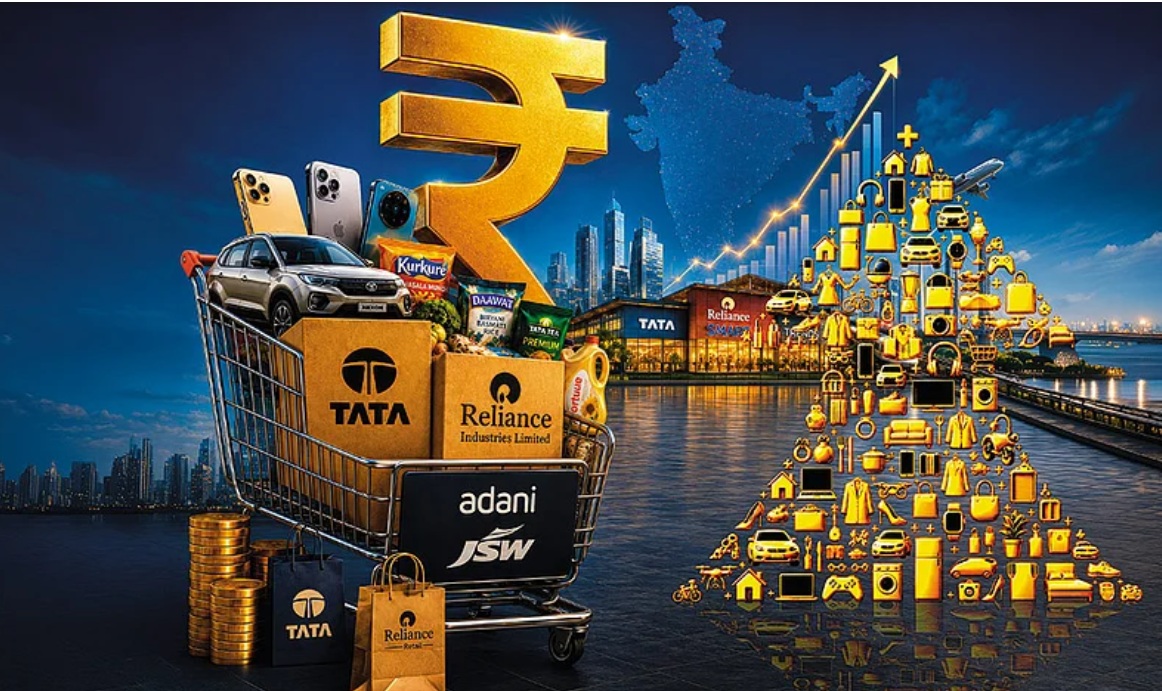
The Birlas are not alone in trying to cash-in on rising prosperity in India. In the past five years alone, India’s top 10 industrial groups have announced new ventures in consumer-facing sectors or doubled down on existing ones. A rough tally of these investments crosses ₹4.8 lakh crore.
For decades, these same business houses built their dominance in core sectors like steel, power, aluminium, cement and chemicals, laying the industrial backbone of the economy. This helped the nation become a large producer of such goods and, in some cases, an exporter as well.
But as India’s economic conditions changed, so has the focus of its largest conglomerates.
For the likes of Tata, Aditya Birla, Bajaj and Bharti, that journey started way back. “What has changed in recent years is the speed and openness of the amount of capital being invested,” says Jitender Kumar, associate professor and programme chairperson, retail management programme at Birla Institute of Management Technology.
“It is not ‘opportunistic’ reasons, it’s structural reasons.”
Two factors seem to be driving the shift: the first is the arrival of an affluent consuming class that can buy branded and premium goods, and the second is the attraction of consumer businesses as a way to diversify revenue and, in some cases, improve the quality of earnings.
The Rise of Affluence
A couple of decades ago, if an Indian household had some extra cash, it often meant buying more of the same. Today, it increasingly means buying better. Even salt is being upgraded, from iodised to Himalayan pink or rock salt. The same shift is visible in bigger purchases: sports utility vehicles (SUVs) over hatchbacks, and ₹1cr-plus homes over budget flats.
But India isn’t simply consuming more. It is moving from basic consumption towards discretionary, branded and premium consumption. This boom is most clearly seen in the rapid expansion of the financial infrastructure that enables consumption. Formal retail credit penetration has more than doubled over the past decade, according to a TransUnion Cibil report, driven largely by personal loans, credit cards and consumer durable loans. Meanwhile, the government-backed Unified Payments Interface has untethered spending from the cash in a buyer’s wallet.
The signs show up across the broader consumption economy. Homes priced above ₹1cr accounted for 54% of total sales in 2025, up from just 30% in 2023—the market that decorative paints and home solutions are chasing.
Out of 4.7mn cars sold in the financial year 2025–26, SUVs accounted for more than half.
“The consumer market has grown substantially—not only through rising incomes but also the dramatic expansion of branded consumption across product verticals,” says Devangshu Dutta, founder of management-consulting firm Third Eyesight.
The bets are also getting more varied, from Reliance Retail tying up with global brands like Fenty and Skims to the Bharti Group bringing Olive Garden to India.
The Lure of Returns
For a passenger walking through an airport, the flight is only one part of the journey. There is coffee before boarding, food between flights, a lounge, retail outlets, parking and a host of other things to spend money on. For Adani Airports, those non-aero businesses are increasingly becoming the more lucrative part.
Its non-aero operations already generate about ₹2,500cr, with returns in the high-20% range, against roughly 12% from regulated aeronautical operations.
Jeet Adani, director of Adani Airport Holdings, expects the share of aeronautical revenue to fall to around 10% of total revenue, with non-aero becoming the bigger growth driver. The motivation can be seen as an escape from a return ceiling as much as a bet on rising affluence.
As Kumar puts it, consumer businesses help the conglomerates in two major ways. First, they help insulate them from volatile and often punishing commodity cycles, and second, they often offer far better returns with lower capital intensity and faster cash conversion.
Reliance Industries (RIL) shows how significant that shift can become. By 2025–26, its consumer-facing arms, Jio Platforms, Reliance Retail Ventures and Reliance Consumer Products, together contributed over 40% of group revenue and nearly 60% of operating profit.
And there is another advantage. “A small business, when it wants to build a new venture, faces constant margin pressure and often has to build its supply chain from scratch. A large conglomerate can leverage its existing scale, infrastructure and supply chain to enter a new business far more efficiently,” explains Kranthi Bathini, equity strategist at WealthMills Securities.
Different Strokes
In chasing consumers, some conglomerates are following the fastest-growing categories, while others are using their existing industrial capabilities to enter consumer-facing businesses. One is trying to build an entire ecosystem around it. But the lines between these approaches are not always clean.
Tatas is doing both: building entirely new consumer brands while also using the industrial ecosystem it has built over decades.
For Tatas, the consumer opportunity has largely been about following where spending is moving. Their consumer ventures have followed this arc longest. It began decades ago with Lakmé (1952), Tata Tea (1962) and Titan (1984). Tanishq and the expansion of Trent under brands such as Zudio are only the latest examples.
At Tata Consumer Products, once largely a staples business built around salt, tea and pulses, the focus has been shifting towards value-added foods and beverages, with ₹7,000cr spent on the acquisitions of Capital Foods and Organic India in 2024. Across companies such as Tata Digital, Indian Hotels, Air India and Tata Motors Passenger Vehicles, the group has announced close to ₹93,180cr in investment over the past five years.
Aditya Birla’s jewellery chain Indriya and its move into premium hospitality belong to the same category of ‘pull-based’ diversification.
JSW is taking a different route. It is taking its existing industrial strengths one step closer to the buyer. The group, which has traditionally been focused on areas such as steel, energy and cement, has expanded into consumer-facing areas such as auto, paints and home solutions.
It launched JSW Paints in 2019, and acquired a controlling stake in paintmaker AkzoNobel India for ₹8,986cr last year. Its strategy is to leverage an established network of contractors, dealers, architects and builders to reach consumers.
The same strategy can be seen in its push into autos, acquiring a 35% stake in the Indian unit of China’s MG Motor in 2024, leveraging synergies with its established steel business.
At Tatas, too, group companies like Tata Steel, Tata Power, Tata AutoComp, Tata Technologies and TCS are doing significant businesses with Tata Motors.
Adani is also using an asset it already controls to move further into the consumer’s wallet. Adani Airports announced a ₹20,000cr investment in June to develop hotels, retail, entertainment and commercial infrastructure around its eight airports, and has signed hotel management agreements with IHG Hotels & Resorts for five hotels. City-side developments could contribute 30–40% of Adani Airport Holdings’ non-aero revenue.
Yet another example of the extension strategy is Aditya Birla Group’s attempt to diversify from cement, metals and textiles into decorative paints with Birla Opus.
RIL took a different approach: trying to connect multiple consumer businesses into one ecosystem. It expanded its retail network through new formats and acquisitions, added brands and partnerships, and then built a consumer-goods business around acquisitions such as Campa Cola and Lotus Chocolate.
That expansion was helped by billions of dollars raised by both Jio Infocomm and Retail Ventures from foreign investors in 2020. The group now plans to spend another ₹8,000cr expanding consumer goods manufacturing. The advantage of having that kind of scale is clear. If RIL has Ajio at a mall and, next to it, GAP and Herschel, it can negotiate better rental terms.
For conglomerates, Kumar points out, the next level of competition will not be based on investment, “but on the ability to create different consumer experiences, foster innovation and create lasting brand loyalty through the integration of these capabilities”.
Can Scale Win?
When Reliance Fresh opened its first stores in 2006, it was part of a rush by some of India’s biggest business groups to crack organised retail. Aditya Birla Group, RP-Sanjiv Goenka Group’s Spencer’s and Kishore Biyani’s Future Group were all betting that organised retail could transform the way Indians shopped. What followed was years of experimentation, losses and, for some, eventual retreat.
Birlas essentially gave up on grocery retail after a decade of heavy losses and exited entirely.
Future was pushed into insolvency after a controversial ₹24,713cr deal with RIL. Spencer’s is still trying to find its footing, with ₹249.33cr in net losses in 2025–26.
Conglomerates may have deeper pockets, but that does not automatically make them better at selling to consumers. India has seen some of those bets fail or take years to work. And even among today’s biggest players, the results are still mixed.
Tata Sons has been in this segment longer than the Ambanis, yet its consumer businesses still make up less than 40% of its total revenue —a share that has not changed since 2020.
These groups have what most standalone consumer companies don’t: capital, distribution, infrastructure, brands, scale.
But winning consumers takes something else entirely—reading what people want, building brands, innovating fast and earning loyalty.
“In B2B [business to business], it’s about manufacturing at scale, getting your costs down. Then you can compete. In B2C [business to consumer], it’s all about the product. With the right product at the right price, you have a chance to win in the market,” Parth Jindal, managing director of JSW Cement and JSW Paints, told Outlook Business in 2025.
Tata Sons’ chairman N Chandrasekaran hit the same wall while revamping the group’s consumer unit. “I have the money. But I don’t have the team to run it,” he had told Sunil D’Souza while hiring him to lead Tata Consumer Products in 2020.
Reliance and Tatas have had the longest head start, but even their journeys show how difficult it is to turn scale and capital into consumer businesses. Birla, JSW and Adani are now trying to make that transition in their own ways.
A longer tail—Bajaj in hospitals, L&T in retail finance and education, Mahindra in insurance and hospitality, Murugappa in electric mobility—is playing it safer, going deeper into what it already owns rather than chasing new categories.
What ties them together is a bet on consumers buying not just more but better, and on those consumers being worth more per rupee of capital than the industrial customers who built these houses.
The prize is growing, but so is the competition. Capital and scale may get these conglomerates through the door. They won’t guarantee a seat at the table.
(Published in Outlook Business)
admin
March 7, 2026
Vaeshnavi Kasthuril, MINT
Bengaluru, 7 March 2026
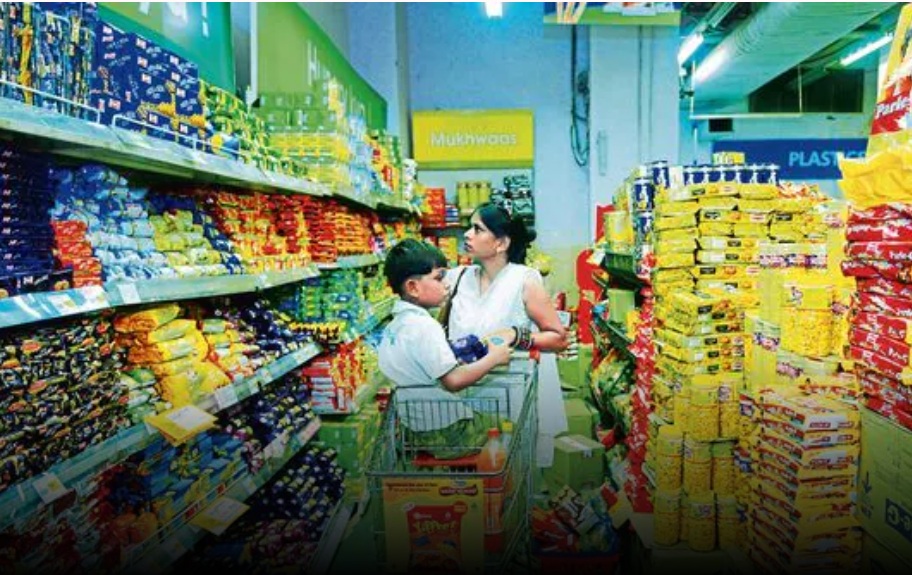
While many consumer goods companies are acquiring direct-to-consumer (D2C) startups, Reliance Consumer Products Ltd (RCPL) is pursuing a different playbook. The consumer arm of billionaire Mukesh Ambani’s Reliance Industries has been steadily buying regional legacy brands with strong local recall. By plugging these brands into Reliance’s vast retail and distribution ecosystem, the company hopes to accelerate its ambition of becoming an FMCG powerhouse.
During the December quarter, RCPL overall gross revenue stood at 5,065 crore, up 60% year-on-year, according to an earnings statement from Reliance Industries. India’s FMCG sector remains dominated by established players such as Hindustan Unilever Ltd, which reported revenue of about 64,138 crore in FY25—highlighting the scale of the opportunity Reliance is targeting as it builds its consumer business.
“What Reliance is doing is cobbling together a portfolio of brands that already have some momentum,” said Arvind Singhal, chairman of The Knowledge Company, a Gurgaon-based management consulting firm.
Which regional brands has Reliance acquired?
Over the past few years, RCPL has assembled a portfolio of regional brands across food, beverages and personal care. One of its latest additions is Chennai-based Southern Health Foods Pvt. Ltd, which sells millet-based foods, health mixes and baby nutrition products under the Manna brand. Reliance acquired the company for about 158 crore, marking its entry into the fast-growing millet and nutrition foods segment.
Earlier, RCPL bought a majority stake in Udhaiyam Agro Foods Pvt. Ltd, a Tamil Nadu-based staples brand known for pulses, flours, spices and ready-to-cook mixes. Revenue at Shri Lakshmi Agro Foods Pvt. Ltd, which sells products under the Udhaiyam brand, rose about 5% year-on-year to 668.2 crore in FY24, according to Tracxn data.
Reliance has also acquired Delhi-based Sii, a legacy condiments maker known for jams, sauces and cooking pastes as well as Velvette, the historic personal care label that pioneered shampoo sachets in India in the 1980s.
In beverages, RCPL revived Campa Cola, acquired from the Pure Drinks Group, as a mass-market challenger in the carbonated drinks segment. It has also partnered Hajpuri & Sons to distribute regional drinks such as Sosyo, Kashmira and Ginlim, and tied up with Sri Lanka’s Elephant House to manufacture and distribute its beverages in India.
What do regional brands gain from partnering with Reliance?
Regional brands that partner with or are acquired by Reliance gain access to scale that is often difficult to achieve independently. Many local brands enjoy strong loyalty in their home markets but face constraints such as limited capital, weaker supply chains and restricted distribution networks.
Under the Reliance umbrella, these brands gain access to the group’s nationwide retail and distribution ecosystem, which includes millions of kirana stores as well as large-format retail chains operated by Reliance Retail. This enables them to expand beyond their regional strongholds far faster than they could independently.
Reliance can also improve manufacturing and supply-chain efficiencies, helping these brands scale production, strengthen sourcing and reduce logistics costs. In addition, stronger marketing capabilities and financial backing allow brands to invest in packaging, advertising and product innovation—helping them evolve from local favourites into national brands.
Why is Reliance pursuing this strategy?
For Reliance Consumer Products Ltd, acquiring regional brands offers a faster and potentially less risky way to expand in India’s vast FMCG market. These brands already have loyal customers, established products and existing manufacturing. By plugging them into Reliance Retail’s distribution network, the company can rapidly expand their reach across the country.
The strategy also allows Reliance to quickly build a diverse portfolio across staples, beverages and personal care—strengthening its ability to compete with established FMCG giants such as Hindustan Unilever and ITC.
How are rival FMCG companies expanding instead?
Most traditional FMCG companies are pursuing a different strategy by acquiring or investing in digital-first D2C brands. These startups often operate in fast-growing segments such as premium skincare, clean beauty and health-focused foods, helping established companies tap younger, digitally savvy consumers.
• Hindustan Unilever recently acquired skincare startup Minimalist, a fast-growing digital-first brand known for its ingredient-focused beauty products.
• Dabur India has also entered the space by acquiring premium beauty brand RAS Luxury Skincare through its 500-crore venture capital arm.
• Marico has taken a similar approach, investing in digital-first brands such as Beardo and Just Herbs to strengthen its presence in grooming and natural beauty.
Such deals allow established companies to quickly enter emerging premium categories.
What challenges could Reliance face in scaling regional brands?
Scaling regional brands nationally can be more complex than expanding digital-first startups. Many regional brands are built around specific local tastes, price sensitivities and cultural preferences that may not translate easily across markets. “India is very diverse, and consumer preferences vary significantly across regions,” said Singhal of The Knowledge Company.
Another challenge is that many regional brands lack the infrastructure to scale independently. “For many regional brands, the first real scaling often comes from the acquirer’s distribution rather than from the brand itself,” said Devangshu Dutta, founder of consulting firm Third Eyesight.
In contrast, many D2C brands are designed from the outset for a national or digital audience, making them easier to scale online. However, these startups often rely heavily on marketing spends and online channels, which can make profitability and large-scale expansion challenging.
For RCPL, the key test will be retaining the regional authenticity of these brands while using the nationwide distribution strength of Reliance Retail to expand them beyond their core markets.
(Published in Mint)
admin
January 7, 2026
Writankar Mukherjee & Shabori Das, Economic Times / Brand Equity
7 January 2026
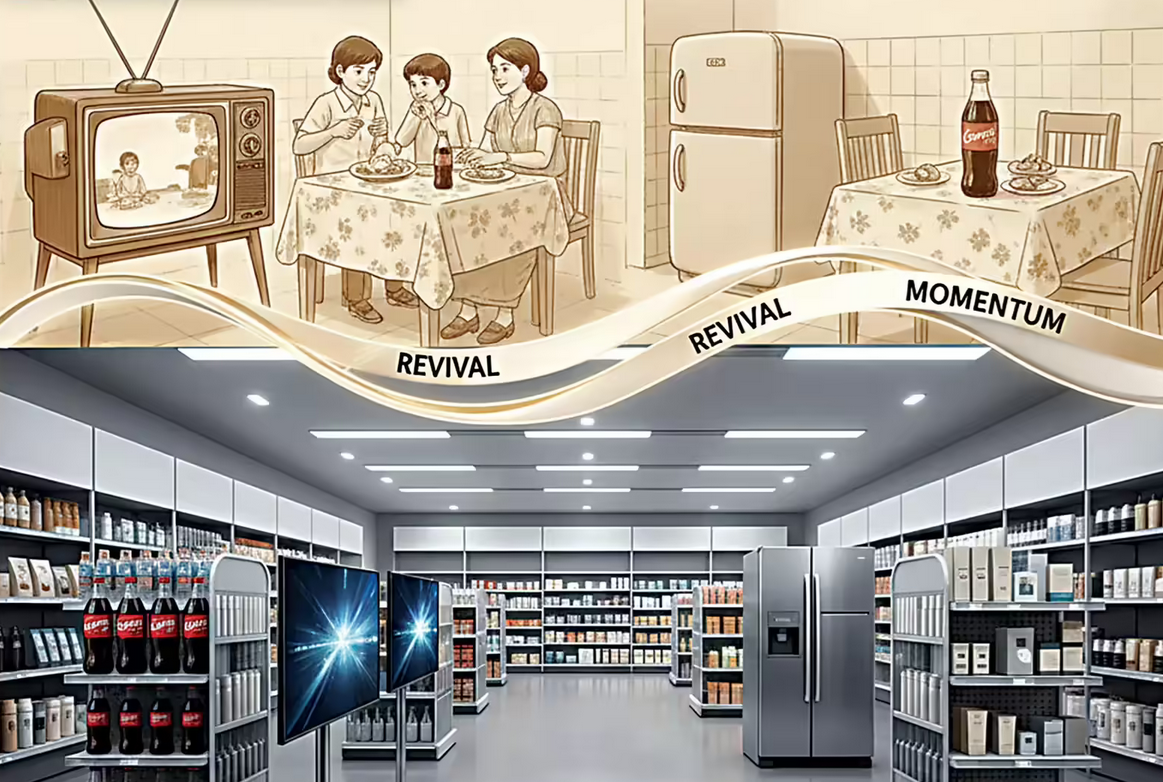
There’s a renewed sparkle in the adage ‘Old is Gold’ at India’s biggest conglomerate Reliance. Banking on Indians’ nostalgia, it is hawking and reviving labels that once defined everyday life, Campa and BPL among them, to set its consumer venture’s cash registers ringing.
What started with sales of Rs. 3,000 crore in FY24, Reliance Industries’ fast-moving consumer goods (FMCG) business quickly accelerated towards Rs. 11,500 crore the following year. With a staggering Rs. 5,400 crore posted in the July to September FY26 quarter alone, the revival story is clearly striking a chord with consumers. But Campa, already the largest contributor to the Reliance Industries’ FMCG business, is only the beginning.
The company is injecting fresh life into acquisition of legacy brands such as Ravalgaon in confectionery and Velvette in personal care. Reliance is applying the same formula to the consumer electronics business, covering televisions, refrigerators and washing machines. Once a staple of Indian households, Kelvinator and BPL are being reintroduced.
Strategy Rings a Bell?
Driving this revival is a strategy Reliance knows well: aggressive pricing that is often 20 to 30% lower than competitors, offering generous trade margins to woo retailers, and a rapid expansion of distribution from its own stores to kiranas and local outlets, alongside local sourcing and an expanding product portfolio.
It’s a playbook that once created waves in the telecom market; this time, however, it comes with a generous dose of nostalgia.
The path ahead though may not be easy. While Campa may have yielded results in a category linked to instant gratification, electronics is a high-ticket, long-term purchase. Marketers are debating whether consumers in their 20s and 30s—spoilt for choice by global brands—would choose a Kelvinator refrigerator, a BPL TV or a Velvette shower gel over LG, Samsung, Dove or Fiama.
Deep Pockets and Retail Muscle
Reliance, experts say, has two advantages— its balance sheet and strong market presence with its own retail stores. “Reliance has the intent to dominate a market in whatever business it enters. Their brands in FMCG and electronics too have a more-than-decent chance of surviving and thriving,” says Devangshu Dutta, founder and chief executive of Third Eyesight, a consultancy in consumer space.
“As long as they have capital and management capability, they may cut their teeth,” he says.
The company is approaching the FMCG and electronics businesses in startup mode, but with deep pockets. As a Reliance executive explains, the strategy is to invest and invest more, gain market share, continue to absorb losses and after achieving scale, drive efficiencies to generate profit.
The path has been carved out. Reliance Consumer Products (RCPL), the FMCG business entity and what started as a unit of Reliance Retail Ventures, is now a direct subsidiary of Reliance Industries. This shift will help the company raise funds independently and eventually launch an initial public offering (IPO), and drive valuation independent of retail. The electronic business may follow suit as it grows in scale.
Reliance did not respond to Brand Equity’s queries.
Electronics: A Tough Play
Industry executives say the electronics foray will not be an easy battle against international brands. Global brands enjoy strong appeal in the Indian market, and companies such as LG, Samsung and Sony have been present for over two decades, cementing their position. Even the newer ones like Haier and Voltas Beko are rapidly gaining market share.
Pulkit Baid, director of the electronics retail chain Great Eastern Retail, says that unlike the cola industry, where two large players (Coca-Cola and PepsiCo) dominate, consumer durables are highly fragmented. “Kelvinator enjoys the brand heritage of an Ambassador car. But we will have to see if the brand is welcomed by Gen Z with the same euphoria as Campa.”
Industry veteran Deba Ghoshal notes that very few legacy brands have been able to withstand the onslaught of new-age brands in consumer electronics. Voltas (from the Tatas) and Godrej are exceptions, he adds.
“Reliance Retail has the strategic foresight to re-establish legacy brands in consumer durables space, instead of chasing a standalone private label business,” adds Ghoshal. “There is a strong opportunity in BPL and Kelvinator, provided they are re-launched with strong value and engaging emotive hooks, and not restricted to being a price warrior. Reliance has the capability; it just needs the right strategy.”
Reliance is readying campaigns for BPL and Kelvinator to connect with the younger consumers. The company is planning to re-launch them beyond Reliance Retail stores—targeting regional retail chains and e-commerce platforms and expanding quickly into smaller towns. With India’s electronics penetration still low—15 to 18% for flat-panel TVs, 40% for refrigerators, 20% for washing machines and less than 10% for air conditioners (ACs)—Reliance has substantial headroom for growth.
Angshuman Bhattacharya, partner and national leader for consumer products and retail at EY India, says Reliance may focus on tier two and three cities. “These markets have been a low priority for the Samsungs and LGs because they want to play in the premium segment where margins are higher. That is where Reliance may expand the market. It requires a lot of capital in terms of inventories and distribution, and Reliance has the ability and potential to do so.”
FMCG: Ball is Rolling
The FMCG push is gaining strong momentum. Reliance plans to double its distribution to three million outlets this fiscal.
Over the next three years, it looks to invest Rs. 40,000 crore to create Asia’s largest integrated food parks and has already invested Rs. 3,000 crore in manufacturing.
Isha Ambani, who spearheads Reliance’s retail and FMCG businesses, drew attention to Campa’s comeback at the company’s AGM in August: “Campa-Cola now holds double-digit market share across many states, breaking a 30-year MNC duopoly of Coca-Cola and PepsiCo. Campa Energy gained two million social media followers in just 90 days.”
Her target is bold: To reach Rs. 1 lakh crore in FMCG revenue within five years and become India’s largest FMCG company with a global presence.
Market watchers say such high ambitions require high investments. Kannan Sitaram, co-founder and partner at venture capital firm Fireside Ventures, said a company like Hindustan Unilever would set aside at least `30-40 crore to launch a brand. “Advertising and marketing alone would take up more than half of that. And when you are re-launching a brand which has not been around for a long while, the spending tends to be 25 to 30% higher in the initial three to four months,” he says.
Yet, analysts believe Reliance is in the consumer brands business for the long term. Bhattacharya says whatever Reliance has learned in this short time is meaningful and serious, something nobody else has managed.
Mover and Shaker
Competitors, including Tata Consumer Products, Dabur and PepsiCo’s largest bottler in India Varun Beverages, have acknowledged the turbulence created by Reliance in the FMCG sector. But the industry hopes low penetration levels will ensure there is room for everyone.
Varun Beverages chairman Ravi Jaipuria did not mince his words in the company’s latest earnings call in October-end: “They (Reliance) have woken all of us up and we are becoming more attentive… it is a very healthy sign for the country because our per capita consumption is so low that in the next five to 10 years, this market may double or triple…there is a huge room, and we see only positives in this.”
The revival of legacy brands and aggressive push into FMCG and consumer electronics indicates that Reliance is preparing for the long haul. In this fight driven by nostalgia, competitive pricing, deep pockets and distribution muscle, the battle for shelf space has just begun.
(Published in Economic Times/Brand Equity)
admin
October 28, 2024
Nisha Qureshi, Afaqs
28 Oct 2024
Reliance Industries last year made a strategic move into the soft drink sector by acquiring the iconic carbonated beverage brand ‘Campa Cola,’ which gained prominence in the 80s and 90s.
The conglomerate intends to strengthen its brand by employing its classic pricing disruption strategy. Reliance is expanding its presence nationwide by focussing on affluent regions and utilising e-commerce and quick commerce platforms.
Recent reports suggest that Campa Cola is providing retailers with more favourable trade margins than its rivals Coca Cola and Pepsi, aiming to challenge the existing duopoly in India’s soft drink market.
In the Q2FY25 earnings call, Reliance Industries reported that its consumer brands, particularly Campa Cola and Independence, are experiencing robust growth, with general trade increasing by 250% year-on-year.
“We are taking several marketing initiatives to grow consumer brands and will leverage the festive period to drive demand,” the company’s representative said during the call, adding that the company was “very optimistic about the next few quarters”.
Experts now believe that the soft-drink beverage market will witness an increase in advertising initiatives by the competitors to mitigate the disruption.
Saurabh Munjal, co-founder and CEO of Archian Foods, the makers of Lahori Zeera, asserts that Reliance’s entry into this sector will only expand the market for soft-drink beverages.
“The consumption will increase, accompanied by a corresponding rise in marketing efforts,” he adds.
Devangshu Dutta, the founder of Third Eyesight, a management consulting firm engaged with the retail and consumer products ecosystem, asserts that both Coca-Cola and Pepsi will undoubtedly endeavour to safeguard their market share.
He says the emphasis will particularly be on domestic consumption, and we can anticipate an increased investment in share-of-mind campaigns to proactively counter Campa’s expansion.
Business strategist and independent director Lloyd Mathias believes that the current circumstances are conducive to market expansion and disruption. “Other players will likewise increase their visibility through marketing strategies and retail initiatives to counter this. So what we will see in the next year is that the categories of soft drinks will grow quite dramatically,” he adds.
The classic Reliance move
Experts suggest that Reliance’s approach to Campa Cola involves competitive pricing, reflecting a strategy akin to its disruptive tactics in the telecom sector with Jio and JioCinema. For instance, a two-litre bottle of Campa Cola’s lemon flavour is priced at Rs 53 on a quick commerce platform, whereas a leading competitor offers it for Rs 74.
Besides competitive pricing, Reliance also has the significant advantage of owning a large retail and media network to scale Campa Cola.
“Reliance has earlier disrupted markets with the aggressive pricing strategy and it has the resources to follow-through on its pricing strategy for Campa as well. It can build significant volumes across its own stores prior to having to compete for shelf space in the broader distribution channels,” says Dutta.
As per Mathias, in addition to possessing deep pockets, Reliance benefits from its extensive media and entertainment wing that will be leveraged for the promotion of Campa Cola.
“I think the combined strength of Reliance in terms of distribution, media, and retail, alongside its capacity to maintain pricing integrity, are quite formidable. I think they are going to make a significant impact in the market,” says Mathias.
Impact on smaller players
Experts also suggest that the introduction of Campa Cola at its current price point will primarily affect smaller local competitors who function within the same pricing bracket, particularly in tier-2 and tier-3 markets.
Mathias asserts that Campa Cola will initially expand the soft-drink beverage market, while also emphasising that given the price point of the soft drink, the immediate impact will be felt by smaller local players who operate at similar price points. Introduction of numerous Indian innovations within the soft-drink category could significantly impact relatively smaller competitors.
Similarly, Dutta observes that the market for carbonated beverages largely hinges on the intangible qualities associated with the brands. In India, however, brand preferences are not as hard coded as they are in the United States.
“Consumers do switch between brands, and price-sensitive customers can be swayed by visible pricing differences. This gives deep-pocketed Reliance an opportunity to carve out a significant market share.”
However, according to Munjial of Lahori Zeera, there appears to be no direct impact on his brand, given that Campa Cola has thus far only introduced the well-known flavours of carbonated beverages. “As far as Lahori Zeera is concerned, there is no impact because the target consumer, the flavours are all very different.”
“This development will merely add to the market and increase the number of people consuming carbonated beverages,” he says.
(Published in Afaqs)
admin
September 16, 2024
Priyamvada C., Mint
16 September 2024
When the late George Fernandes, the industries minister in the short-lived Janata Party government of 1977, issued a diktat to multinational corporations Coca-Cola, IBM and AstraZeneca to dilute their stake in their wholly owned subsidiaries to 40% in favour of Indian shareholders, Coca-Cola and IBM chose to exit India. Later, during P V Narasimha Rao’s proliberalisation government in 1993, Coca-Cola returned. It bought out Ramesh Chauhan’s Delhi Bottling Company and Coolaid, the bottling companies of five carbonated drinks, in 1998.
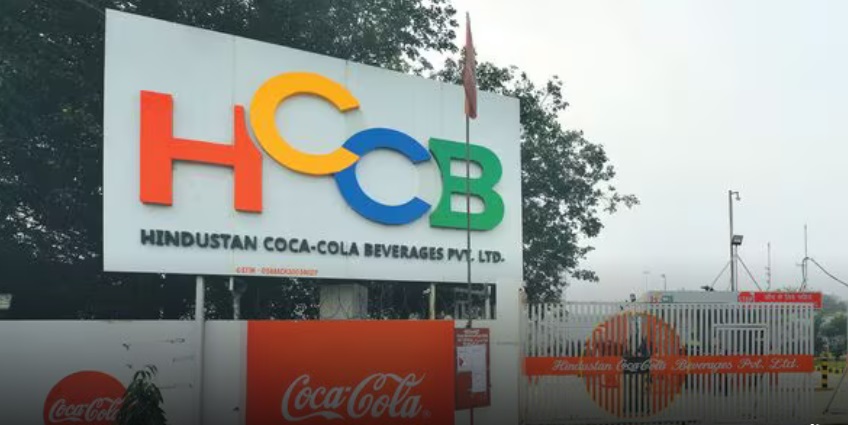
With Coca-Cola India now said to be evaluating options to list its wholly owned bottling subsidiary – Hindustan Coca-Cola Beverages (HCCB), Mint explains the rationale behind companies considering such moves.
What caused the change in strategy?
Experts said there is a trend of consumer giants spinning off their units to optimise their balance sheets, go asset-light and focus on their core brands and business models. Coca-Cola India’s ambitions to list HCCB come almost a decade after rival PepsiCo’s bottler, Varun Beverages, listed on the local stock exchanges, yielding significant value for the Jaipuria family.
Unlike PepsiCo, Coca-Cola owns its bottling franchise, just as other MNCs including consumer goods major Whirlpool, ball-bearing specialist Timken, and tobacco giant BAT, who are keen to take advantage of the valuations that Indian investors give to well-run MNCs. Varun Beverages commands a market valuation of ₹2.09 trillion. Hindustan Unilever and Colgate-Palmolive (India) are examples of multinational companies that have listed in India.
Coca-Cola’s move is seen as a strategic attempt to yield significant benefits, including financial gains, risk mitigation and other exit opportunities. The Economic Times was the first to report on HCCB’s listing plans in May.
How does the parent company benefit?
Through such moves, the parent company can reduce exposure to risks associated with bottling companies, which include fluctuations pertaining to raw material, regulatory changes and local market conditions, said Alpana Srivastava, a partner at Desai & Diwanji. While spinning off bottling subsidiaries is more prevalent in the beverage industry, she said other fast-moving consumer goods and retail companies may explore similar strategies to optimise their balance sheets in the current environment.
Earlier this year, HCCB announced the transfer of its bottling operations in three territories in north India to streamline supply chains in the region. However, the bottler declined to comment on its IPO plans.
As part of the transition, the Rajasthan market will be owned and operated by Kandhari Global Beverages, which operates in parts of Delhi, Himachal Pradesh, Haryana, Punjab, Chandigarh, Jammu & Kashmir, and Ladakh.
The Bihar market will be owned and operated by SLMG Beverages Pvt Ltd, which runs bottling operations in Uttarakhand, parts of Uttar Pradesh, Madhya Pradesh, and Bihar. The Northeast market and select areas of West Bengal will be owned and operated by Moon Beverages Pvt Ltd, which operates in parts of Delhi and Uttar Pradesh.
What other factors motivate such spin-offs?
Besides providing liquidity for the bottler, listing may offer tax benefits such as reduced capital gains tax or more favourable transfer pricing rules and optimise the overall tax burden for both the parent company and the subsidiary, Srivastava explained. It may allow both entities to be valued more accurately based on their individual capacities in growth, risk profiles and capital intensity.
This comes in the backdrop of companies looking to make the most of a bullish stock market to unlock more value for shareholders by listing their manufacturing subsidiaries. It enables the companies to raise more capital, which can be used to strengthen their market presence and reduce debt, said Devangshu Dutta, founder of Third Eyesight, a management consulting firm. He said the core value generator for companies such as Coca-Cola and Pepsi are brands and marketing rather than manufacturing.
In April, private equity firm Lighthouse Funds invested ₹700 crore in Parsons Nutritionals, a contract manufacturer specialising in packaged foods, beverages, and personal care products, underlining investor appetite in this sector. Other co-investors include the International Finance Corporation, a member of the World Bank Group, Evolvence India, HDFC AMC’s Fund of Funds, and various family offices.
However, there may be legal considerations, too. While exclusive contracts exist, the bottler may have partnerships with other companies in its distribution portfolio, which may have to be reviewed and renegotiated. There may be regulatory compliance and other anticompetitive considerations when it involves such big entities.
Other instances of such moves
While there are fewer examples of bottling companies listed in India, this practice is more common globally. Coca-Cola has listed most of its bottling subsidiaries in other global markets such as North America and Europe.
While there is no shareholding between PepsiCo and Varun Beverages, there is an exclusive arrangement for Varun Beverages to bottle, use trademarks, distribute, market, and sell PepsiCo products across India. The beverage giant benefits from royalty and licence fees. Over the past year, Varun Beverages’ revenue rose 22% to ₹16,400 crore while its profit increased to ₹2,056 crore from ₹1,497 crore in FY22. As of Friday’s close, the bottler’s shares had gained almost 30% to ₹645.20 since the beginning of this year.
Any potential listing opportunity for HCCB may allow a staggered exit for Coca-Cola India from managing local operations, monetising its stake and participating in future licence fees and/or royalty arrangements, said Dhruv Chatterjee, a partner at Saraf and Partners. He added that there are indications in the retail and fast-moving consumer goods category of similar divestments. Coca-Cola India did not respond to Mint’s request for comment.
Ravikumar Distilleries is an example of a listed manufacturing company that has tie-ups with liquor companies Radico Khaitan, Shashi Distilleries and John Distilleries, in addition to manufacturing and marketing its own liquor products. Bengal Beverages is an unlisted bottler that manufactures and distributes non-alcoholic beverage brands under licence from Coca-Cola across categories such as sparkling soft drinks, juice and water.
What kind of contracts exist between the bottler and the parent company?
Many bottling plants are usually set up by companies as a joint venture with a local partner. The bottler procures the concentrate from the companies. About 14-15% of the concentrate cost goes to the bottler, which translates into revenue for the brand, according to a person familiar with such discussions who spoke on condition of anonymity. The company spends a part of this revenue on marketing activities that target mass audiences through television, radio and newspapers.
Depending on the terms of the contract, the bottler may be expected to spend a portion of its revenue on marketing through outdoor settings such as billboards, flyers, social media and events. The arrangement between a bottler and a company may be either a pure bottling arrangement (or contract manufacturing) or a bottling and distribution arrangement, where the bottler is also responsible for marketing, branding, and last-mile distribution.
How has the carbonated beverage market fared?
Market research provider Statista estimated that the carbonated drink market in India clocks about $2.4 billion in revenue and is expected to grow by 6.98% annually over the next four years. The volume consumed at home and other outdoor locations is likely about 4.2 billion litres this year.
In 2022, Parle Agro’s brand Appy Fizz and Coca Cola dominated with a 31% market share each, followed by Fanta, Pepsi, 7UP and Sprite, among others. Other brands such as Reliance-backed Campa Cola are expected to challenge the dominance of these companies.
Before Reliance acquired Campa for ₹22 crore in 2022, the soft drink had been launched by Pure Drinks Group in the 1970s. The group was behind the launch and distribution of Coca-Cola in 1949, before the US company was shunted out of the country in 1977.
Pure Drinks and Campa Beverages subsequently launched Campa Cola to fill the gap left by foreign soft drink companies in the country. However, Coca-Cola and PepsiCo re-entered the Indian market in the 1990s, throttling local competition.
(Published in Mint)
