
admin
January 24, 2022
Written By Devika Singh
The entry of Jubilant FoodWorks will intensify competition in the fried chicken segment, where KFC so far has maintained its stronghold.

Popeyes, founded in 1972 in New Orleans, Louisiana, has over 3,400 restaurants in over 25 countries around the world. Popeyes (Wikimedia Commons)
Jubilant FoodWorks, the franchisee for Domino’s Pizza, will launch the iconic US-based fried chicken brand Popeyes, known for spicy New Orleans-style fried chicken and chicken sandwiches, in India on January 19 with the unveiling of the first outlet in Bengaluru.
“Popeyes was founded in 1972 and has been one of America’s most popular and fastest-growing chicken brands. Popeyes aims to delight Indian guests with the bold and delicious flavours of its Louisiana-style chicken,” the company said in a filing to stock exchanges.
“The success of the brand lies in its traditional and unique technique of hand breading, battering, and marinating its fresh chicken for 12 hours in bold Cajun seasonings,” the company added.
Popeyes runs over 3,400 restaurants in 25 countries.
With the entry of Jubilant FoodWorks, the competition is set to intensify in the fried chicken segment, where KFC has maintained leadership in the country so far.
“KFC has enjoyed a free run in the fried chicken market. There are some local players in this segment but no large QSR (quick service restaurant) player had a presence in it until now. With Popeyes as a competitor, now Jubilant FoodWorks is stepping into that opportunity,” said Devangshu Dutta, chief executive at consulting firm Third Eyesight.
While launching its initial public offering (IPO) last year, Devyani International, the largest franchisee of Yum! Brands (which owns KFC), had stressed the advantage it has over other QSRs in the country.
“We have no competition for KFC in India,” Ravi Kant Jaipuria, chairman, Devyani International, had said at the time. Devyani International runs 284 KFC India stores across 107 cities and the brand contributes more than half of its revenues. Sapphire Foods, which too launched its IPO last year, is another major franchise for KFC in India.
Both the companies already compete with Jubilant FoodWorks in the pizza segment as they also operate Yum! Brands-owned Pizza Hut in India. Jubilant FoodWorks with Domino’s Pizza, however, has clear leadership in the pizza market. Sample this: Pizza Hut currently has 500 stores in India, of which 317 are run by Devyani International; Jubilant FoodWorks, on the other hand, already has 1,335 outlets of Domino’s Pizza in India.
Now with the launch of Popeyes, Jubilant FoodWorks, it seems, wants a chunk of the fried chicken pie too.
Westlife Development, which holds the master franchise for McDonald’s in southern and western India, also has set its sight on the fried chicken segment in India. In an interview with Moneycontrol in September last year, Smita Jatia, managing director of Westlife Development, shared an ambitious plan to become a market leader in the segment. The company has already introduced fried chicken in its 125 stores in South India and plans to soon launch the food item in the western region too.
Clearly, the fried chicken market is certainly headed for interesting times as several new QSR players vie for a share of it. According to experts, the segment also offers the next avenue for growth for QSR players. “While fried chicken was the first to take off in Southeast Asia, in India, pizza and burgers found takers given the preference towards wheat-based cuisine in some parts of the country,” said Rajat Tuli, partner at global management consulting firm Kearney.
“However, as Indians become more experimental with food and trying out different cuisines, the fried chicken segment offers the next arena for growth to QSR companies,” he added.
Tuli also believes that the segment has enough space for a couple of players. “The QSR space is poised for over 20 percent growth in the next five-six years and hence there is enough headroom for multiple players to grow in it,” he said.
‘Veg options and no MSG’
The Popeyes India menu will feature the signature Cajun-flavoured Chicken Sandwich and Popeyes signature Chicken in Classic and Spicy flavours. The Indian menu will also feature an array of vegetarian options and will also have rice bowls and wraps. The entire India menu has no flavour enhancer monosodium glutamate (MSG), and the chicken is antibiotic-free, said Jubilant FoodWorks.
In a statement, Shyam S. Bhartia, chairman, and Hari S. Bhartia, co-chairman, Jubilant FoodWorks, said, “We are excited to introduce the Popeyes Louisiana Kitchen brand to chicken-loving Indian consumers. We are confident that Popeyes will not only delight guests but also strategically complement our portfolio and fortify JFL’s leadership in the QSR domain.”
Popeyes will start with its flagship store in Bengaluru’s Koramangala on January 19, followed by stores in New BEL Road and Kammanahalli soon thereafter. The brand will have its own app (Android and iOS) and mobile website.
To ensure a smooth and seamless delivery experience, Jubilant FoodWorks has built its in-house delivery fleet with e-bikes to enable zero-emission delivery. The company is also taking precautions given the pandemic situation.
“Safety protocols like daily temperature screening for all employees and frequent sanitisation of the restaurant are being implemented and frequent sanitisation of bikes will be conducted. All delivery riders will be compulsorily wearing face masks and gloves while following the frequent hand sanitisation protocol,” it added.
Source: moneycontrol
Devangshu Dutta
August 17, 2019

Retail is such a pervasive and dynamic a sector of the economy, that it is impossible to identify a single point at which modernisation began. I’ve met countless people who perhaps entered the retail sector during the last 15 years, and who mark the beginnings of modern retail around then. There is no doubt that there has been an explosion of investment in retail chains in the last 2 decades, but we need to acknowledge the foundation on which this development is built. The current titans of the sector are standing on the shoulders of previous giants who have created successes and failures from which we are still learning.
This piece is not an exhaustive history of the evolution of the retail business in India, nor a census of all the brands operating in this sector, but the aim is to capture the flavours of the phases of development. (PDF available here to download.)
Early Years
If we were to trace back the growth of “organised” retail (mind you, I dislike that word!) or modern retail to the first retail chains, we will have to cast our mind back more than a hundred years. While many businesses of that time have disappeared, a few pioneers continue to survive, straddling three eras: the British Raj, the Socialist Raj and the Liberalised Lion economy. The businesses that continue to stand, having been through multiple transformations, include:
Fifty Years of Independence
The 1950s and 1960s remained fertile times, post-Independence and before the heavy-handed Socialist Raj truly began squeezing the life out of Indian businesses. Leading textile companies such as DCM, Bombay Dyeing and Raymond, and footwear companies such as Bata and Carona established chains of retail stores including company-operated stores as well as authorised dealers operating under the companies’ banners.
The 1980s brought the Asian Games, colour television, and a new up-to-date car model to India, all marks of a new vibrancy. Over the 1980s, a new retail wave was led by indigenous ventures such as Intershoppe (launched by a fashion exporter), Little Kingdom and The Baby Shop (children’s products), Nirula’s (fast food) and Computer Point (home computers, PCs and accessories). Many of these were certainly ahead of their time: the critical mass of consumers had yet to develop, the business infrastructure was inadequate, and funding norms were unsuitable to the capital-hungry business of retail. Unlike the textile companies that had large manufacturing and trading businesses, these new retailers were like shooting stars, glorious but visible for only a short period of time. This period, unfortunately, also witnessed the degeneration and disappearance of some of the older stalwarts such as DCM and Carona that were beset by labour disputes, management issues and disconnection from the transforming market.
Numero Uno, an indigenous denim brand, was launched in 1987 soon after VF’s American denim brands were launched, and it took nearly a decade for Numero Uno to reach other geographies in India. Nirula’s, one of the oldest fast food restaurant chains based in North India, expanded across the Delhi NCR in the 1980s and 1990s, and also explored other cities, albeit with mixed success.
Future Group, which today has a large retail and consumer brand portfolio, launched trousers under the name Pantaloons in 1987, initially as a distributed brand, and then denimwear under the brand name Bare. Within a few years the company also launched exclusive stores by the same names, to provide focussed visibility to the brands. About a decade of growth later, the group launched its first large format store under the Pantaloons name, but by now covering a much wider range of products, which became its launch pad for achieving scale.
The RPG group that had acquired Spencer & Co. relaunched it in 1991 in a spanking, new format as Spencer’s in Bangalore, and a short few years later rebadged it again as Foodworld in a joint-venture with a foreign partner. It subsequently went on to launch other formats such as Musicworld and Health & Glow.
Also in 1991, the Rahejas converted an old cinema into a department store, Shoppers Stop, aiming to provide an international shopping experience, although initially focussed on menswear. The store added women’s and children’s sections in subsequent years and the second store was launched four years later after the first one. Subsequent large scale retail expansion only came about towards the end of 1990s.
Little Kingdom is a notable example that I would like to dwell on briefly (partly for the purely personal reason that it was my first retail job!). The business was launched in 1987, headed by alumni of the illustrious IIMs around the country, built on processes and IT systems that could have been the envy of many retailers even 25 years later. The company – Mothercare India Limited – was the first purely retail company to start up and launch a public issue in 1991. During the early 1990s, it was the largest retail chain present across the country, in its categories. In 1991, it also attempted to bring the first home computer, Spectrum, to forward-thinking parents through a mix of in-store sales and door-to-door direct-selling. It was admittedly one of the first to expand internationally, opening a franchise store in Dubai in 1992. During its short life, the team launched multiple brands and formats, including Little Kingdom, Ms (a womenswear brand), The Baby Shop, and became a partner to the international giant VF Corporation’s Healthtex children’s brand and Vanity Fair lingerie brand in India. But, by the mid-1990s – financially overstretched between multiple brands and formats, and backward integration into manufacturing – it was gone.
Physical retail was not the only avenue being explored for growth during these decades. An Indian company imagined replicating the success of western catalogue companies, and launched the Burlington’s mail order catalogue retail venture and even became a joint-venture partner of one of the world’s largest catalogue retailers, Otto Versand (Germany). Other models included direct sales business, such as the Eureka Forbes introducing vacuum cleaners through demonstration parties (which was emulated for the Spectrum home computers mentioned above). With the growth of private television channels, products also began being promoted during non-peak hours through infomercials, though serious TV shopping was still a few years away, coming up in the mid-2000s with dedicated teleshopping channels.
The Foreign Hand and Corporate Retailing
The 1980s and 1990s also saw the launch of international brands from global giants such as VF Corporation (Lee, Wrangler, Vanity Fair, Healthtex), Coats Viyella (Louis Phillippe, Van Heusen, Allen Solly), Benetton (UCB and 012), Levi Strauss, Lacoste, Reebok, adidas, Pepe and Nike, grocery retailers such as Nanz (a three-way German-US-Indian partnership) and Dairy Farm International (with RPG Group’s Spencer’s Retail) and Quick Service formats such as Domino’s, McDonald’s, Pizza Hut, Baskin Robbins and KFC.
India was reopening to business, global management consultants were writing glowing reports about the untapped potential of the (mythical) 200 million middle-class customers and global retailers wanted to own part of the action.
Due to the lack of large-format stores and suitable environments, international brands that entered the Indian market during this phase needed to create exclusive stores to ensure that the brand could be communicated holistically to the consumer, in an environment that was more in the brand’s control, and many of them were, in a sense, “forced” to become retailers in India.
However, around 1996, a very senior member of the cabinet is reported to have said, “Do we need foreigners to teach us how to run shops?” It was an unexpected condemnation, coming as it was from a person and a party otherwise seen as champions of an open economy. It slammed the doors shut to foreign investment and, to my mind, the sector is still yet to fully recover from that ban and the policy contortions that have come over the years to allow international brands and retailers to play a more active role in the market.
Internal weaknesses compounded the decline or exit of some of the businesses. Nanz folded due to various operational challenges and lack of adequate experience. British retailer Littlewoods’ wholly-owned subsidiary pulled out of the market due to problems back home, and in 1998 sold the sole store to the Tata Group, which eventually renamed it Westside.
Despite the early hiccups, India continued to attract international players on account of the high growth and changing social norms. Not only was there greater purchasing power available amongst more Indian consumers, there was a shift in consumer attitude from saving to spending. Several brands, including fashion, luxury and quick service formats, entered the market through licensing, franchising, and joint ventures.
During this period the domestic retail market also drew in more corporate houses, attracted by the apparently abundant market opportunity for them to mine alone or to act as a gateway for foreign companies interested in India. Most were significant diversifications from their existing businesses.
Tobacco, paperboards, agri-commodities and hospitality conglomerate ITC ventured into retailing through Wills Lifestyle and as well as its rural initiative e-Choupal in 2000, followed by John Players and Choupal Sagar respectively. Pantaloon Retail launched a partial hypermarket format Big Bazaar in 2001 and went on to Food Bazaar in 2002, Central in 2004, Home Town and Ezone in 2006. Reliance entered in 2006 with multiple stores of Reliance Fresh being opened simultaneously and over the next few years the company expanded through multiple formats such as Reliance Mart, Reliance Digital, Reliance Trendz, Reliance Footprint, Reliance Wellness, Reliance Jewels to name a few. Telecom major Bharti set up a joint-venture with Wal-Mart at the back end, while the Tata group tied the knot with Woolworths and Tesco in two separate businesses supplying its retail stores, even as it expanded its successful watches and jewellery businesses, as well as Westside.
Even a retail operation like Fabindia, born as an export surplus outlet of a handicraft product business found investors to back a rapid expansion spree, becoming more of a corporate retailer than a front-end for producer organisations and craftspeople.
Through the 1990s and beyond, the market remained in ferment. In 1997 Subhiksha, a small modern retail format for food and grocery was launched. Venture-funded Subhiksha expanded rapidly and over the next decade grew to 1,600 outlets. However, in 2009 the business closed down owing to a severe cash crunch, amidst accusations of criminal mismanagement and fraud.
New product areas emerged highlighting the pace of change of lifestyles, cafes prominent among them. Café Coffee Day opened its first store in 1998 in Bangalore and became the largest organised coffee chain in India by far, though it is now living under the shadow of the recent death of its founder. Barista was also launched in 1999 as India’s Starbucks-wannabe, found its footing, scaled up and lost its way, going on to be sold to Tata Coffee and the Sterling Group, who turned it over to the Italian coffee company Lavazza in 2007, who also exited seven years later. Its current owner, the Amtex Group, is itself going through financial troubles in some of its key businesses.
In the last two decades, while some retailers have gone out of business due to unrealistic business plans, mismanagement or lack of funds, most have taken opportunities to rationalise their operations by shutting down unviable or underperforming locations, aligning businesses to market needs, assessing their brand consistency across various touch points, improving organizational capabilities right down to front-line staff, and focusing on unit productivity.
It’s not just Indian retailers that have faced trouble. Foreign brands have had their own share of problems – some have overestimated the market, or their own relevance to the Indian consumer, while others have had misalignment with their Indian franchisees or joint-venture partners. A number of foreign brands and retailers have also churned partners, or exited the market outright, but most remain committed and invested in the market for the long-haul. The last few years have also seen the successful launch and humongous growth of global leaders such as Zara and H&M, even mass-market Chinese retailers like Miniso, as well as the largest investment commitment made by Ikea (about US$2 billion).
Showing on a Screen Near You
The late-1990s also witnessed a dotcom frenzy that led to a plethora of travel sites, and a few product sales businesses such as Fabmall, Rediff and Indiamart.
However, the online market lacked critical mass in the 1990s and early-2000s. Despite apparent advantages of the online business model, success depended on internet penetration (low!), the appearance of value-propositions that were meaningful to Indian consumers (questionable), investments in fulfilment infrastructure (lacking) and the development of payment infrastructure (regulation-bound). Malls and shopping centres – the new temples of retail – seemed to be sucking up all of the consumer traffic, in any case.
By the mid-2000s the business had reached just about Rs 8-9 billion (US$ 180-200 million), despite 25 million Indians being online. Dotcoms became labelled dot-cons, with an estimated 1,000 companies closing down. However, multiple changes took place in the mid-2000s, among them being the price disruption of the telecom market and explosion of mobile connectivity, as well as a renewed funding appetite among venture funds.
This laid the path for growing the second crop of ecommerce in India. Billions of dollars of investment was poured into creating India’s Amazon wannabes, the high streets ran red by ecommerce-fuelled discounts, aggressive advertising budgets (most promoting discounts) and mergers/acquisitions pushed through by venture investors.
After more than a decade of the second coming, India’s ecommerce business accounts for a market share of total retail in the low single digits. India’s Amazon – if one can call it that – is the Flipkart group, now owned by Walmart, bought at an eyepopping $21 billion valuation and still bleeding cash, and the runner-up is relentless Amazon that continues its aggressive push to own what could be one of the three largest markets in years to come. The Chinese internet giants Tencent and Alibaba are also trying to hack piece off the market, having fulfilled their aim of kicking out Western competitors from their home market.
However, the wild card has just been played by the Reliance Group – having moved from textiles to fibre to oil, the group has made its move into telecom and data (didn’t someone say, “data is the new oil”?). It has strategically pushed handsets and cheap data plans into the hands of the consumers and, according to the latest announcement on Jio Fiber, will soon offer High Definition or 4K LED television and a 4K set-top-box for free. The play is to grab as much of the customer’s share of spend on products and services (including entertainment) as possible.
Looking Ahead
Possibly the biggest driver of modern retail in the coming years will be the shift in the demographic structure of the country. The young consumers who are joining the workforce now are a distinctly different set from previous generations. This is a generation that has grown up in the liberalised economy and has been exposed to innumerable choices since their childhood. The most important factor is that these consumers are increasingly located outside the top 10 or 20 cities in the country, and are becoming more accessible as both physical and virtual access improves for them.
A large number of them may have only occasionally, or perhaps never, experienced modern retail first hand while they were growing up, but they have seen this upmarket environment emerge before them and are not shy of spending within it, even if it is only on select special occasions. Most of them are handling mobile phones (even if it is their parents’) while still in school and being socially active online even on the go. Certainly most of them have hardly ever visited tailors, growing from one set of ready-to-wear clothes to another. It is this set of young consumers whose outlook and habits will drive retailing very differently in terms of product categories and services in the future.
There is another significant set of consumers whose number is swelling annually: that of working women. As they add to the discretionary household income available to spend, they gain influence in purchase decisions, and with them the entire household’s lifestyle also undergoes a shift. There is a greater demand of time-saving solutions and convenience products to make their lives easier. Modern retail environments where their various needs can be taken care of under one roof, and convenience pre-packaged products are natural winners in this shift. Ready-to-wear products for women, grooming, beauty and personal care, women-oriented media products, processed foods and eating out get a boost. Another important shift is that, due to busier lifestyles, they are time-crunched and more likely to rely on branded products and services that they can trust. However, given the nascent stage of the market, these brands could just as well be retailers’ own labels, if they are managed well.
In terms of business, significantly greater efficiency needs to be achieved, both at the front-end and in head office and supply chain operations. Process and system-led planning and execution needs to become the norm. With India’s burgeoning population, people are treated as a cheap resource: on the contrary, each extra person can be expensive beyond just their salary cost to the organisation. Each extra person adds some friction to decision making, reducing the responsiveness of the business. Smart business will begin to realise this, and look closely at employee efficiency and effectiveness in the context of the overall business, rather than just in terms of individual costs.
Even as the retail business in India is far from saturation, and fragmented growth continues, the business will also undergo consolidation simultaneously, as large scale retail operations are enormously capital intensive. Mergers will be a strategy that will be explored to improve the viability of many businesses in this sector.
Should you be tempted to think that, squeezed between large corporates, international retailers and ecommerce giants, it’s “Game Over” for smaller domestic retailers and brands, let me say that the India retail story is not only not over yet, but continues to be written and rewritten. As the market grows and matures, retail businesses also need to differentiate themselves, investing more in product selection or even product development through private label growth to help them stand out in the market. A one-size-fits-all strategy doesn’t work in a country as diverse as India. For the size of the market, we have surprisingly few brands, many of them virtually indistinguishable from their competitors. Development on this front, of indigenous brands and product development capabilities, is an absolute must.
The good news is that already there is more talent available than ever before. Most importantly this management pool has experience of the retail sector not just in good times but during (many) downturns as well.
Eventually, what is needed is a mix that will be healthy for India’s ecosystem at large for a long time to come. This will not be delivered by a blind transplantation of international templates or a rapid-fire expansion across the country, nor by fearful protectionism or regional parochialism. It will only be achieved by the evolution of market-appropriate business models and a mature approach that can be make the Indian retailers robust enough to grow not just domestically, but possibly even globally over time.
Devangshu Dutta
December 27, 2016
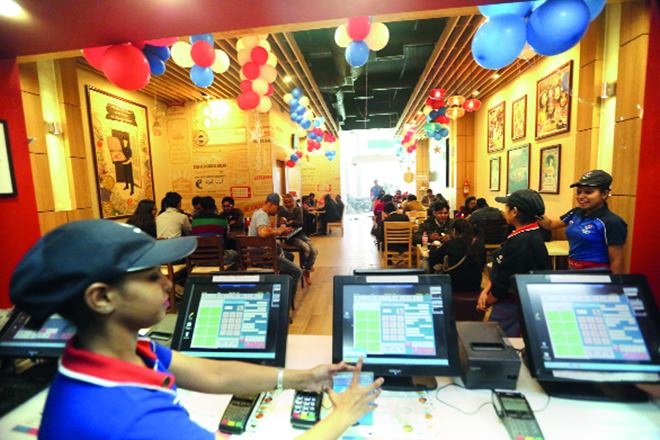
When American fast food standard bearers McDonald’s and Domino’s Pizza stepped into India in the mid-1990s, the market was just ripe enough for take-off.
McDonald’s and later Domino’s Pizza can be credited with not just growing the consumer appetite for fast food but also for fostering an entire food service ecosystem, including fresh produce, baked goods, sauces and condiments, and cold chain technology.
India has been typically difficult for business models driven by scale, replicability and predictability. The customer is price sensitive, operating costs are high and non-compliance of business standards is a frequent occurrence. In this environment, these brands have reinvented the meaning of meals, snacks and treats.
Their growth has set the stage for other international players and also set business aspirational standards for Indian food entrepreneurs and conglomerates alike.
Product experimentation has also been an important part of their success; it keeps excitement in the brand alive and help improve footfall. However, how far a product sustains and whether it becomes a menu staple can’t be predicted accurately. New products also need significant investment in both supply chain and front-of-house changes in standardisation-oriented QSRs, so the new product launch cannot be undertaken lightly. This is one reason these successful QSR formats don’t overhaul their menus drastically but make changes incrementally.
For these market leaders, future scale and deeper penetration is only feasible with higher visit frequency. For growth in middle-income India, they need to become a significantly cost-competitive option to be seen as more than a ‘treat’ or celebration destination.
So, while both McDonald’s and Domino’s Pizza have invested significantly in Indian flavours and menu offerings, perhaps it’s also best for them to reconcile with the fact that there will be a significant part of the consumer’s heart, stomach and wallet that will remain dedicated to indigenous offerings.
In a global environment that’s turning hostile to fast food, India isn’t a quick-fix growth market, but it’s certainly one to stay invested in, for the longer term.
And I have no doubt that as much as these companies aim to change India, over time India will also change them.
(Also published in Brand Wagon, The Financial Express)
Devangshu Dutta
April 24, 2016

(Published in the Financial Express, 10 May 2016)
In about 20 years, Café Coffee Day (CCD) has grown from one ‘cyber café’ in Bengaluru to the leading chain of cafés in the country by far.
In its early years, it was a conservative, almost sleepy, business. The launch of Barista in the late 1990s and its rapid growth was the wake-up call for CCD — and wake up it did!
CCD then expanded aggressively. It focussed on the young and more affluent customers. Affordability was a keystone in its strategy and it largely remains the most competitively priced among the national chains.
Its outlets ranged widely in size — and while this caused inconsistency in the brand’s image — it left competitors far behind in terms of market coverage. However, the market hasn’t stayed the same over the years and CCD now has tough competition.
CCD competes today with not only domestic cafés such as Barista or imports such as Costa and Starbucks, but also quick-service restaurants (QSRs) such as McDonald’s and Dunkin’ Donuts. In the last couple of years, in large cities, even the positioning of being a ‘hang-out place’ is threatened by a competitor as unlikely as the alcoholic beverage-focussed chain Beer Café.
CCD is certainly way ahead of other cafés in outlet numbers and visibility in over 200 cities. It has an advantage over QSRs with the focus on beverage and meetings, rather than meals. Food in CCD is mostly pre-prepared rather than in-store (unlike McD’s and Dunkin’) resulting in lower capex and training costs, as well as greater control since it’s not depending on store staff to prepare everything. However, rapid expansion stretches product and service delivery and high attrition of front-end staff is a major operational stress point. Upmarket initiatives Lounge and Square, which could improve its average billing, are still a small part of its business.
Delivery (begun in December 2015) and app-orders seem logical to capture busy consumers, and to sweat the assets invested in outlets. However, for now, I’m questioning the incremental value both for the consumer and the company’s ROI once all costs (including management time and effort) are accounted for. The delivery partner is another variable (and risk) in the customer’s experience of the brand. Increasing the density through kiosks and improving the quality of beverage dispensed could possibly do more for the brand across the board.
The biggest advantage for CCD is that India is a nascent market for cafés. The café culture has not even scratched the surface in the smaller markets and in travel-related locations. The challenge for CCD is to act as an aggressive leader in newer locations, while becoming more sophisticated in its positioning in large cities. It certainly needs to allocate capex on both fronts but larger cities need more frequent refreshment of the menu and retraining of staff.
An anonymous Turkish poet wrote: “Not the coffee, nor the coffeehouse is the longing of the soul. A friend is what the soul longs for, coffee is just the excuse.” There are still many millions of friends in India for whom the coffee-house remains unexplored territory, whom CCD could bring together.
Devangshu Dutta
January 24, 2014

[This article appeared in the February 2014 print issue of Retailer, under the headline “Implications of the Tata-Tesco JV“]
India is a civilisation that has borne fruit from thousands of year of international cultural exchange, commerce and investment flowing both inwards and out. It is also one that has suffered from military and as well as economic colonisation over the millennia.
For those reasons, foreign investment into the country is bound to have both vociferous opponents as well as staunch supporters, and this debate is possibly most polarised in the retail sector that touches every Indian’s life daily. Over the last few decades, foreign investment into the retail sector has seen flip-flops from successive governments and political parties across the spectrum, being allowed until the late 1990s, then blocked (by Congress-led UPA), then selectively allowed (by BJP-led NDA, and later by Congress-led UPA). And more recently, with pressures, protests and influences from all sides 2011, 2012 and 2013 have certainly been on/off years during the UPA’s second successive term.
In this time Zara’s joint-venture, set up in 2010, has turned out be one of the most successful and profitable in India. More recently, Ikea announced a €1.5 billion plan for the country, followed by H&M’s US$ 115 million proposal, while Marks & Spencer identified India as its second largest potential market outside the UK. However in October 2013, the world’s largest retailer Wal-Mart decided to call off its joint venture amid investigations of its executives having supported or indulged in corruption and accusations that it had violated foreign investment norms. It decided to acquire Bharti’s stake in the cash-and-carry JV and announced that it would not invest in Bharti’s retail business.
It was soon after, as if to compensate for Wal-Mart’s blow, that India’s Tata Group and British retailer Tesco announced that they would be creating a formal joint venture in India, with Tesco investing US$ 110 million. The Congress-led government went on to quickly approve the proposal, as if to visibly shake off accusations of “policy paralysis”.
Tesco’s investment doesn’t look like much for a country the size of India, especially in the context of Ikea’s ambitious proposal or H&M’s fashion retail business that is possibly less complex than Tesco’s multi-product multi-brand format. However, let’s keep in mind that Tesco is facing tough trading conditions in Europe, took a global write-down of US$3.5 billion last year including its exit from the US market, and merged its Chinese business with retail giant China Resources Enterprise to become a minority partner. In view of all that and the unpredictability of Indian politics, US$ 110 million looks like a reasonable if not disruptive commitment. It also does somewhat limit the downside risk for Tesco if the environment turns FDI-unfriendly after the general elections.
Whenever Tesco expanded into new markets, it has tried to adopt a localised or partner-led approach. In India, since 2007, Tesco has had an arrangement to provide support to Tata’s food and general merchandise retail business. The intent underlying the partnership was clearly to look at a joint retail business when allowed by regulations and not just at back-end operations. The existing structure has provided Tesco with an opportunity to learn about the Indian market and operating environment first-hand while working closely with Tata’s retail team. Tata, in turn, has drawn upon Tesco considerable expertise of operating retail businesses in both developed and emerging markets. At the very least, the FDI inflow from Tesco will deepen this arrangement further, benefiting both partners further.
But there are the inevitable twists in the tale. While the Tesco proposal was in the works, the new Aam Aadmi Party formed a government in surprise victory in Delhi state and announced that it would not allow foreign owned retail businesses in the state of Delhi. This strikes off one of the most lucrative metropolitan markets from the geographic target list at least in the short term. (The central government has pushed back saying that while retail is a state-subject, the decision to allow FDI by the previous Congress government cannot be reversed at will by the current AAP government, but the debate goes on.) BJP-led and BJP ally-led state governments have also indicated their unwillingness to allow foreign retailers into their markets.
So should we even attempt to forecast what Tesco and Tata could do in this environment? I would rather not pre-empt and second-guess the future plans of business executives who are trying to read the intent of politicians who are focussed on elections 4 months in the future! However, whatever the plans, the retailers must comply with the regulations such as they are now and utilise the opportunities that exist. So it is likely that the following scenario will play out.
Tata and Tesco have said that the proposed joint-venture looks at “building on the existing portfolio of Star Bazaar stores in Maharashtra and Karnataka”. These are both states where Trent has multiple locations, so a certain critical mass is available. Since current government policy requires the investment to be directed at creating fresh capacity, new stores would also be opened in these states, though the expansion plans look modest, with 3-5 new stores every financial year.
But with the 50 percent investment in back-end also being a regulatory requirement, new procurement, processing and logistics infrastructure which could service stores within these states as well as in other states are is likely to be built. Tesco’s wholesale subsidiary currently supplies merchandise to Star Bazaar stores across states – this relationship is likely to continue as some of Tata’s stores are in states that are not within the FDI ambit. The product mix proposed includes vegetables, fruits, meat, fish, dairy products, tea, coffee, liquor, textiles, footwear, furniture, electronics, jewellery and books.
The norms earlier required FDI proposals to ensure that 30 per cent of product sourcing would be domestic, from small-midsized enterprises. However, in August 2013, the government relaxed this requirement to be applied only at the beginning of the joint-venture operations, and that this requirement would not include fruits and vegetables, an area where Tesco has focussed significant energy. So the immediate focus would be on meeting the domestic sourcing requirements in other categories, and creating a viable business model and scale through an appropriate product mix.
The partners are likely to continue working on improving the performance of the existing Star Bazaar stores which are 40,000-80,000 sq ft in size. However, Tata has also launched a new convenience store format, Star Daily sized at about 2,000 sq ft focussed on fresh foods, groceries and essential items. Retailers with foreign investment are now also permitted to open stores in cities with populations under one million from which they had been prohibited previously, so the new small format can provide significant expansion opportunities and more volume for the back-end operations to reach critical mass quicker.
Would there be a change of name on the store fascia? Unlikely, since Tesco has been operating stores under other brands as well in markets outside the UK and a “Tesco” name appearing on the fascia may not significantly change the consumer’s perception of the store. Other than in lifestyle categories or overtly brand-driven products (such as fashion), most Indian consumers focus on utility, quality, local relevance and price as significantly more important purchase drivers than an international name. In fact, a trusted Indian name like Tata carries as much weight or more weight in many categories than an international brand would. So the stores may carry a joint by-line, but the focus is likely to remain on the existing brand names.
And what of several other retailers who are interested in the Indian market? Will they draw inspiration from Tesco and take their plunge into the market, urged on by the outgoing government eager to demonstrate results during its final months?
Wal-Mart, for one, seems to have returned to the table, having set up a new subsidiary, perhaps preparing the ground for a retail launch with another partner. A European retailer, remaining nameless for now, is being mentioned as being the next proposal in the FDI pipeline.
However, it is likely that most will remain in the wait-and-watch mode until the outcome of the national elections is clear. The real issue is not the regulations themselves as much as the unpredictability of the regulatory environment. Policies are being made, turned around, and twisted over in the name of politics, without a clear thought given to the real impact on the country, the economy and the industry of either the original policy formulation or its reversal.
Until that dust settles down, we should expect no dramatic changes in the near term, no sudden rushes into the market. But then, we could be wrong – policy and politics have taken unexpected twists earlier, and could do so again!
